
Step 1 of 5
Page list
Every page the site will have, with one line each saying who it is for and what it has to make them do. Two quotes against the same list are comparable; two against a conversation are not.
 5.0 Google rating
Web Design In Waterloo
Web Design Waterloo is often bought by somebody who can read the code, which raises the floor on honesty and introduces a different and more expensive failure.
Trusted by Ontario businesses












On this page
The whole scope, in the order it is explained below.
The audience
The city's economy changes who is in the room when a website is reviewed.
Statistics Canada, 2021 Census of Population
University of Waterloo, Co-operative Education
Semrush, Canada database, October 2026
In most towns a website is signed off by somebody judging how it looks. Here there is frequently a developer in the business, or a co-op student, or a founder who writes code, and the review includes questions about page weight, rendering, accessibility and what framework was used and why.
That is a harder sale and a better engagement, because the questions are the right ones. A site that loads quickly, renders without JavaScript doing the work, and has a sane URL structure is better for search as well as for the person asking.
It also means a web design waterloo proposal has to be specific. "Modern, responsive and optimised" is three adjectives and will be treated as three adjectives. What the buyer wants is what the build is, what it costs to run, and who maintains it.
The over-engineering trap
The failure mode in this city is rarely a site that is too simple.
Where everybody in the room is comfortable with software, the natural instinct is to build rather than configure. A content site becomes a bespoke application, a blog becomes a custom publishing system, and a brochure becomes a project with a deployment pipeline.
Each decision is defensible on its own and the sum is a website that costs several times what it needed to and requires a developer to change a paragraph. The cost does not arrive at launch; it arrives in year two, when the person who built it has moved on and nobody else wants to touch it.
The useful question in the room is not whether something can be built but who will change the copy in eighteen months and whether they will need a pull request to do it. That one question kills most over-engineering without an argument.
The honest counterweight: where there genuinely is an application inside the site — a calculator, a portal, an integration — building it properly is correct and the simple route will fail. The skill is telling the two apart, which is a conversation rather than a preference.
What a proposal should contain
None of these appears on a typical local agency proposal and all four are reasonable.
Named, with the trade-off stated. A reasonable answer is often the boring one, and saying so plainly earns more credibility here than an impressive one does.
Hosting, the platform, any services it depends on, per year. A quote that covers the build and is silent about running costs is half a quote.
Which parts the business can edit and which need a developer. This is the single biggest determinant of what the site costs over five years and it is almost never specified.
A redirect map, written before launch. Mishandling it discards whatever the old site earned, and in a room that will check, not having an answer is disqualifying.
How it gets reviewed
Agree where the work is reviewed and how feedback is given, before there is anything to review.
A staging address nobody else can find, with a single list of comments against it, is the arrangement that works. Three people emailing screenshots is the arrangement that produces a fortnight of confusion and a bill for it.
Give feedback in one document, page by page, with one person collating. Contradictory instructions from a client are the commonest cause of a project going over, and they are entirely within the client’s power to prevent.
Set a number of review rounds in advance — two is normal — and say what happens after them. Open-ended revision is how a fixed price stops being fixed, and both sides resent the conversation when it arrives unplanned.
And make sure the staging site cannot be found by a search engine, which is a single setting and is forgotten often enough to be worth naming in writing.
A number in the contract
Performance is the one quality everybody says they want and nobody writes down.
Put a measured figure in the agreement: the main pages load in under a stated time on a mid-range phone over a mobile connection, tested with a named public tool before final payment.
Without that it is an opinion, and a site that was fast when it had four pages and three photographs will not be fast by the time the content is in. Nobody is at fault and nobody is accountable.
The figure also constrains the decisions that would otherwise be made casually: a heavy font set, an animation library, a slideshow on the front page. Each of those is a choice with a cost, and a stated budget turns the conversation into arithmetic.
Re-run the test six months later. A site drifts slower as things get added, and a number agreed once gives you a straightforward basis for asking why.
Handover
The end of a build is the one moment you have everything and all the leverage. An hour spent there saves a quarter later.
The accounts, in your name. Domain registrar, hosting, the content management system, analytics, anything taking payment. Not shared logins — your own accounts, with the supplier added to them. One page listing all of it, with whose name each is in, is the most useful document a small business owns.The source, somewhere you can reach it. Not a zip file in an email that expires. If the site has any custom code in it, it belongs in a repository you can get into without asking anybody.A backup you have restored from once. An untested backup is a belief, not a backup. Restore it to a staging address while the people who built it are still available and contractually interested.The redirect map, as a file. Every old address and what it now points at. When something breaks in eighteen months, this is the document that explains it, and nobody can reconstruct it afterwards.A written answer to "who do we call". For the site, for the mail, for the domain, for the payments. Four names or four companies, with response times. The worst moment to find out there is no answer is the morning it goes down.Our scope
Narrow on purpose, so a wasted meeting is avoided.
We build and rebuild presentation sites with the structure decided against the search clusters each page is meant to own, the redirects written before launch, and the content planned as part of the project rather than chased afterwards.
Web Design Waterloo work with us is the wrong purchase when the requirement is an application with a forming specification. That needs a dedicated engineering team and a different commercial model, and in this city there are good ones. We will say so rather than take the work.
We are based in Minesing rather than Waterloo, which matters for filming and for nothing else here. Where there is an internal development team, the split that works best is that they own the application and we own the presentation layer and the URL map — and the URL map needs exactly one owner.
A page list, who writes the words and when they are due, what happens to every address on the current site, and the monthly figure to keep it running afterwards. Two quotes against those four answers are comparable; two without them are two numbers describing different projects in the same vocabulary.
Next step
That one answer settles most of the scope and most of the cost. Tell us and we can be specific in a single call.
NewLife Marketing · 70 Bearberry Rd, Minesing, ON L9X 2E1 · 705-302-1097 · Based in Minesing, building for businesses across Ontario including Waterloo.
How it works
Five phases, and the first one settles most of what the rest will cost.
Step 1 of 5
Every page the site will have, with one line each saying who it is for and what it has to make them do. Two quotes against the same list are comparable; two against a conversation are not.
Step 2 of 5
The copy gathered by interview rather than by waiting for a free afternoon. Sites slip on words far more often than on anything technical.
Step 3 of 5
Assembled page by page on a staging address nobody else can find, reviewed in two rounds against one written list of comments from one person.
Step 4 of 5
Every address on the old site pointed at its replacement before the switch, the measurement already running for a month, and the forms tested from a real phone away from the office.
Step 5 of 5
Watching for error pages, which are the symptom of a missed redirect and are invisible unless somebody is deliberately looking for them.
Proof first
Every number published on this site came from paid media or production work, because that is what we publish. There is no traffic graph here, and you should be wary of them elsewhere.
A Portuguese grill that came to us with almost no online presence.
Read the case study →A storm drainage build with around forty trades working around us.
Read the case study →One of fourteen published client partnerships.
See the partnership →None of that work was done in Waterloo, and we are not going to pretend otherwise. It is published, named and checkable, which is more than a logo wall offers. Ask any firm you shortlist for the enquiry count before and after a build, and ask who counted it.
The person on your account
Sales Director & Head of Client Communication — NewLife Marketing
Scopes your engagement before a dollar moves — what you actually need, what it should cost, and the goals the work will be judged against. Then he leads your day-to-day communication and checks those goals monthly.
Straight answers
Straight answers before you ever book a call.
The spread is wide and it is set by how much is bespoke, what it integrates with and who writes the content. A quick way to narrow it: decide whether anything on the site has to compute something specific to your business. If not, you are in the lower part of the range regardless of how the site looks.
Sometimes, and the question to settle first is who maintains it in two years. An in-house build by a developer who later moves on leaves a site nobody wants to touch, which is the most expensive outcome available. If the answer is that the same team will own it indefinitely, in-house is frequently the right call.
Not by itself, and it can easily make them worse if the redirects are mishandled. What a rebuild does is remove obstacles — speed, structure, a page per thing you sell — so that search work can produce a result. Treat it as clearing ground rather than as the crop.
Yes, and where there is an internal team that usually produces the best split: they own the application and we own the presentation layer and the search structure. The thing to agree up front is who owns the URL map, because that is the seam where rebuilds go wrong and it needs one owner rather than two.
Why NewLife
Everything we do runs on one system we call The Film-to-Funnel System: in-house film → paid ads → landing page → CRM follow-up → optimize. Here is how that stacks up against doing it yourself or hiring a typical agency.
| In-house | Typical agency | NewLife | |
|---|---|---|---|
| Creative | You film it on a phone | Outsourced or stock footage | Our in-house cinema crew, filmed on-site |
| Who does the work | You, between running the business | A junior account manager | Cruz and the senior team, directly |
| The system | Disconnected tools that don't talk | Ads, then hands-off | Film → ads → landing page → CRM, one connected system |
| Your accounts & data | Yours, but no time to run them | Often held hostage | Always yours - you keep everything |
| Follow-up | Manual, when you remember | Rarely their problem | Automated speed-to-lead in the CRM |
| Local knowledge | You know your market | A national, generic playbook | Real local research for every market you target |
Where to go next
Come say hi
The office and the studio are in Minesing, just west of Barrie. Come and sit in it, see what is actually on the screens, and ask the person who would be on your account what they would do first.

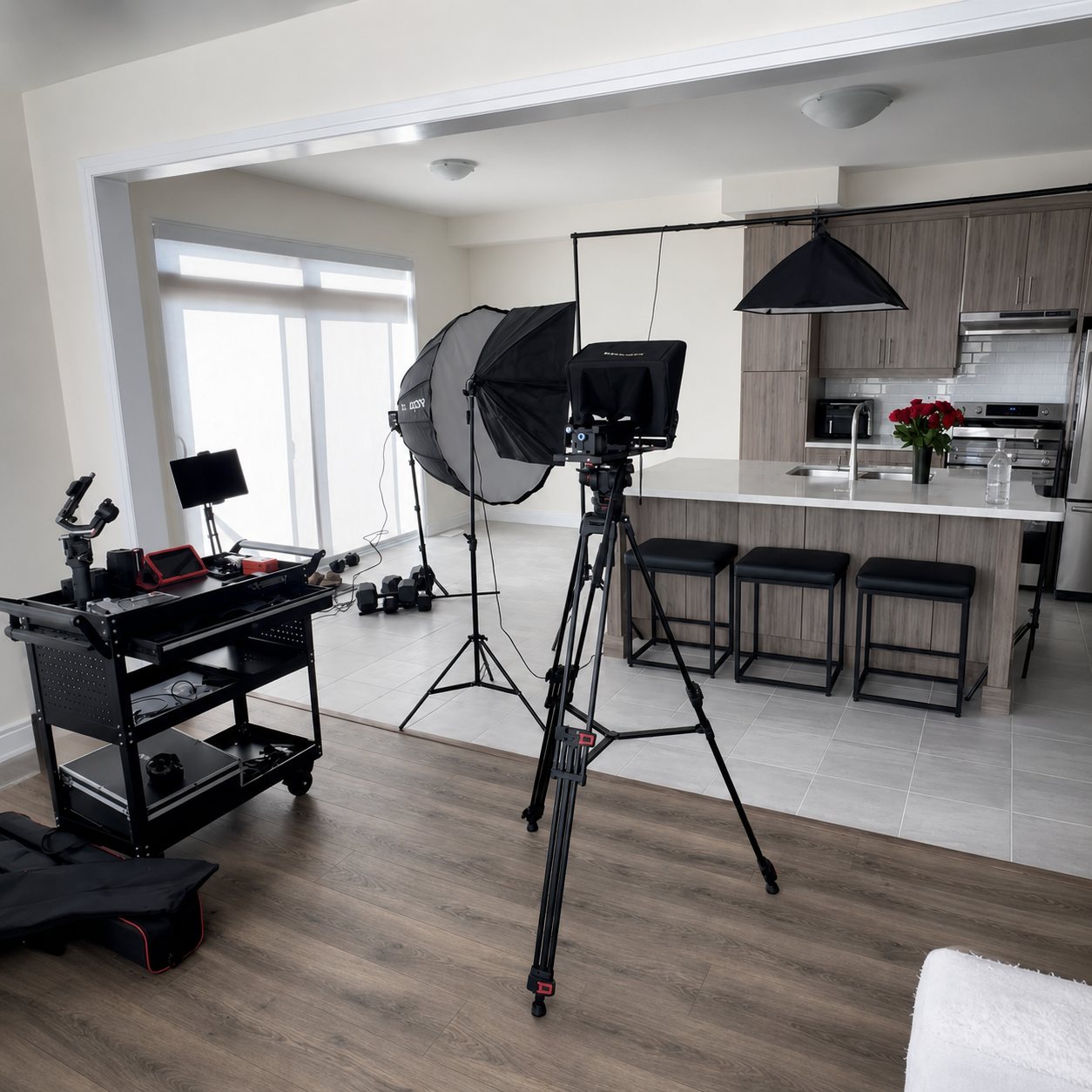
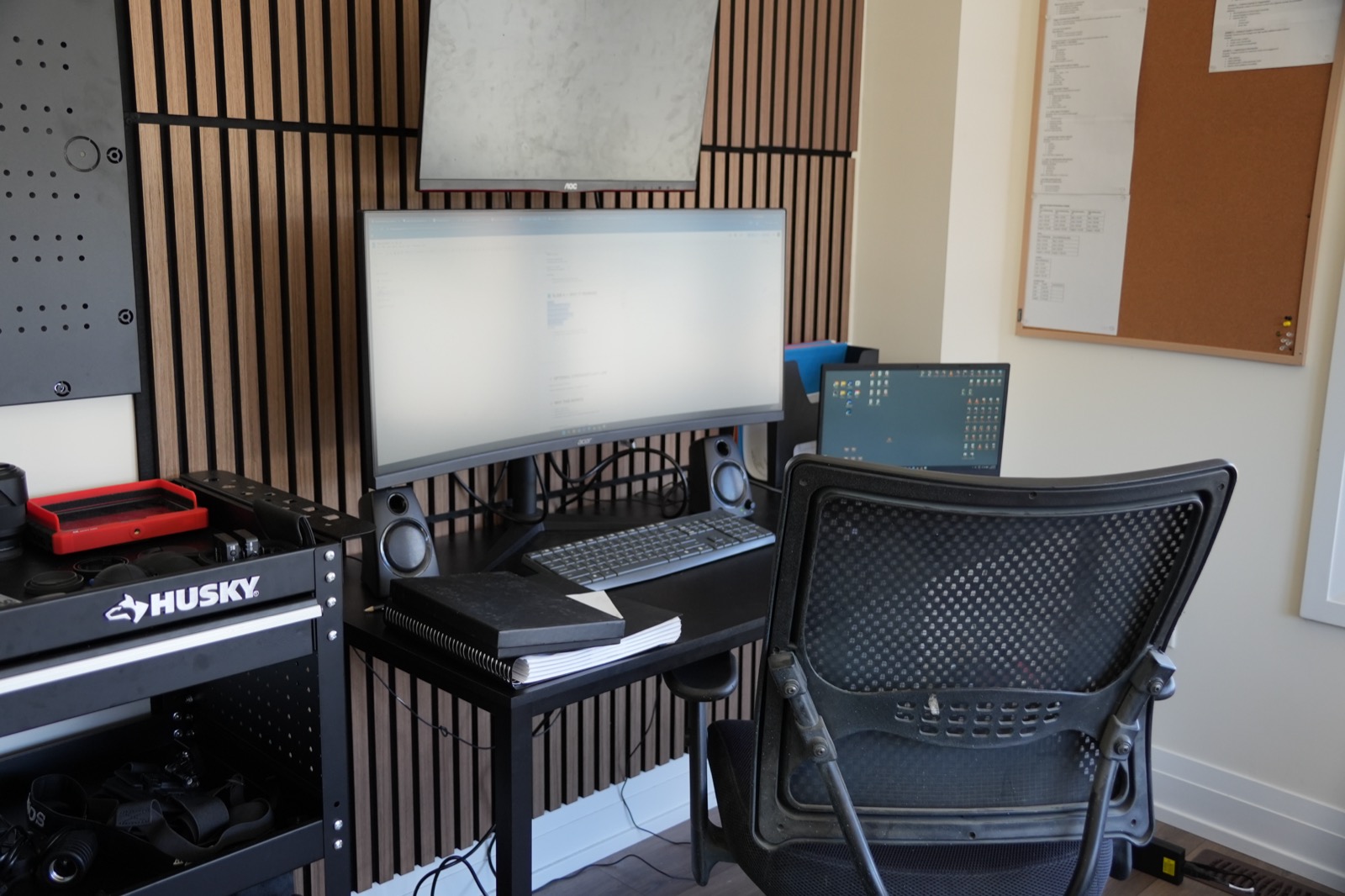
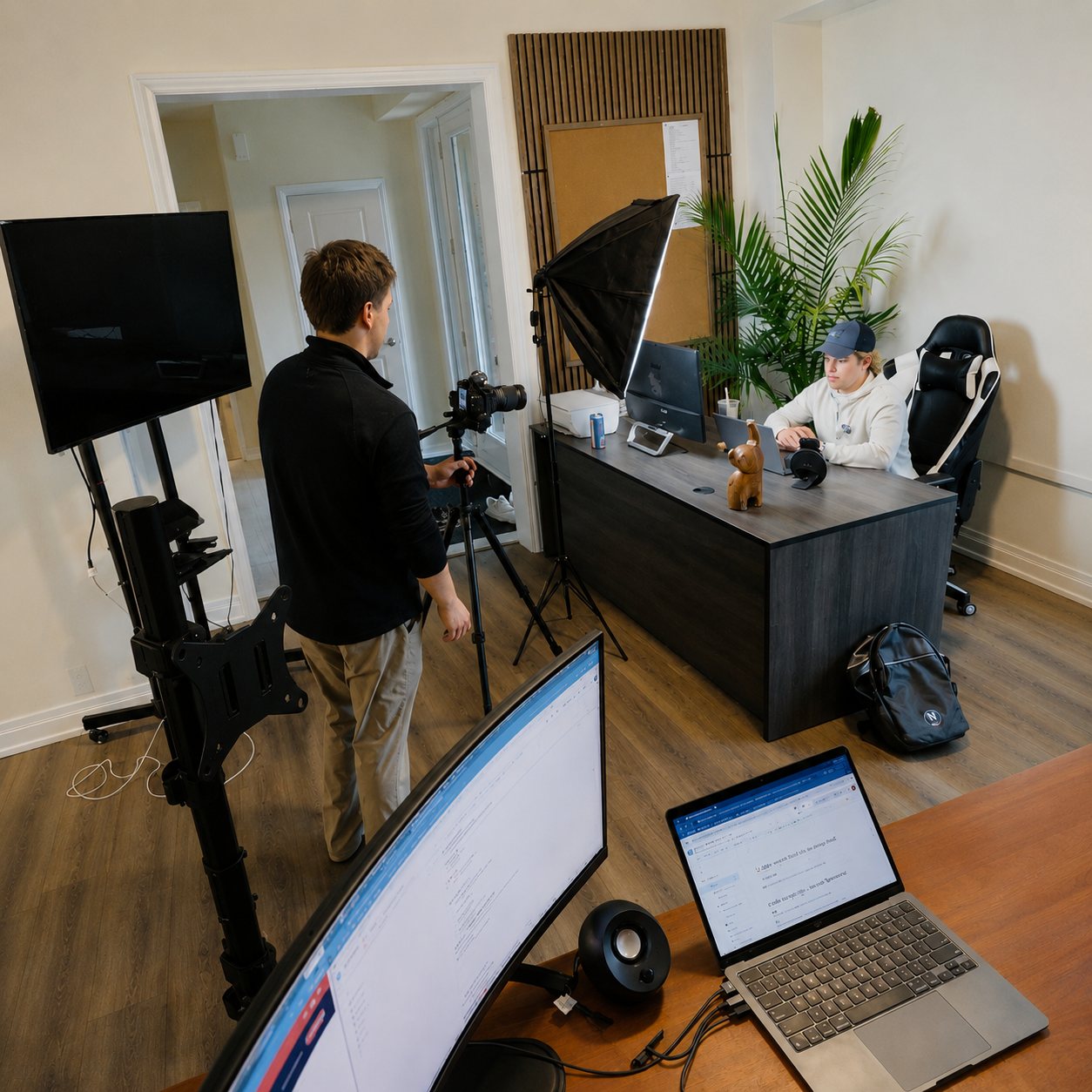 The office
5.0 ★ on Google
5.0Google rating“Working with NewLife Marketing has been a great experience. Their team has travelled to our locations to film professional content and turn it into Meta ad campaigns focused on generating real leads for our stores. The campaigns have been profitable, the communication has been consistent, and they’re always looking for ways to improve performance and bring us more opportunities. It’s been great having a marketing team that’s willing to show up, understand our business, and put in the work. We’d highly recommend NewLife Marketing to any business looking to grow through digital advertising.”
Last step
You will talk to Cruz or Keegan, not a sales rep. If the honest answer is that you do not need us yet, that is what you will hear, and you keep the plan either way.