NewLife Services
Creative Production
Cinematic Video & Photo, Shot On-Site
NewLife Marketing is a creative production studio for Barrie & Simcoe County businesses — in-house video and photo filmed on 10-bit cinema gear at your location, and cut into quality content that sells across ads and social.
Real Footage Of Real Work — Shot To Sell
We plan it, film it on cinema gear and edit it in-house — a whole library of ad-ready content from a single shoot day, that looks like you and nobody else.
The problem
Phone Footage And Stock Don't Sell
You know video matters, so you shoot a clip on your phone or buy a stock montage that looks like every other business in your industry. It doesn't land — because it doesn't look like you, and it doesn't look good enough to trust.
Great creative is the single biggest lever on whether an ad works or a feed grows. It's worth doing properly — filmed on real gear, at your real business, by people who cut it to sell.
What it is
Creative Production, In Plain English
Creative production is us filming and editing professional video and photo content of your business — planned, shot on cinema gear, and cut for the platforms you run. From a 15-second reel to a full brand film.
It's your in-house film crew, without hiring one. We show up, capture the real thing, and hand back a library of content ready to run as ads and social.
For B2B clients that library is also what makes Thought Leader Ads possible — the format needs a steady supply of real posts from real people, which is a production problem before it is an ads problem.
Who it's for
Who Our Creative Production Works Best For
Any business that sells something worth seeing — a transformation, a product, a space, a story. If you can show it, we can shoot it.
Real Estate & Hospitality
Listing films, drone and property media where the footage IS the product.
See the Real Estate & Hospitality playbook →Home Services & Trades
Project showcases and before/afters that prove the quality of your work.
See the Home Services & Trades playbook →E-Commerce & Retail
Product and brand video that makes the scroll stop and the cart fill.
See the E-Commerce & Retail playbook →The catalog
Real Footage We've Shot & Cut
Every tile is real work from our crew — filmed on cinema gear, edited in-house, and run as ads and content. Tap any one for sound.
Table of contents
What’s In This Guide
Twenty-three chapters: the kit and why each part of it matters, the six things we shoot, what actually happens on a shoot day, and where the footage goes afterwards.
- 01Your Footage Is Selling You Short
- 02What Creative Production Actually Means
- 03Owned, Not Rented
- 04Cameras & Lenses
- 05Everyone Sees It, Nobody Can Name It
- 06Bad Audio Makes Good Video Look Cheap
- 07Movement & Aerial
- 08The Six Things We Shoot
- 09Commercials
- 10YouTube & Long-Form
- 11Podcasts & Multi-Camera
- 12The Stills Pass Most Crews Skip
- 13Shot Vertical, Not Cropped
- 14What Actually Happens When We Turn Up
- 15The Shot You Cannot Plan
- 16Edit, Colour, Sound, Graphics
- 17Where The Footage Goes
- 18Who Is Actually In The Room
- 19Who It Is For — And Who Does Not Need Us
- 20Brief To Delivery
- 21What Is Included
- 22The Five Most Common Production Mistakes
- 23Proof — Aruba, Thunder Bay, Tampa & DC
The problem
Your Footage Is Selling You Short
Most businesses are better than their footage makes them look, and it is costing them more than they think.
- Phone footage
- Fine for a story, wrong for an ad. Flat, badly lit, unusable audio — and it quietly tells people your business is smaller than it is.
- Stock video
- The visual equivalent of a form letter. Nobody believes it, everybody recognises it, and it cannot show your actual work.
- The one shoot, two years ago
- A single expensive production day used everywhere until it was exhausted. The team is in different clothes now and the product has changed.
- The freelancer who vanished
- A good videographer who booked out, moved on or raised rates — and the footage stopped with them.
This is a media-buying problem, not a branding one
Creative is now the single biggest lever on ad performance, because with modern targeting the creative is what decides who the platform shows it to. Weak footage does not just look worse — it reaches fewer people, and it costs more to reach them.
Which is why this page sits underneath the Meta and Google pages rather than beside them.
What it is
What Creative Production Actually Means
The distinction that decides whether any of this is worth the money.
- A repeatable production capability
- Attached to your marketing and filmed monthly, feeding every channel you run.
Not: A one-off video project with a delivery date and an ending. - Strategy first
- We shoot what the campaigns need, in the orientations they need it in.
Not: A videographer turning up with no brief and handing over a folder. - Owned kit, in-house crew
- So the cost curve flattens the more you shoot.
Not: A quote per project, rebuilt from scratch every time. - Footage built to be cut many ways
- Vertical and horizontal, short and long, captioned and silent-safe.
Not: One 90-second brand film and nothing else usable.
The difference is repeatability
A production company that shoots you once has sold you an asset. A production capability attached to your marketing shoots you every month, and the library compounds — which is the only version of this that makes the maths work.
It is also the reason our social media service can plan a full month before it starts: the footage already exists.
The kit
Owned, Not Rented
Six categories, all on our own shelves. The reason that matters to you is scheduling and cost, not bragging rights.
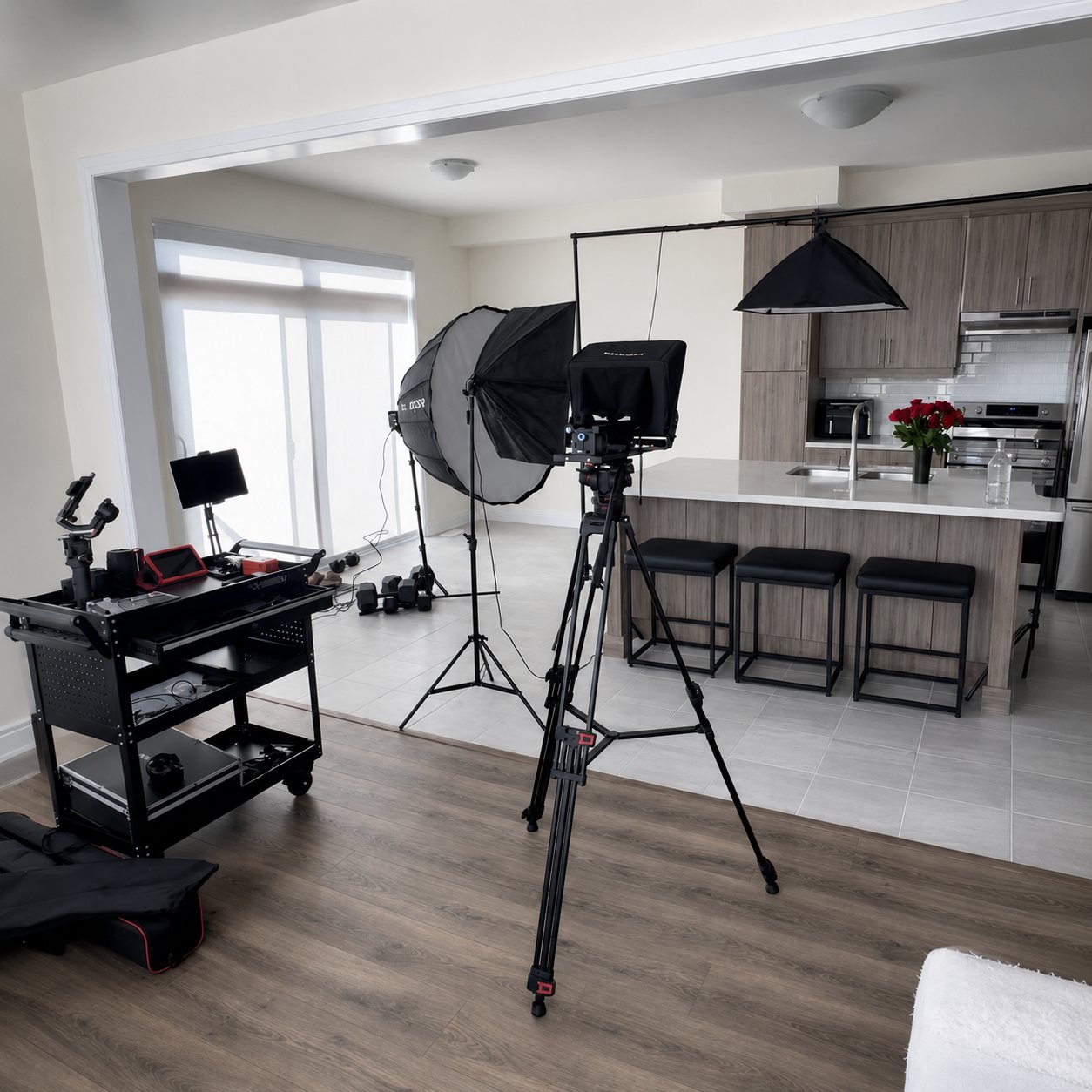
We are not a marketing agency that books a freelancer. The cameras, the lenses, the lighting, the audio and the drone are ours, and the people operating them are on our team. That is the whole reason we can shoot your business every month instead of once a year.
The practical effect is scheduling. We can shoot you next week because the kit is on our shelf rather than on a rental calendar, and we can shoot you again next month without rebuilding a quote — which is what every other service we run depends on.
The glass
Cameras & Lenses
What we run, and the reason for each — because a spec list without a reason is just a receipt.
- 10-bit cinema bodies
- The reason is colour. 10-bit holds far more tonal information than standard 8-bit, which is what lets footage survive a real grade without falling apart.
- Fast prime lenses
- The shallow depth of field and low-light performance that reads as cinematic. This is the single biggest visual difference between professional and prosumer footage.
- Zoom lenses
- For run-and-gun coverage where the moment will not wait for a lens change — events, walkthroughs, live process.
- Multiple bodies
- So interviews run multi-angle and nothing is lost to a single point of view.
Lighting
Everyone Sees It, Nobody Can Name It
The difference everybody can see and almost nobody can describe.
- Key, fill and back
- The structure behind every interview and talking head that looks professional rather than merely filmed.
- Modifiers
- Softboxes, diffusion and flags. Hard light is what makes footage look like security-camera footage; softening it is most of the job.
- Colour temperature control
- Matching the space, or deliberately overriding it, instead of letting mixed lighting turn skin tones green.
- Practical and location lighting
- Warehouses, kitchens, workshops and sites — where our clients actually operate, rather than a studio that looks like nowhere.
Two identical cameras in the same room produce completely different results depending on who lit it. Lighting is the most under-appreciated and most decisive part of the kit, and it is the thing viewers register instantly without ever being able to name.
Audio
Bad Audio Makes Good Video Look Cheap
The cheapest way to make expensive footage look amateur.
- Wireless lavalier systems
- The clean, close dialogue that makes an interview usable at all.
- Shotgun and boom
- For natural room sound, and for anything where a visible mic would break the shot.
- Dedicated recorders and monitoring
- Audio is recorded properly and checked on headphones during the take — not discovered in the edit when everyone has gone home.
- Room treatment
- Most real workplaces are reflective, echoing boxes. That has to be handled on site, because it cannot be fixed afterwards.
Viewers forgive imperfect visuals and abandon bad sound within seconds. On muted-autoplay platforms it matters even more than that: poor audio kills the one moment somebody chooses to unmute.
Motion
Movement & Aerial
Two kit categories, and one judgement call that separates a crew from a camera operator.
- Gimbals and sliders
- Smooth motion where motion is motivated — a walk through a space, a reveal, a process in progress.
- The experienced call
- Knowing when not to move the camera. Unmotivated movement reads as amateur, and a locked-off shot is very often the stronger one.
- Aerial
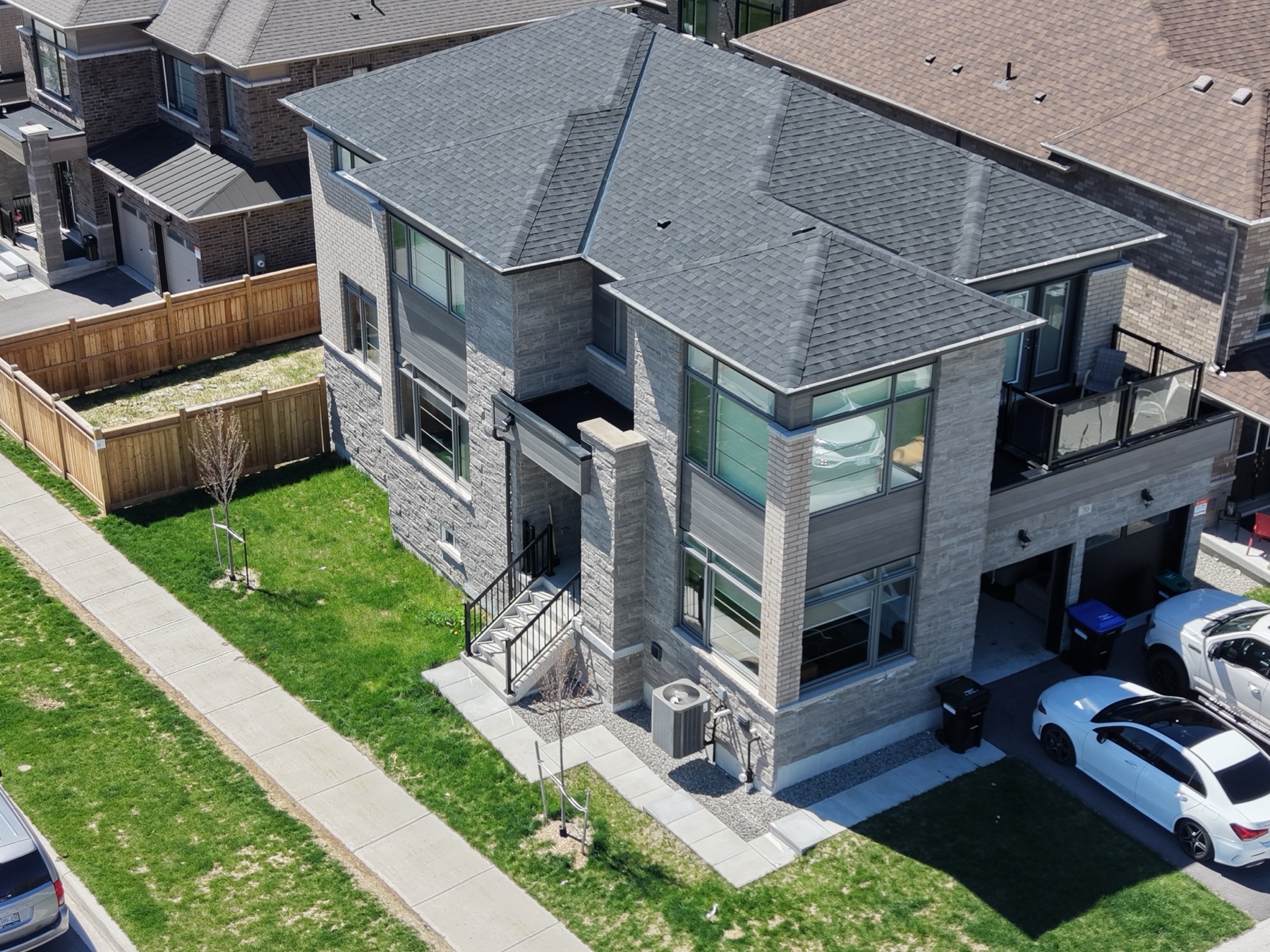
- Drone work for scale and context — sites, properties, builds and landscapes. The shot that shows the size of a job in one frame.
- On regulation
- Commercial drone operation is regulated in Canada, and construction and industrial clients are right to ask. We will confirm exactly what applies to your site before we fly anything.
The formats
The Six Things We Shoot
Six formats, one crew, and usually one day.
Commercials
Broadcast-standard brand films — the flagship asset, and what a business points at when it wants to be taken seriously.
YouTube & long-form
Authority content, five to thirty minutes, built to be found and to teach.
Podcasts & multi-camera
Two to three angles so the edit can cut on dialogue instead of sitting on a static wide.
Photography
A dedicated stills pass on the same day, using lighting that is already built.
Social-first vertical
Framed natively for 9:16, not cropped down from a horizontal master.
Event & documentary
Real moments as they happen — launches, builds, trade nights, site work.
Each of the first five gets its own section below. They are not six packages — they are six things that come off the same shoot day, which is the entire economic argument for doing it this way.
Format 01
Commercials
The flagship asset, and the one everything else on a shoot day gets built around.
- What it is
- The full production treatment — concept, script, shot list, lighting design, multiple setups, a real colour grade and a sound mix.
- Where it runs
- As paid media, and at the top of a homepage. These are the assets a business points at when it wants to be taken seriously.
- Written and directed in-house
- So the ad strategy and the film are never two separate conversations happening in two different companies.
Every tile in the catalogue above is a commercial or ad we filmed and cut — real client work rather than a showreel of somebody else's.
Format 02
YouTube & Long-Form
The authority format, and the one that quietly feeds everything else.
- What it is
- Five to thirty minutes, built for a platform that behaves like a search engine rather than a feed.
- What it covers
- Multi-camera interviews, process documentation, teaching content and walkthroughs.
- Why it is the highest-yield thing on a shoot day
- A long-form video is also the raw material for a month of short-form. One session, and the clips come out of it for weeks.
Format 03
Podcasts & Multi-Camera
Recorded properly the first time, because a podcast is the one format you cannot reshoot.
- Multi-camera
- Two to three angles, so the edit can cut on dialogue rather than sitting on a single static wide for forty minutes.
- Broadcast audio
- Individual channels per speaker, recorded separately, so one bad mic does not lose the episode.
- Full episode output
- The long-form video, an audio version, and a set of vertical clips from the same session.
Format 04
The Stills Pass Most Crews Skip
The cheapest thing on a shoot day, and the one most crews leave without.
- What it is
- A dedicated photography pass on the same shoot day, using the lighting that is already built — product, team headshots, the space, the process, the details.
- Why it matters
- Video crews frequently leave without a single usable photograph, and then the business pays a photographer separately to light the same rooms again.
- Where the images go
- The website, the ad statics, the carousels, the Google Business Profile and the print material. They carry more of your marketing than the video does.
Format 05
Shot Vertical, Not Cropped
Where most of it will actually be watched, so it is framed for there first.
Vertical work is framed natively for 9:16 rather than cropped down from a horizontal master. The difference is visible instantly, and it is one of the clearest tells of a crew that understands modern distribution versus one that shoots for television and adapts afterwards.
It is planned into the shot list from the start, so both orientations are covered properly on the day instead of one being rescued in the edit.
The shoot day
What Actually Happens When We Turn Up
Demystifying the day removes the main objection to booking one.
- Pre-light
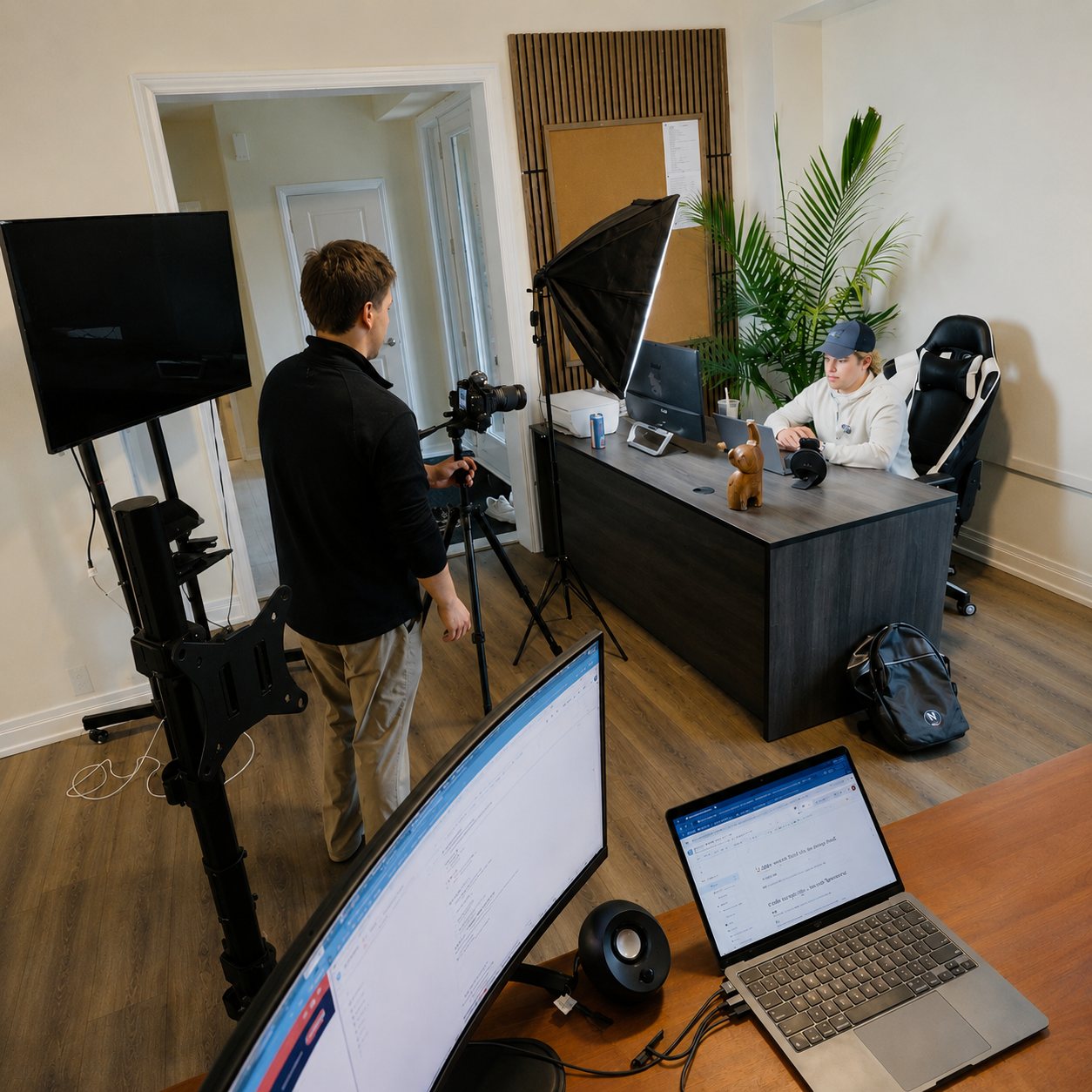
- The crew arrives ahead of anyone being on camera. Lighting and audio are built and tested before a single person is asked to perform.
- Principal
- The planned shot list — interviews, pieces to camera, the scripted material. The part that needs your people.
- B-roll
- The texture: hands working, machines running, details, the space. This is what carries every edit, and it is the part rushed crews skip.
- Stills
- The dedicated photography pass, using the lighting that is already up.
- Wrap
- Everything backed up on site before the kit is packed. Footage never travels on a single card.
The disruption answer, stated plainly
Most of a shoot day does not require your team at all. We schedule the people-facing parts tightly and shoot everything else around your operation — which is usually the real objection underneath “we are too busy for this.”
The philosophy
The Shot You Cannot Plan
The honest centre of this page, and the reason the planned material is only half the job.
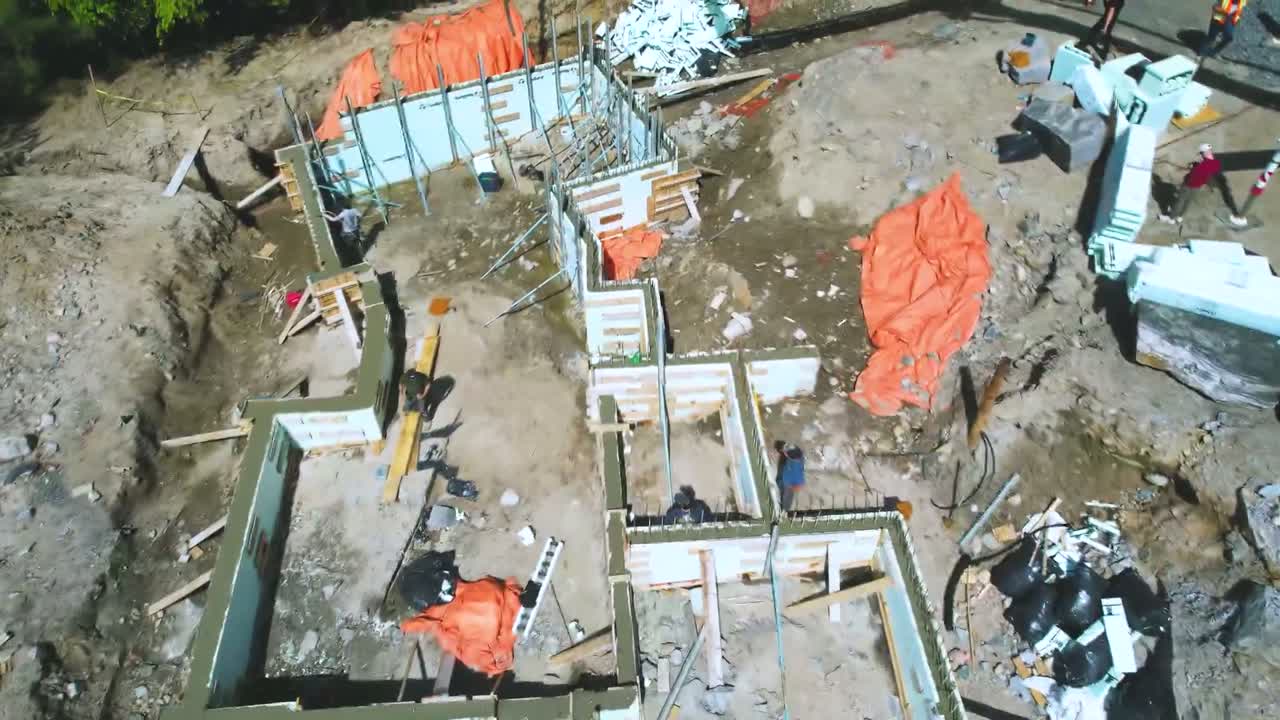
A shot list gets you the footage you knew you needed. The material that actually makes people stop — the genuine reaction, the moment of concentration, the unscripted exchange between two people who work together — cannot be scheduled. It can only be caught, and catching it requires a crew that is set up, watching, and already rolling.
- We stay rolling between setups
- The most usable material frequently happens in the minute after somebody thinks the take has ended and their shoulders drop.
- We shoot the process, not just the result
- A finished job is a photograph. The work becoming the finished job is a story.
- Real people over performances
- We would rather spend ten minutes making somebody comfortable than get a technically perfect take of someone visibly reciting.
- Being early is the whole technique
- Pre-lighting before anyone is on camera exists precisely so that when a real moment happens we are ready, instead of adjusting a light.
This is what the service is actually about
Everything above this chapter — the kit, the lighting, the pre-light hour — exists to buy the one thing you cannot buy directly: being ready when something real happens.
Post-production
Edit, Colour, Sound, Graphics
Five stages, and the one people underestimate is the first.
- Edit
- Structure, pacing and story. The decision that matters most and the one that takes longest.
- Colour grade
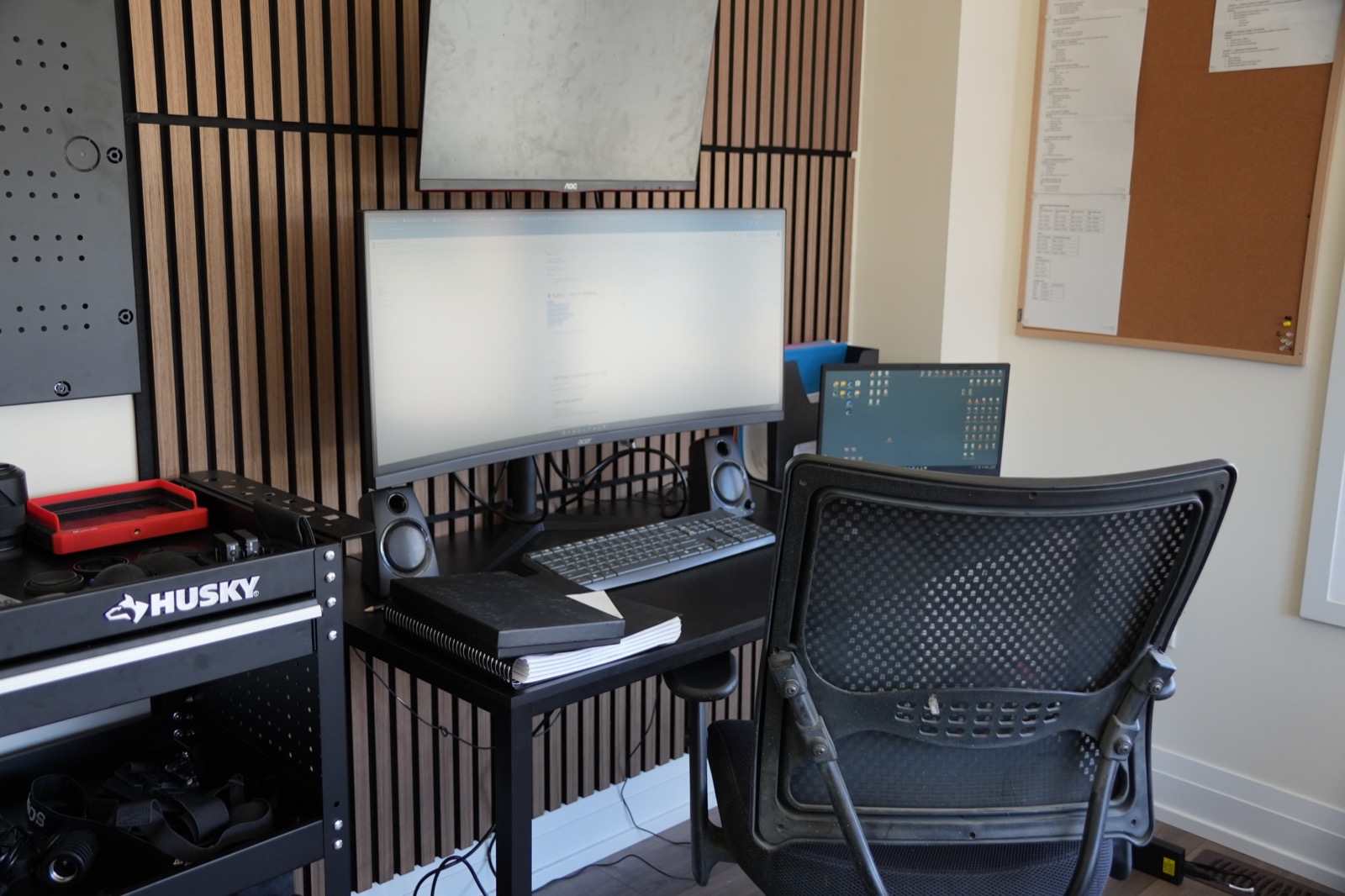
- Where 10-bit footage pays off — consistent skin tones, a deliberate look, and shots matched across setups so a sequence feels like one film rather than four clips.
- Sound
- Dialogue cleaned and levelled, music selected and licensed, effects placed. The layer nobody notices unless it is absent.
- Motion graphics
- Titles, lower thirds, captions and brand elements — designed in-house rather than dropped in from a template pack.
- Versioning
- Every asset cut for where it is going: 16:9, 9:16, 1:1, long, short, captioned, silent-safe.
Captions as standard
A large share of social video is watched muted. Burned-in captions are not an accessibility afterthought here, they are a performance requirement — so they ship on everything rather than on request.
Distribution
Where The Footage Goes
The commercial argument for the whole service, in one diagram.
The footage is an asset, not a deliverable. It keeps working across every channel you run, for as long as the work in it is still representative.
A production day priced against one video looks expensive. The same day priced against a month of social, a quarter of ad creative, a website refresh and a sales deck is the cheapest marketing spend in the budget — and that is the actual comparison, because that is where it actually goes.
What each channel does with it
- Social Media Marketing
- The production day is what makes a 30-day content plan possible. That page plans and publishes; this one makes the thing being published. It is the tightest link on this site.
- Meta Ads
- Creative is the lever that decides ad performance, and this is where the creative comes from — in-house, in the orientations the campaigns need.
- Google Ads
- Demand Gen and YouTube campaigns need real video, which is the point where most Google-only agencies quietly opt out of the channel.
- LinkedIn Ads
- Thought Leader Ads run on real posts from real people, so the format needs a supply of material rather than a copywriter.
- SEO
- Photography and video are on-page assets, and the case-study pages need real imagery to be worth reading.
The crew
Who Is Actually In The Room
The same people, every shoot.
Alex — Creative Director
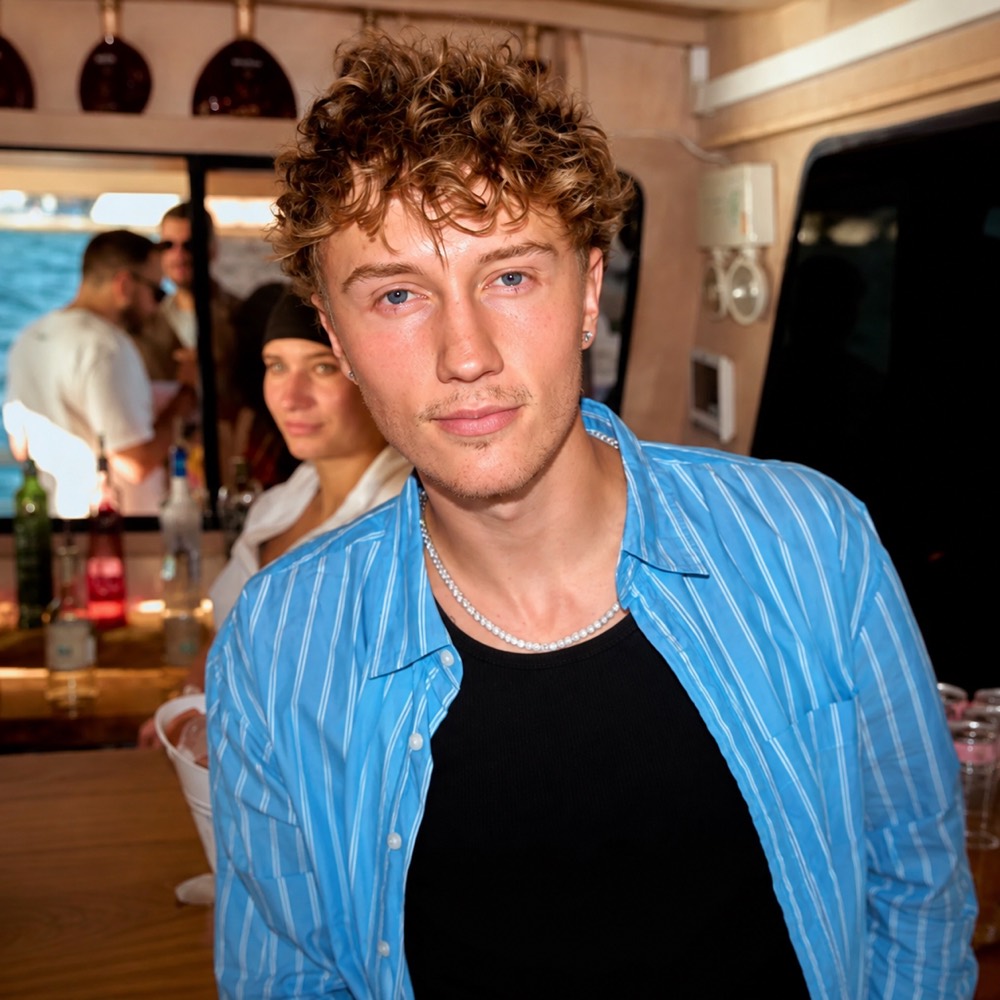
Alex directs the creative: the scripts, the plans and the shoot itself. He is on location directing on the day, and he runs project management across the team so the work lands on schedule rather than eventually.
He also hosts the NewLife podcast — the same multi-camera setup described a few chapters up, so the format we recommend for your business is one we run for our own.
Rudy has shot on client sites across Ontario and on productions in Aruba, Washington DC, Tampa and Thunder Bay.
You are not being handed to a subcontractor. The people who show up are the people whose work is in the portfolio — which is also why they can learn your business instead of relearning it every shoot.
Qualify yourself out
Who It Is For — And Who Does Not Need Us
Naming who should not book a production day is what makes the rest of this page worth reading.
This fits when
- Your work is visual — You build, make, serve, treat, transform or sell something somebody can see happening.
- Creative is the bottleneck — You are already running ads and the thing holding them back is what is in them.
- You need volume, not one film — A month of content rather than a single hero asset.
- You want the same crew over time — People who know where the good light is in your building and who on your team is comfortable on camera.
It is the wrong call when
- There is genuinely nothing to film — And nobody to film. It happens, and we will say so.
- You need one video, once — Hire a freelancer — honestly. This is built around repetition and you will not get the benefit.
- Nobody will go on camera — Under any circumstances. There are formats that work around it, but not many, and not as well.
- The budget supports one day and nothing behind it — A production day with no distribution behind it is an expensive asset with nowhere to go.
The process
Brief To Delivery
Six phases, and the sixth is the one that changes the economics.
- Brief
- What the footage is for, which campaigns it feeds, and what has to exist by when. Strategy before shot list, always.
- Pre-production
- Shot list, script where one is needed, location scout, scheduling around your operation, and a clear list of what we need from you.
- Shoot day
- Pre-light, principal, b-roll, stills, wrap — as laid out above.
- Post
- Edit, grade, sound, graphics, versioning.
- Delivery & review
- First cuts delivered for review, one structured revision round, then final assets in every format needed.
- Repeat
- The following month builds on a library that already exists, which is why month three costs the same and produces more.
Why the last row is the important one
Everything before “repeat” is what any production company does. The compounding is the part that only works if the crew, the kit and the strategy are the same people month after month.
The scope
What Is Included
Everything that comes off a production day, and the one sentence about ownership that most production pages avoid.
- Full pre-production — concept, scripting, shot list and scheduling around your operation
- Crew and all equipment on site, with no rental line items
- Video captured in every orientation the campaigns need
- A dedicated photography pass on the same shoot day
- Full post-production — edit, colour grade, sound mix, motion graphics and captions
- Platform versioning: every asset cut for where it actually runs
- Licensed music and effects, cleared for commercial use
- Organised delivery, and your footage archived — raw and finished, and yours
You own the footage
Raw and finished. It is archived and it is yours, during the engagement and after it. We say that plainly because plenty of agencies hold assets as leverage, and you should know which kind you are hiring.
Read before you book
The Five Most Common Production Mistakes
Every one of these turns up in footage we are asked to rescue, and none of them is a camera problem.
- Mistake 01 — Shooting one hero video and nothing else
- An expensive asset with no volume behind it, exhausted within weeks and then repeated until everyone is sick of it.
- Mistake 02 — Ignoring audio
- The fastest way to make a well-shot video feel amateur. Viewers forgive imperfect visuals and abandon bad sound in seconds.
- Mistake 03 — Shooting horizontal, then cropping for social
- Visibly wrong framing on the platforms where most of it will actually be watched.
- Mistake 04 — No b-roll
- It leaves the editor with talking heads and nothing to cut to, which is why so many corporate videos feel static.
- Mistake 05 — Production with no strategy
- Beautiful footage that does not match any campaign anyone is actually running.
Proof
Proof — Aruba, Thunder Bay, Tampa & DC
Range and volume, both already published elsewhere on this site.
Cinema shoots on location in Aruba, Thunder Bay, Tampa and Washington DC. Clients fly us places — which is a harder thing to claim than a number, and a more useful one.
- The range
- Four locations outside our home market, on real client productions rather than a portfolio trip.
- The volume
- Over a thousand videos produced in-house. It answers the “can you actually keep up” question before it gets asked.
- The named work
- Chicken On The Run, Elite Cards Toronto, A&R Design Build and DMT Building Group — every tile in the catalogue on this page is footage we filmed for a real client, not a showreel of somebody else's.
Straight answers
Creative Production FAQ
The questions we get before a shoot — what we make, the gear, ownership, timelines and cost — answered straight.
How much does a production day cost?
It depends on the day — how many setups, how many locations, whether there is scripting and how much post is attached. What we will not do is quote a number on a page that turns out to mean something else on the call. The useful framing is that a day priced against one video looks expensive and a day priced against a month of content does not, so we scope it against what the footage has to feed.
How long does a shoot take, and how disruptive is it?
Most shoots are one day on site. The honest answer on disruption is that most of that day does not need your team at all — the crew arrives early to build lighting and audio before anyone is on camera, and the parts that need people are scheduled tightly. We shoot the b-roll, the space and the process around your operation rather than through it.
Do we have to be on camera?
Somebody usually should, because a real person is the single most effective thing in the frame. But it does not have to be everybody, and it does not have to be the owner. We can build a shoot around process, product and hands if nobody is comfortable on camera — it is a weaker version, and we will tell you that rather than pretend otherwise.
How far will you travel?
Further than most regional crews. We are based in Barrie and shoot across Ontario as standard, and we have filmed client productions in Aruba, Thunder Bay, Tampa and Washington DC. If the work is somewhere else, ask — travel is a line item, not an obstacle.
Who owns the footage — raw and edited?
You do, both. The finished assets and the raw footage are yours, archived and handed over on request, during the engagement and after it. We state that plainly because plenty of agencies hold assets as leverage, and you should know which kind you are hiring before you book.
How many videos do we get from one day?
More than most people expect, because the day is planned for volume rather than for one hero asset. A typical day produces a long-form piece, a set of vertical cuts, ad variants in more than one orientation, and a stills library — all from the same setups. The exact count depends on how many setups and locations the day covers, and we agree that in pre-production rather than afterwards.
How long until we see the finished work?
First cuts come back for review, then one structured revision round, then final assets in every format needed. The edit is the longest part and the one worth not rushing — structure and pacing are what decide whether anyone finishes watching. We agree the delivery dates in the brief so they are fixed before the camera comes out.
Can you shoot vertical and horizontal in the same day?
Yes, and it is planned into the shot list from the start rather than solved in the edit. Vertical work is framed natively for 9:16 instead of cropped down from a horizontal master — the difference is visible instantly, and it is one of the clearest tells of a crew that understands where the footage is actually going to be watched.
Do you write the scripts?
Where a script is needed, yes — and because the ad strategy and the film are the same conversation here, the script is written against the campaign rather than in isolation. A lot of our best material is not scripted at all: interview prompts and a shot list produce more usable footage than a page somebody is visibly reciting.
What if we don't like the first cut?
That is what the review round is for, and it is built into the process rather than charged as an extra. If the first cut is wrong, it is almost always because the brief was wrong — so we would rather spend the time up front on what the footage is for than rebuild an edit twice.
Can you film a podcast or live-stream an event?
Podcasts, yes — multi-camera with individual audio channels per speaker, delivered as the long-form video, an audio version and a set of vertical clips. For live streaming, tell us what the event is and we will confirm what we can run for it before you plan around it.
Do you do photography as well, or just video?
Both, on the same day. A dedicated stills pass runs on every shoot using the lighting that is already built — product, team, space, process and detail. Those images end up carrying the website, the ad statics, the carousels and the Google Business Profile, and most video crews leave without shooting a single one.
Why NewLife
You, In-House, Or A Typical Agency
Everything we do runs on one system we call The Film-to-Funnel System — in-house film → paid ads → landing page → CRM follow-up → optimize. Here's how that stacks up against doing it yourself or hiring a typical agency.
| In-house | Typical agency | NewLife | |
|---|---|---|---|
| Creative | You film it on a phone | Outsourced or stock footage | Our in-house cinema crew, filmed on-site |
| Who does the work | You, between running the business | A junior account manager | Cruz and the senior team, directly |
| The system | Disconnected tools that don't talk | Ads, then hands-off | Film → ads → landing page → CRM, one connected system |
| Your accounts & data | Yours — but no time to run them | Often held hostage | Always yours — you keep everything |
| Follow-up | Manual, when you remember | Rarely their problem | Automated speed-to-lead in the CRM |
| Local knowledge | You know your market | A national, generic playbook | Barrie & Simcoe County, on the ground |
Keep building
Services That Work Together
Websites, Portals & Platforms
Websites, client portals and internal platforms
Explore Websites, Portals & Platforms →Meta Ads
$736K reported value on $6.05K spend
Explore Meta Ads →Google Ads
$751.7K reported value on $11.07K spend
Explore Google Ads →LinkedIn Ads
Named accounts, the whole buying committee
Explore LinkedIn Ads →SEO
Page 6 → #3 on page 1 in 35 days (DMT Building Group)
Explore SEO →Social Media Marketing
7 reels + 20 carousels a month for one client (Chicken On The Run)
Explore Social Media Marketing →CRM Systems
$280K in new pipeline value in 30 days (DMT Building Group)
Explore CRM Systems →Software Solutions
3 platforms, one login — CRM, SEO & social, run for you
Explore Software Solutions →Account-Based Marketing
Land and expand larger B2B deals with a named-account approach
Explore Account-Based Marketing →Go-To-Market Strategy
A costed route to market — ICP, positioning, channels and the first 90 days
Explore Go-To-Market Strategy →Demand Generation
Create demand, don't just harvest it
Explore Demand Generation →Intent & Signal Marketing
Reach accounts while they are looking
Explore Intent & Signal Marketing →Last step
Book Your Free Creative Production Strategy Call
One call. We look at your market, your numbers and your goals, and you leave with a written growth plan — yours to keep whether we work together or not. You'll talk to Cruz or Keegan directly — never a sales rep.