
Step 1 of 5
Scope
Before a date is booked: what the footage has to do, where it will be used, and how long it has to stay usable. A shoot with no answer to that produces something nice and unusable.
 5.0 Google rating
Video Production In Sudbury
Video Production Sudbury has to be scheduled rather than booked, because the sites you want filmed can be two hours apart and a day only has one of them in it.
Trusted by Ontario businesses












On this page
The whole scope, in the order it is explained below.
What a day actually holds
The largest municipality in Ontario by land area makes travel a line item inside your own city.
City of Greater Sudbury
City of Greater Sudbury
Statistics Canada, 2021 Census of Population
A shooting day is six or seven usable hours once equipment is set up and packed down. Two sites forty-five minutes apart remove an hour and a half of that before anything is filmed, and a third site removes the rest.
So the schedule is decided before the shot list, which is the reverse of how most briefs are written. Group locations geographically, accept that the far site gets its own half-day, and the day stops overrunning.
The alternative is the pattern everybody recognises: a crew arriving at the last location in failing light, filming a compromised version of the thing that mattered most, and nobody wanting to pay for a second day to redo it.
None of this is a reason to film less. It is a reason to decide the order in advance, which costs nothing and changes what the day produces.
What one day should produce
Once a crew is standing somewhere, another setup costs minutes. Getting there is what costs.
The job going in, the machine running, the finished result. The only footage a competitor cannot buy from the same stock library you can.
Each on camera in ninety seconds. The most reused material a shoot produces, because it goes on the website, into email replies and into social for years.
Not just what today’s film needs. Coming back across the municipality for one forgotten shot is an expensive morning and usually means it never gets filmed at all.
The unglamorous bank of detail shots and photographs that lets an editor build ten more pieces later without anybody driving anywhere.
Decide those in advance rather than on the morning. A crew improvising at a site it has never seen produces a good film and nothing else, and the second piece is where the economics of a day live.
Where it earns
The longest-lived use of a film is rarely the one it was commissioned for.
A social post is seen for two days. The same ninety seconds on the page a customer lands on is working every week for years, and in a municipality this large that page is frequently the only look anybody gets at premises they will never drive to.
Real footage also does a job stock cannot: it confirms what the person who recommended you said. Stock quietly contradicts it, and the contradiction is most visible to exactly the audience a recommendation sends you.
The same material carries paid campaigns, and in an audience this size it has to last longer than it would in a city, because the same people see it repeatedly and fatigue arrives in weeks.
And it carries the thing nobody budgets for: the reply to an enquiry. Sending a short film of the exact process somebody asked about closes more than a paragraph does, at no cost once the day is paid for.
Distance
Travel is the line nobody prices properly, and across a municipality this size it decides what a day can actually contain.
A day is roughly eight usable hours, and driving comes out of them. Two sites ninety minutes apart is three hours of road, which is most of a second location gone before anybody unpacks. The honest answer is usually one site properly rather than two badly.So the list gets written against a map. Which sites are close enough to pair, what is worth a day of its own, and what can be covered by somebody on site with a phone rather than by a crew. That last category is larger than most people expect and it is free.Light runs out, and in winter it runs out early. A day in November has far fewer usable outdoor hours than one in June, which changes what can be scheduled rather than just how it looks. Planning a winter shoot like a summer one is how the last two items on the list never get filmed.And weather gets a written answer before the date. What happens if it is unworkable on the morning: who decides, by when, what it costs to move, and which parts of the list can be done indoors instead. Agreeing that in advance costs nothing and settles an argument that otherwise happens at seven in the morning.Where the files go
The deliverables are easy to keep. Everything else disappears within two years.
A shoot produces far more material than it delivers, and the surplus is where the next three films come from. It survives only if somebody decides, on the day, where it will live and what the folders are called.
Name them for what they show rather than for the camera’s own numbering. A folder called “plant exterior, winter, 2026” is findable in four years; one called by a serial number is not, and nobody will open forty of them to look.
Store it twice, in two places, one of which is not an external drive on a shelf. Drives fail silently and the discovery is always made at the moment the footage is wanted.
Agree all of this before the shoot rather than after, because it is a five-minute conversation in advance and an unanswered email six months later.
Ask for a short index as part of the delivery: a page listing what was shot, where, and roughly when in the material each thing appears. Editors keep this for themselves as a matter of course and almost never hand it over, and without it a client holding two terabytes of footage effectively holds nothing.
Our scope
Stated plainly, because the schedule is the whole commercial question here.
We shoot and edit for Ontario businesses and run the paid media the footage feeds, with over $70,000 a month in advertising spend under management and the owner running that media personally.
A video production sudbury booking with us starts from the map rather than the shot list: locations grouped by where they are, the far site given its own half-day, and everything at each location filmed while the crew is standing there rather than on a second visit.
We are in Minesing, several hours south, so travel to the city appears as its own visible line on the quote rather than folded into a fee. Where a job needs somebody who can be there repeatedly at short notice, a closer supplier is the better buy and we will say so.
The shoot, which is days you can count, from the edit, which is where most of the hours actually go, from versioning, which is what decides whether the material gets used anywhere. Ask how many finished pieces, in what lengths and shapes, how many rounds of changes are included, who owns the raw footage afterwards, and what it costs to have something recut in a year.
Next step
In this city that question decides the quote before the shot list does. Send us the locations and we will say what fits in a day.
NewLife Marketing · 70 Bearberry Rd, Minesing, ON L9X 2E1 · 705-302-1097 · Based in Minesing, filming for businesses across Ontario including the north.
How it works
Five steps, and the first one is a question rather than a booking.
Step 1 of 5
Before a date is booked: what the footage has to do, where it will be used, and how long it has to stay usable. A shoot with no answer to that produces something nice and unusable.
Step 2 of 5
Every shot written down before anybody arrives, in the order it will be filmed, with what has to be in frame. This is what turns one day on site into a month of material rather than four clips.
Step 3 of 5
Pre-light, principal photography, b-roll, a stills pass, and wrap. Our crew and our own kit, so the day does not stop because something was rented and did not arrive.
Step 4 of 5
Then motion graphics and versioning: the same material cut for paid ads, organic social, the website, email and a sales deck, because each of those wants a different length.
Step 5 of 5
Footage that sits in a folder cost the same as footage that works. The versioning is what decides which one you bought.
Proof first
Every number published on this site came from paid media or production work, with the client named on it.
A storm drainage build with around forty trades working around us.
Read the case study →One of fourteen published client partnerships.
See the partnership →Named clients, real figures, and what each one was spending.
See all case studies →Neither of those was filmed in Sudbury, and we are not going to imply otherwise. They are published, named and checkable, which is more than a showreel offers. Ask any crew you shortlist what the footage was used for afterwards, and whether anybody counted it.
The person on your account
Creative Director — NewLife Marketing
Writes the scripts and the plan before anyone picks up a camera, directs your shoot on the day, and project-manages the work across the team so what was promised is what ships.
Straight answers
Straight answers before you ever book a call.
Sometimes, and it depends entirely on where they are. A shooting day is six or seven usable hours once setup and pack-down are counted, and two sites forty-five minutes apart take an hour and a half out of that before anything is filmed. In a municipality of 3,228 km², grouping locations geographically is the single most useful planning decision.
Far more than most people ask for. Once a crew is at a location another setup costs minutes; the cost is getting there. A planned day yields a main film, several short answers to common questions, a bank of cutaways and a set of photographs. An unplanned day yields one film at the price of a day.
Partly, and you should. A phone plus a clip microphone covers social posts, enquiry replies and anything unexpected, especially at sites a crew reaches rarely. What it does not cover is lighting an interior, clean audio in a noisy room, or the deliberate piece at the top of a page.
You should, and it is worth settling before the day rather than after. The rushes are the asset: holding them means a different editor can produce something new in three years without anybody driving back across the municipality.
Why NewLife
Everything we do runs on one system we call The Film-to-Funnel System: in-house film → paid ads → landing page → CRM follow-up → optimize. Here is how that stacks up against doing it yourself or hiring a typical agency.
| In-house | Typical agency | NewLife | |
|---|---|---|---|
| Creative | You film it on a phone | Outsourced or stock footage | Our in-house cinema crew, filmed on-site |
| Who does the work | You, between running the business | A junior account manager | Cruz and the senior team, directly |
| The system | Disconnected tools that don't talk | Ads, then hands-off | Film → ads → landing page → CRM, one connected system |
| Your accounts & data | Yours, but no time to run them | Often held hostage | Always yours - you keep everything |
| Follow-up | Manual, when you remember | Rarely their problem | Automated speed-to-lead in the CRM |
| Local knowledge | You know your market | A national, generic playbook | Real local research for every market you target |
Where to go next
Come say hi
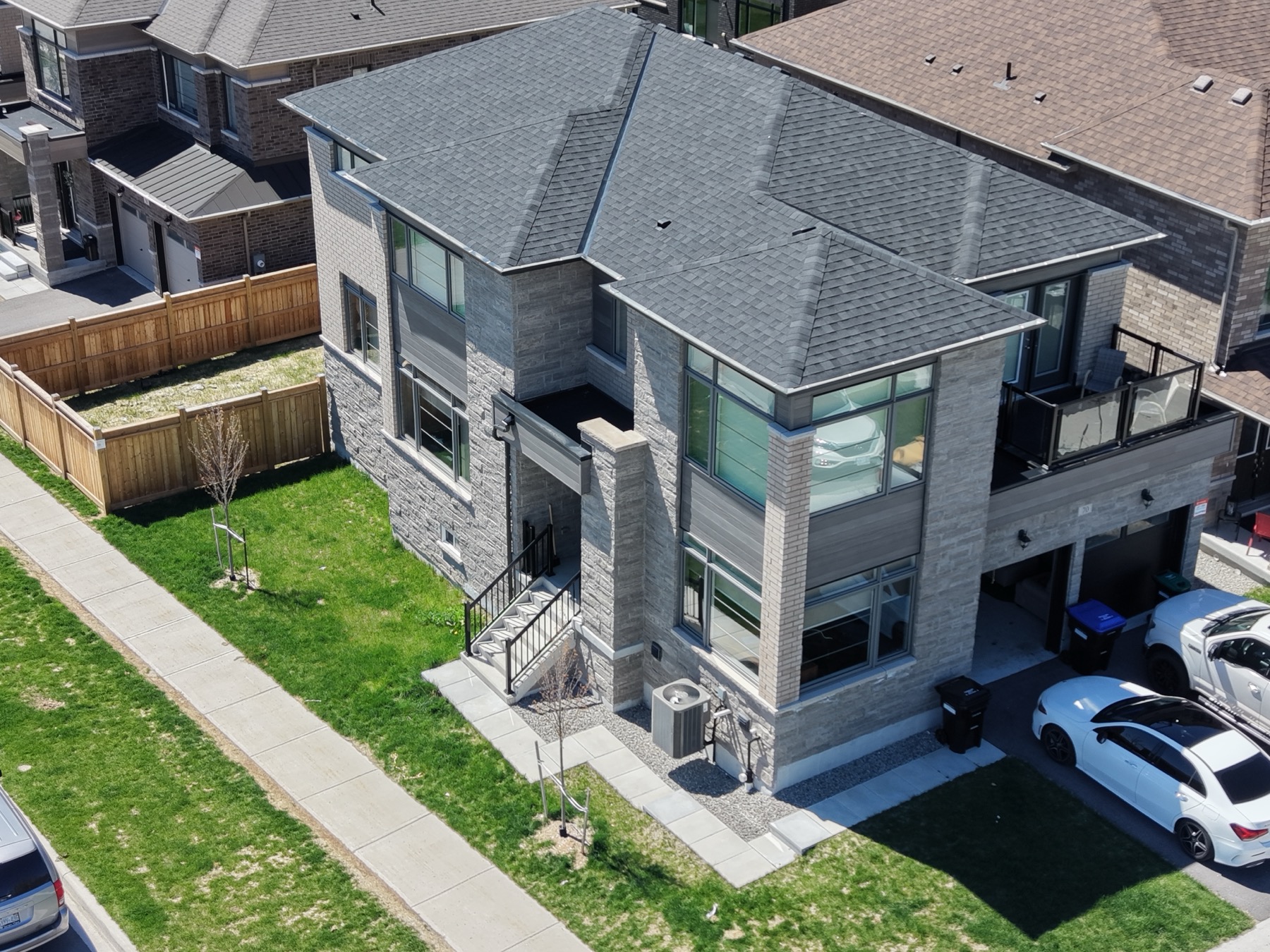
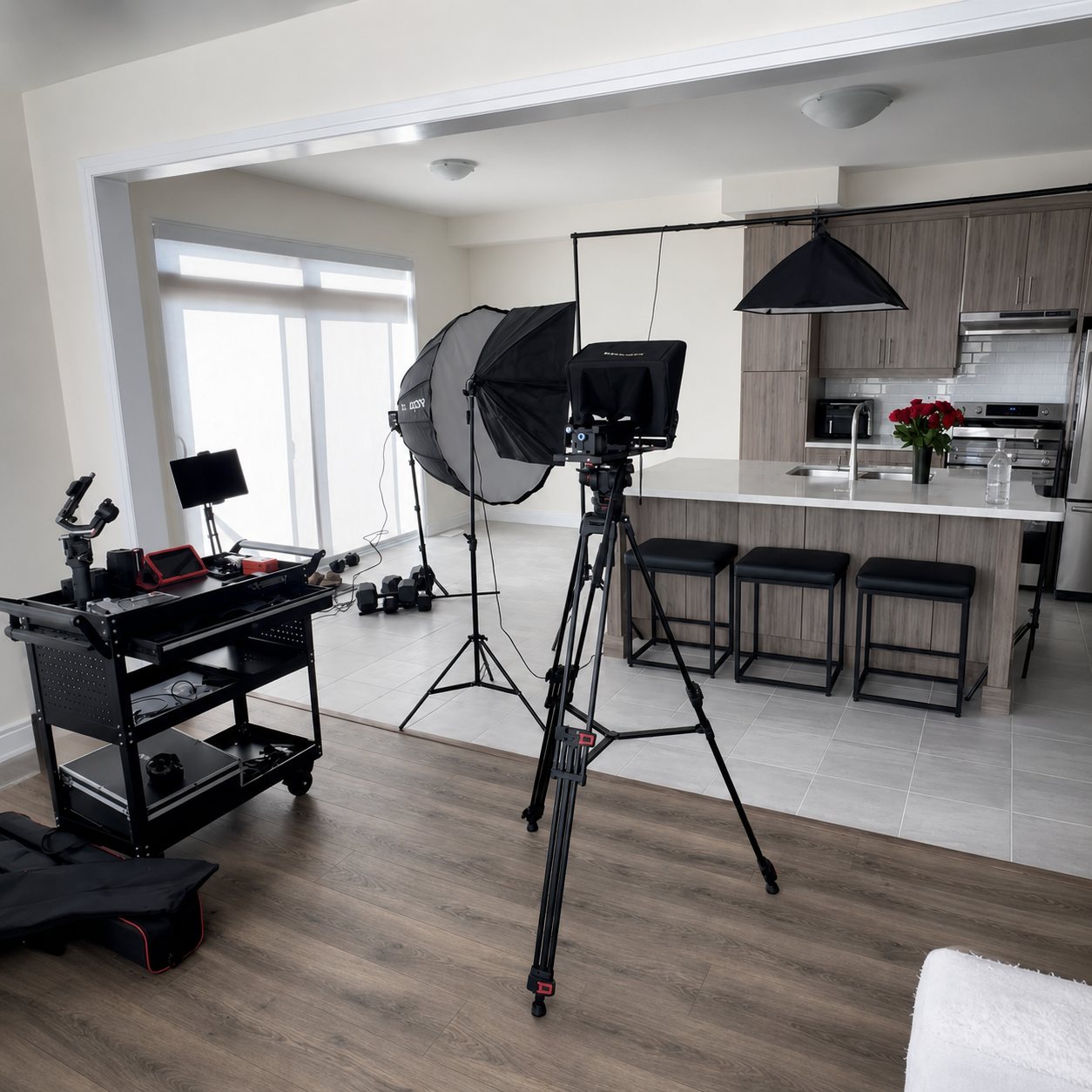
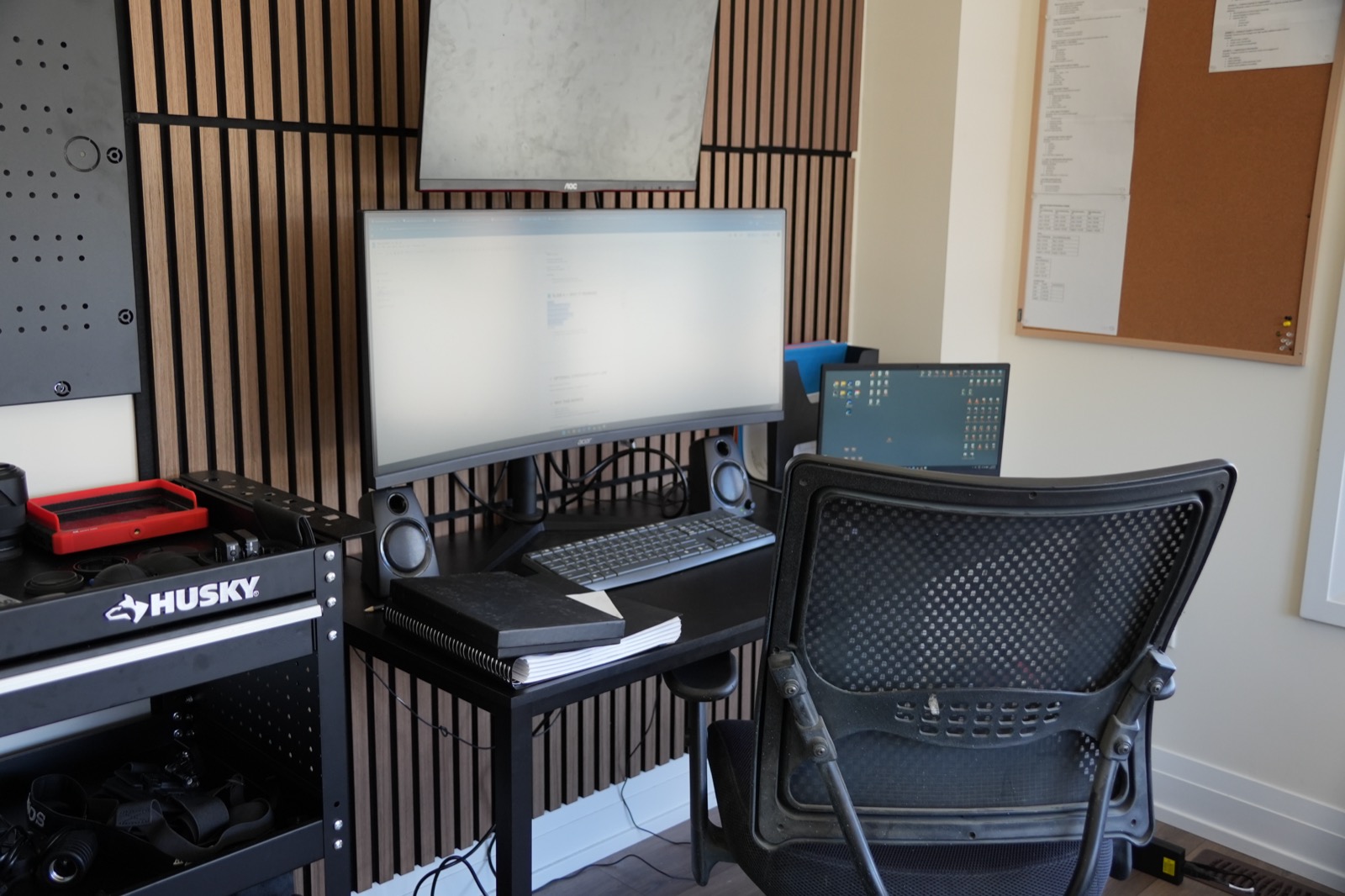
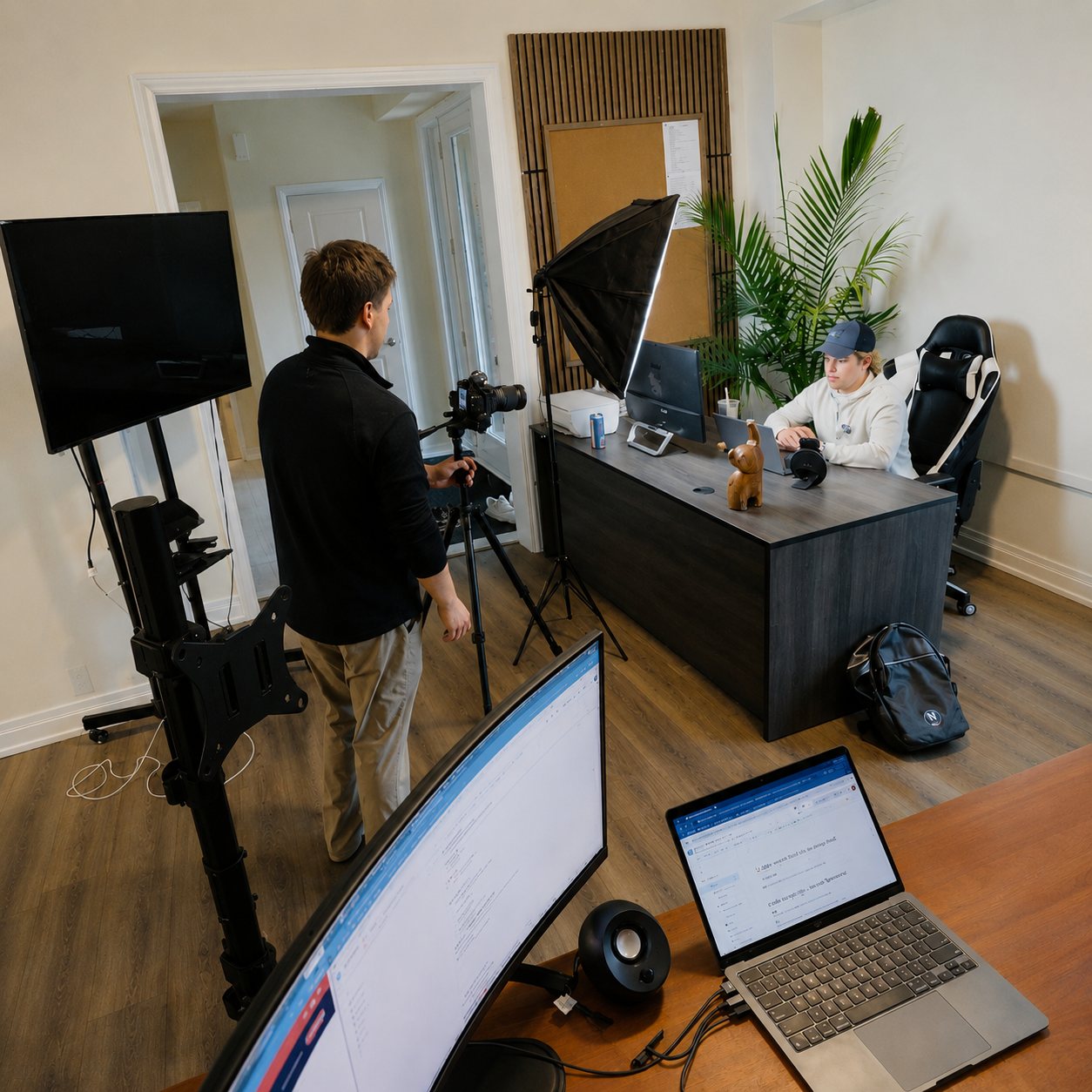
The office and the studio are in Minesing, just west of Barrie. Come and sit in it, see what is actually on the screens, and ask the person who would be on your account what they would do first.
 The office
5.0 ★ on Google
5.0Google rating“Working with NewLife Marketing has been a great experience. Their team has travelled to our locations to film professional content and turn it into Meta ad campaigns focused on generating real leads for our stores. The campaigns have been profitable, the communication has been consistent, and they’re always looking for ways to improve performance and bring us more opportunities. It’s been great having a marketing team that’s willing to show up, understand our business, and put in the work. We’d highly recommend NewLife Marketing to any business looking to grow through digital advertising.”
Last step
You will talk to Cruz or Keegan, not a sales rep. If the honest answer is that you do not need us yet, that is what you will hear, and you keep the plan either way.