
Step 1 of 5
Scope
Before a date is booked: what the footage has to do, where it will be used, and how long it has to stay usable. A shoot with no answer to that produces something nice and unusable.
 5.0 Google rating
Video Production In St. Catharines
Video Production St Catharines is watched by a careful buyer who wants to understand something, and a cinematic film is a worse answer to that than a clear one.
Trusted by Ontario businesses












On this page
The whole scope, in the order it is explained below.
What this audience wants
A longer decision rewards a different kind of film.
Niagara Region Community Dashboard, 2021 Census
Statistics Canada, 2021 Census of Population
Statistics Canada, 2021 Census of Population
A buyer taking two weeks over a decision is not looking for a reason to be excited. They are looking for reasons not to worry: what happens, who turns up, how long it takes, what it costs and what could go wrong.
A film that answers those five questions is unglamorous to commission and it is the one that gets watched to the end. It also gets forwarded to a family member, which in this market is frequently part of the decision.
What performs badly is the fast-cut brand film with music over it. It reads as advertising to an audience that has seen a great deal of advertising, and it answers none of the five questions.
So the brief that works is a list of worries rather than a creative concept, and the worries are already written down in whatever your team says on the phone every week.
What to film
Each answers something a careful buyer is actually asking.
At normal speed, with the waiting left in. Cutting out every pause is what turns an explanation into an advertisement, and this audience notices.
Not the owner in a suit — the person who will actually be in the room. It is the single most reassuring thing you can put on a page.
Each one in ninety seconds. The most reused material a shoot produces, because it goes into email replies and onto pages for years.
Almost nobody films this and it is the question behind the other four. Answering it plainly is the strongest trust signal available.
Four pieces, one day, and none of them needs a concept. The planning is a list of questions rather than a storyboard.
How it should be made
Three production decisions that matter more than the camera.
Clean audio before anything else. A careful viewer will forgive an ordinary picture and will not persevere through speech they have to strain to follow, and this is the single most common failure in self-made video.
Captions on everything, properly checked rather than auto-generated and left. A meaningful share of viewing happens with the sound off, and in this market the captions are frequently how the film is actually consumed.
And a pace that lets a sentence finish. Rapid cutting is a stylistic habit from somewhere else; here it reads as something being hidden rather than as energy.
None of those three is expensive. They are decisions rather than budget lines, and they are what separates a film that gets watched from one that gets closed at eight seconds.
Where it earns
The commissioning reason is rarely the most valuable use.
The page somebody lands on, where ninety seconds of the actual process does more than three paragraphs. In a longer decision that page gets revisited, and the film is what makes a second visit worth something.
The reply to an enquiry, which is the use nobody budgets for and frequently the strongest. Sending a short film of the exact thing somebody asked about closes more than a written answer, and it costs nothing once the day is paid for.
And the thing that gets forwarded. A careful buyer frequently consults somebody else before deciding, and a film is far more likely to be passed on than a web page.
The same material carries paid campaigns, where real footage lasts longer than stock because the audience has not seen it anywhere else.
Interiors
The difference between footage that looks considered and footage that looks like a recording.
An ordinary interior is lit from above, which puts shadows exactly where a face does not want them. A single light at the side, at head height, fixes most of that for very little money.
The second decision is the window. Filming somebody against one makes them a silhouette; turning them to face it is usually the best light available and it is free.
Overhead fluorescent light flickers in a way the eye does not see and the camera sometimes does. Switching off the lights in the immediate area and lighting deliberately is frequently better than adding to what is there.
None of this requires a van full of equipment. Two portable lights and ten minutes of arrangement covers almost every interior a small business will ever film in.
Sending it to somebody
The placement that converts best and is handled wrongly almost every time.
An embedded film does not play in most mail software, and attaching one guarantees the message is rejected or ignored. What works is a still image with a play symbol on it, linked to the page where the film sits.
Say what it is in the line above. “Ninety seconds showing how the install actually runs” sets an expectation and is clicked considerably more than a bare image.
Send it to the page rather than to a platform, so that whoever clicks arrives somewhere you control with the next step on the same screen.
And use it in replies rather than in campaigns. A film sent to one person who asked a specific question is the highest-converting use of video available to a small business, and it costs nothing after the first one is made.
Our scope
Stated plainly, so a wasted meeting is avoided.
We shoot and edit for Ontario businesses and run the paid media the footage feeds, with over $70,000 a month in advertising spend under management and the owner running that media personally. Our published work includes two days on an active City of Barrie site with around forty trades and engineers, and seven finished videos.
A video production st catharines day with us starts from a list of the worries your telephone already produces rather than from a creative concept: the process at normal speed, the person who will turn up, the weekly questions, and what happens when something goes wrong. Captions are a deliverable rather than an afterthought.
We are in Minesing, a couple of hours away, so travel appears as its own visible line rather than folded into a fee. Where a business needs somebody who can arrive the same week, repeatedly, a closer supplier is the better buy and we will say so.
The shoot, which is days you can count, from the edit, which is where most of the hours actually go, from versioning, which is what decides whether the material gets used anywhere. Ask how many finished pieces, in what lengths and shapes, how many rounds of changes are included, who owns the raw footage afterwards, and what it costs to have something recut in a year.
Next step
Your telephone already has the list. Send it and we will say what one day would cover.
NewLife Marketing · 70 Bearberry Rd, Minesing, ON L9X 2E1 · 705-302-1097 · Based in Minesing, filming for businesses across southern Ontario.
How it works
Five steps, and the first one is a question rather than a booking.
Step 1 of 5
Before a date is booked: what the footage has to do, where it will be used, and how long it has to stay usable. A shoot with no answer to that produces something nice and unusable.
Step 2 of 5
Every shot written down before anybody arrives, in the order it will be filmed, with what has to be in frame. This is what turns one day on site into a month of material rather than four clips.
Step 3 of 5
Pre-light, principal photography, b-roll, a stills pass, and wrap. Our crew and our own kit, so the day does not stop because something was rented and did not arrive.
Step 4 of 5
Then motion graphics and versioning: the same material cut for paid ads, organic social, the website, email and a sales deck, because each of those wants a different length.
Step 5 of 5
Footage that sits in a folder cost the same as footage that works. The versioning is what decides which one you bought.
Proof first
Every number published on this site came from paid media or production work, with the client named on it.
A storm drainage build with around forty trades working around us.
Read the case study →One of fourteen published client partnerships.
See the partnership →Named clients, real figures, and what each one was spending.
See all case studies →Neither of those was filmed in St Catharines, and we are not going to imply otherwise. They are published, named and checkable, which is more than a showreel offers. Ask any crew you shortlist what the footage was used for afterwards, and whether anybody counted it.
The person on your account
Creative Director — NewLife Marketing
Writes the scripts and the plan before anyone picks up a camera, directs your shoot on the day, and project-manages the work across the team so what was promised is what ships.
Straight answers
Straight answers before you ever book a call.
The dull one. A buyer taking two weeks over a decision is looking for reasons not to worry: what happens, who turns up, how long it takes, what it costs and what could go wrong. A film answering those five gets watched to the end and forwarded; a fast-cut brand film answers none of them.
Clean audio, checked captions, and a pace that lets a sentence finish. A careful viewer forgives an ordinary picture and will not strain to follow speech. A meaningful share of viewing happens with the sound off, which makes captions part of the film rather than an accessory.
On the page somebody lands on, into the reply to a specific enquiry, and somewhere it can be forwarded. A careful buyer frequently consults somebody else before deciding, and a film travels further than a web page does.
Yes, and the one thing to buy first is a clip microphone. A phone handles pictures well enough for an answer to a question; it does not record speech cleanly in a working room, and for this audience audio is the limiting factor rather than the camera.
Why NewLife
Everything we do runs on one system we call The Film-to-Funnel System: in-house film → paid ads → landing page → CRM follow-up → optimize. Here is how that stacks up against doing it yourself or hiring a typical agency.
| In-house | Typical agency | NewLife | |
|---|---|---|---|
| Creative | You film it on a phone | Outsourced or stock footage | Our in-house cinema crew, filmed on-site |
| Who does the work | You, between running the business | A junior account manager | Cruz and the senior team, directly |
| The system | Disconnected tools that don't talk | Ads, then hands-off | Film → ads → landing page → CRM, one connected system |
| Your accounts & data | Yours, but no time to run them | Often held hostage | Always yours - you keep everything |
| Follow-up | Manual, when you remember | Rarely their problem | Automated speed-to-lead in the CRM |
| Local knowledge | You know your market | A national, generic playbook | Real local research for every market you target |
Where to go next
Come say hi
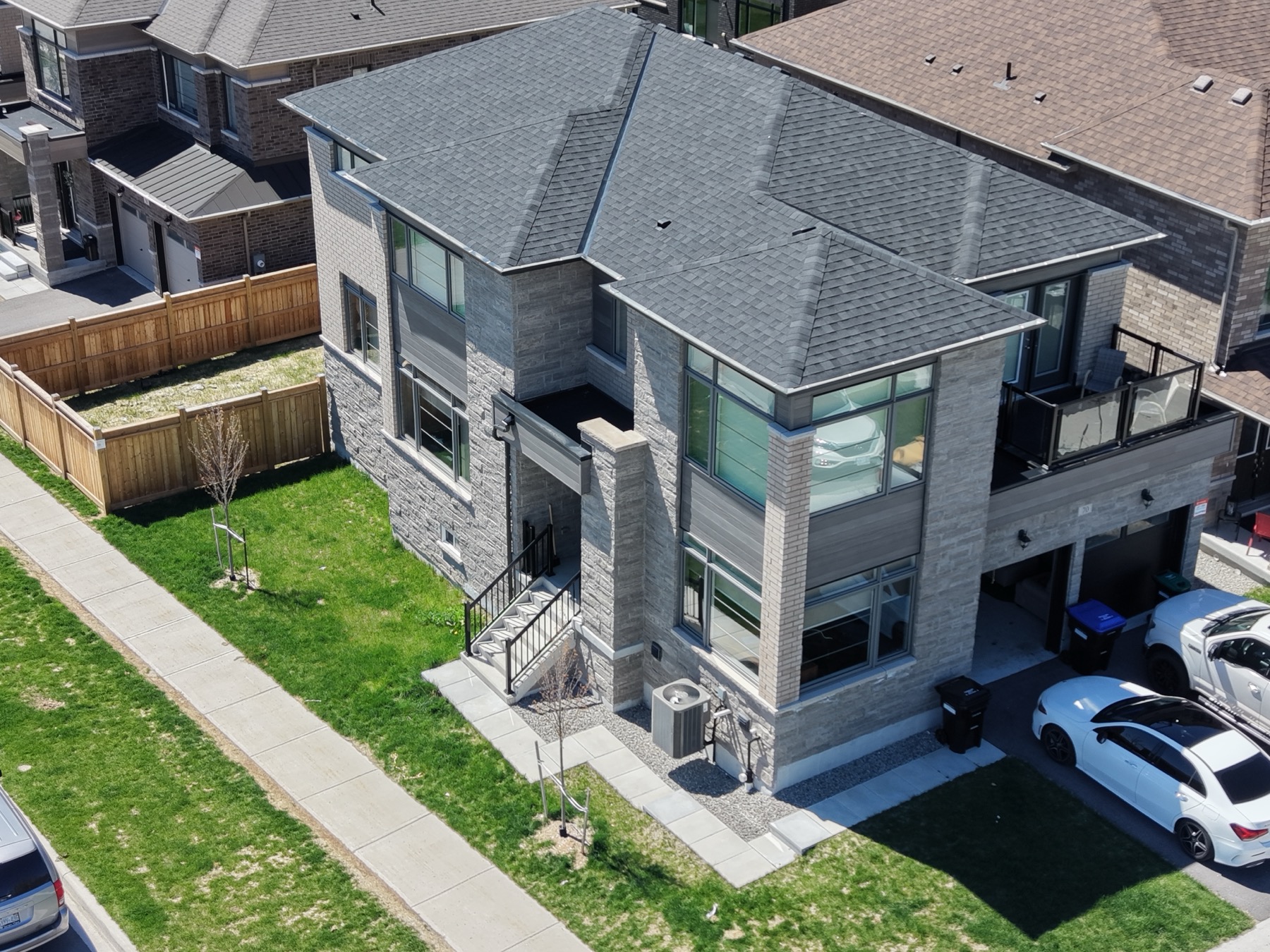
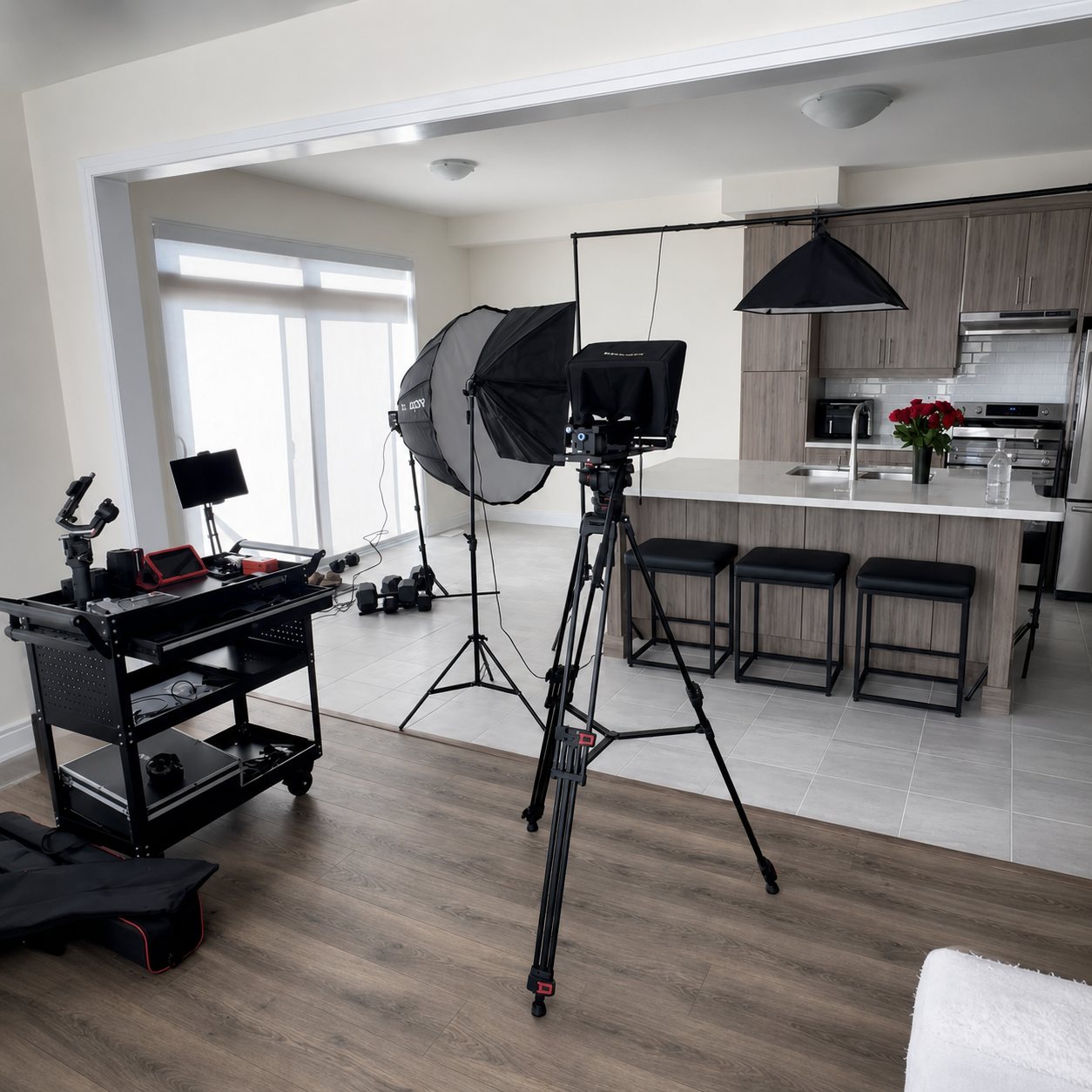
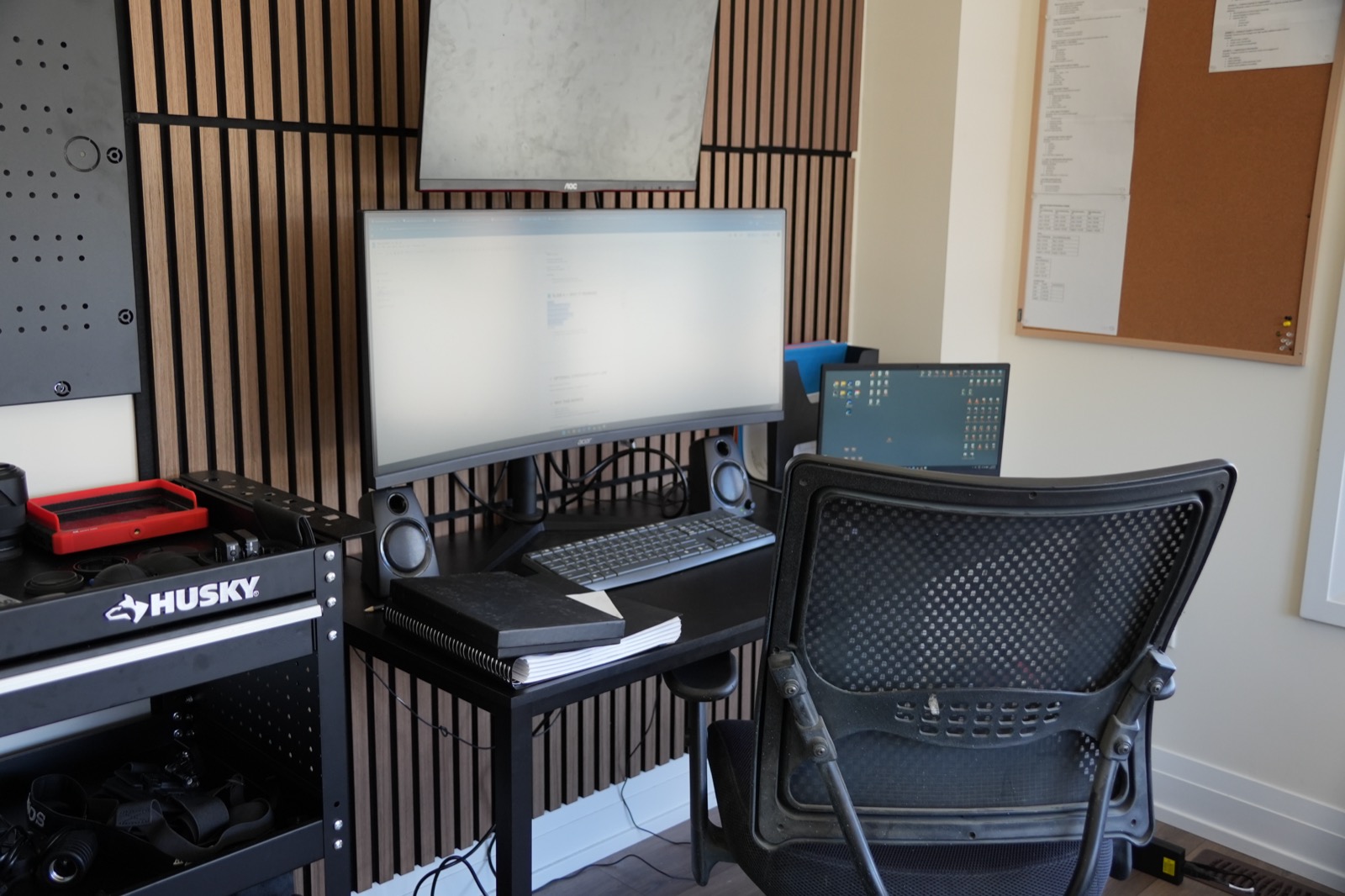
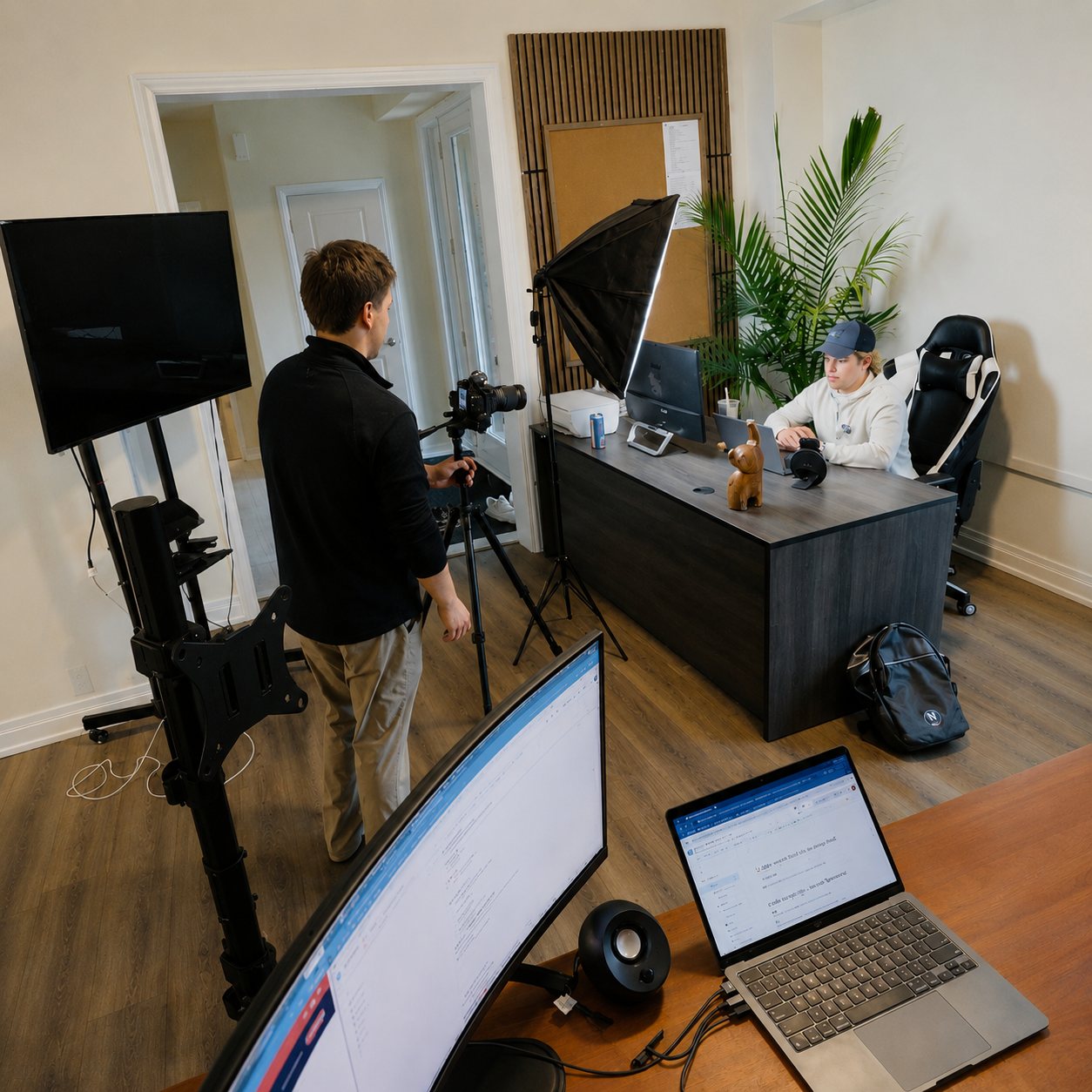
The office and the studio are in Minesing, just west of Barrie. Come and sit in it, see what is actually on the screens, and ask the person who would be on your account what they would do first.
 The office
5.0 ★ on Google
5.0Google rating“Working with NewLife Marketing has been a great experience. Their team has travelled to our locations to film professional content and turn it into Meta ad campaigns focused on generating real leads for our stores. The campaigns have been profitable, the communication has been consistent, and they’re always looking for ways to improve performance and bring us more opportunities. It’s been great having a marketing team that’s willing to show up, understand our business, and put in the work. We’d highly recommend NewLife Marketing to any business looking to grow through digital advertising.”
Last step
You will talk to Cruz or Keegan, not a sales rep. If the honest answer is that you do not need us yet, that is what you will hear, and you keep the plan either way.