
Step 1 of 5
Audit
Before anything is changed, we read what the account has actually been paying for. On a neglected account this one report explains most of the waste, and it is free to read.
 5.0 Google rating
Google Ads Management In Thunder Bay
Thunder Bay Pay Per Click PPC accounts draw a circle around a city that is not shaped like a circle, and pay for the half of it nobody drives to.
Trusted by Ontario businesses












On this page
The whole scope, in the order it is explained below.
The geography
Two downtowns, one municipal boundary, and a default setting that assumes a single centre.
City of Thunder Bay
Statistics Canada, 2021 Census of Population
Ontario Ministry of Transportation, Highway 17 distances
Most campaign geography is configured as a circle around a point, which works in a city with one centre and fails in one with two. Drawn tightly around either, the circle excludes a meaningful share of the city’s own population.
Drawn loosely enough to cover both, it also reaches a great deal of land with nobody on it, which is cheaper than it would be elsewhere but not free, and it blurs the reporting so that nobody can tell which half of the city is producing anything.
The better configuration is not a radius at all. It is the city named explicitly, with the reporting split so you can see what each centre produced, and travel costs reflected in what you are willing to pay for an enquiry from each.
That takes an afternoon to set up and it is the single highest-return change available in most accounts here.
The reporting half of that change is the part worth insisting on, because it is what makes every later decision possible. Without a split, a campaign that performs well in one half of the city and badly in the other reports as mediocre overall, and the usual response is to adjust something that was never the problem. With a split, the same data says plainly which half to put more behind and which to leave alone, and that single distinction is frequently worth more than any change to the creative or the bidding.
It also tells you something about the business rather than the account. Most firms here have an intuition about which side of the city their customers come from, and the intuition is frequently a few years out of date. The report settles it with evidence, costs nothing beyond the configuration, and the answer tends to change what gets built next rather than only what gets bid.
What is easy here
The isolation that makes other things hard makes one thing simple.
With the nearest larger city 700 km away, a generous boundary reaches highway and bush rather than a costlier adjacent market with its own suppliers. The expensive mistake available in southern Ontario is not available here.
A defined population with no commuter overlap means the cost of reaching a meaningful share of it more than once is a number rather than a guess.
The local auction is thin, so click prices are set by relevance rather than by somebody else’s budget. What you pay is mostly a function of how good your page and your account are.
The trade-off is saturation. An audience you can cover completely you can exhaust completely, and cost per result climbing after three weeks with nothing changed in the account is the audience having seen it rather than the campaign failing.
Who counts as local
One setting, two options, and the default is the wrong one for most businesses.
A location target can mean people who are in the area, or people who are in it or have shown interest in it. The second is the default, and it includes somebody three provinces away reading about the place.
For a business selling to residents that is pure waste, invisible in the headline figures and perfectly visible in the location report once anybody opens it.
For a business selling to visitors it is exactly right, because the people planning a trip are the customers and they are not here yet.
So it is a commercial decision rather than a technical one, and it should be made deliberately on the first day. Most accounts have made it by accident.
Showing it again
And the one most likely to be shown the same advertisement forty times.
Somebody who visited a page and left is cheap to reach again and far likelier to act than a stranger. For anything with a considered purchase, this is usually the best-performing spend in the account.
What ruins it is frequency. The same advertisement shown to the same small audience day after day stops working and starts irritating, and in a small market the audience is small enough for that to happen within a fortnight.
So cap how often somebody sees it, and set an end: thirty days after the visit is plenty for most purchases, and anything beyond ninety is following people who have decided.
Exclude the ones who already bought. Advertising to existing customers for a purchase they have made is the most visible way to look like nobody is watching the account.
The exclusion needs a list of who bought, which means the purchase has to be recorded somewhere the advertising can read. For most small businesses that is a single page shown after a booking or a form, and it takes ten minutes to set up on the day the campaign starts and is effectively impossible to backfill afterwards.
Where the sale happens by telephone and nothing online marks it, the honest answer is a shorter window rather than a clever one. Thirty days following somebody who has already decided wastes a little; ninety days wastes a great deal and irritates a customer you now have to keep.
The other half of this is what the repeat advertisement says. Showing the same message again to somebody who already read it and did not act is asking the same question twice and expecting a different answer. A second message that addresses the likeliest reason they hesitated — price, timing, whether you cover their area — is a different proposition and performs like one.
That requires knowing why people hesitate, which is not in any report. It is in what the person answering the telephone hears several times a week, and writing those three objections down is an afternoon that improves every advertisement in the account.
A last point about the audience itself, because it is routinely misunderstood. The list of people who visited is not a mailing list and it cannot be exported, read or contacted directly; it is a bucket the platform uses to decide who to show something to. That matters for two reasons: nothing about it is portable to another supplier, and nothing in it identifies anybody to you.
The practical consequence is that the list is slow to rebuild and easy to lose. It accumulates over months, it lives inside whichever account holds it, and starting again elsewhere means starting that accumulation from zero while still paying for the clicks that fill it.
Which is another reason the account should sit under the business rather than a supplier, and another reason to set the tracking up properly in the first week rather than the first quarter. Both are administrative decisions with no cost attached at the start and a real one later.
There is also a minimum size below which none of this is available at all. The platform will not show advertisements to a group smaller than a threshold, for reasons of privacy, so a business with very few visitors a month simply cannot use the feature until the traffic is there. That is worth knowing before anybody builds a campaign around it.
What else drifts
Campaign types that choose their own geography interact badly with a city shaped like this one.
Left to select their own placements and locations inside whatever boundary they are given, automated campaign types will find the cheapest impressions available. In a city with two centres and a great deal of empty land around it, cheap impressions are abundant and nearly worthless.
Used with a boundary that is enforced rather than suggested, clean conversion data and a maintained exclusion list, they work well. Used as a substitute for those three they produce a confident report describing activity nobody chose.
The question to put to any supplier is therefore not whether they use them, but what constrains them: which conversions are being optimised toward, what geography is enforced, what is excluded, and how often any of it is reviewed.
The habit that catches the drift is simple: read the search terms report and the geographic report side by side each month and ask of every line whether you would have chosen to pay for it. Anything failing that test becomes a negative keyword or an excluded location that week, and the account gets tighter every month instead of looser.
It is worth saying what this is not. None of it is an argument against automation, which genuinely outperforms what manual bidding achieved in almost every account we have moved across. It is an argument for giving it the three things it needs to work: a target worth optimising toward, a boundary it is not allowed to leave, and a list of what it may never buy. Supplied with those, it is the best operator most small accounts have ever had. Supplied with none of them, it is an expensive and very confident guess.
Before spending anything
Two of them usually move more than a month of advertising.
The Business Profile decides a large share of local results and is almost always wrong somewhere: categories chosen once, a service area that does not match where you go, lapsed hours, photographs from a previous decade.
The landing page is the second. Advertising magnifies whatever the page already does, so paid traffic over a page that loads slowly or buries the number is paying to lose people faster. Test it on a phone away from the office and time how long before anything is readable.
Both are an afternoon’s work and both are finished before the first click is bought. An account launched over a broken page produces a cost per enquiry that looks like a market problem and is not.
And in a city with two centres, check the address and hours are consistent everywhere they appear. A contradiction between the profile and the site is expensive where the map produces most of the phone calls.
The third free thing is knowing what a customer is worth, without which no cost per enquiry can be judged and the budget conversation has no arithmetic in it at all. Those three take an afternoon between them and they decide what every later dollar is worth; an account launched before they are settled is not really an experiment, because nothing it reports can be interpreted.
Our scope
Narrow, and shaped to a self-contained market.
We build and run Google and Meta accounts against cost per enquiry, write the pages the ads point at, and set up the tracking that connects an enquiry to its source. We manage over $70,000 a month in advertising spend for Ontario businesses and the owner runs the paid media personally.
The geography, named rather than drawn, with the reporting split between the two halves of the city, and retargeting running underneath. Most thunder bay pay per click ppc accounts we are shown have a radius somebody set once and no way to tell which half of the city produced the enquiries.
We do not sell percentage-of-spend management. We are in Minesing, a long way south, which changes nothing for running an account and matters for filming, where travel appears as its own visible line rather than folded into a fee.
The media budget, which goes to Google, and the management fee, which goes to the agency. A single number a month tells you neither, and an agency taking a percentage of spend is paid more for spending more. Ask for both figures in writing, ask what happens to the account if you leave, and ask whose name it is in.
Next step
Most accounts here cannot answer that. Send us access and we will split the reporting so you can.
NewLife Marketing · 70 Bearberry Rd, Minesing, ON L9X 2E1 · 705-302-1097 · Based in Minesing, running paid media across Ontario including the northwest.
How it works
Five steps, and the first one costs nothing but reading.
Step 1 of 5
Before anything is changed, we read what the account has actually been paying for. On a neglected account this one report explains most of the waste, and it is free to read.
Step 2 of 5
Campaigns split so that a budget decision is possible: by what you sell, by what it is worth, and by where it is worth it. An account that cannot be turned down in one place cannot be managed.
Step 3 of 5
A conversion is a booked job or a sale, not a click on a phone number. Tracking is verified against what the business actually received before a single bid is changed.
Step 4 of 5
Starting on the searches with the clearest intent and the tightest match, then widening deliberately once there is evidence rather than hope.
Step 5 of 5
Every search term the account paid for, read weekly and sorted: promote it, block it, or leave it. This is most of what separates an account that improves from one that drifts.
Proof first
Every number on this site came from paid media or production work, with the client named. There is no traffic graph here and you should be wary of them elsewhere.
A Portuguese grill that came to us with almost no online presence.
Read the case study →Named clients, real figures, and what each one was spending.
See all case studies →That account was not run in Thunder Bay, and we are not going to imply otherwise. It is published, named and checkable, which is more than a logo wall offers. Ask any agency you shortlist for the cost per booked job before and after, and ask who counted it.
The person on your account
Founder & CEO · Head of Operations & Paid Media — NewLife Marketing
Runs your strategy call, builds and manages your paid media accounts personally, and owns the monthly numbers you will be shown. On your calls you talk to Cruz or Keegan: never a rep.
Straight answers
Straight answers before you ever book a call.
Not as a radius. Fort William and Port Arthur became one city in 1970 and still function as two centres, so a circle drawn from either excludes a meaningful share of the other. Name the city explicitly, split the reporting so you can see what each half produced, and reflect travel in what you will pay per enquiry from each.
Far less than in southern Ontario. With the nearest larger city 700 km away, a generous boundary reaches highway and bush rather than a costlier adjacent market with its own suppliers. The real risk here is saturation rather than leakage.
Because the audience has seen it. A market you can cover completely you can exhaust completely, and cost per result climbing with nothing changed in the account is saturation rather than failure. Bursts with a reason behind them and new material planned in advance work better than a permanent drip.
Yes, with a boundary. Left to choose their own placements and locations they will find the cheapest impressions, and in a city with two centres and a lot of empty land around it those are abundant and nearly worthless. Ask what conversions they optimise toward, what geography is enforced and what is excluded.
Why NewLife
Everything we do runs on one system we call The Film-to-Funnel System: in-house film → paid ads → landing page → CRM follow-up → optimize. Here is how that stacks up against doing it yourself or hiring a typical agency.
| In-house | Typical agency | NewLife | |
|---|---|---|---|
| Creative | You film it on a phone | Outsourced or stock footage | Our in-house cinema crew, filmed on-site |
| Who does the work | You, between running the business | A junior account manager | Cruz and the senior team, directly |
| The system | Disconnected tools that don't talk | Ads, then hands-off | Film → ads → landing page → CRM, one connected system |
| Your accounts & data | Yours, but no time to run them | Often held hostage | Always yours - you keep everything |
| Follow-up | Manual, when you remember | Rarely their problem | Automated speed-to-lead in the CRM |
| Local knowledge | You know your market | A national, generic playbook | Real local research for every market you target |
Where to go next
The province-wide page this one localises: the six campaign types, the five controls, and what an engagement includes.
Explore Google Ads →A social page cannot rank. What a site can do that a feed cannot.
See SEO in Thunder Bay →The published numbers, all from paid media and production, with the client named on every one.
View case studies →Come say hi
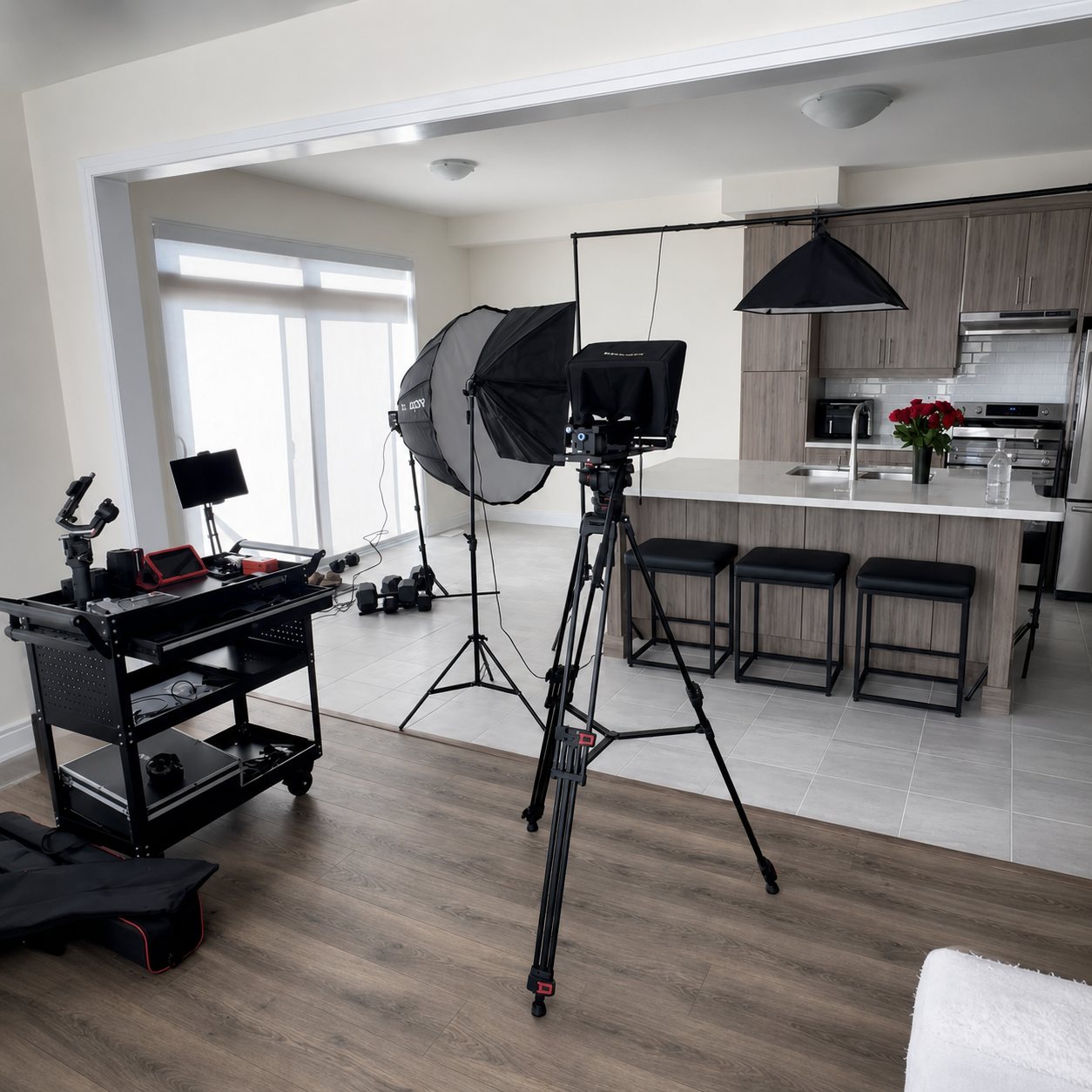
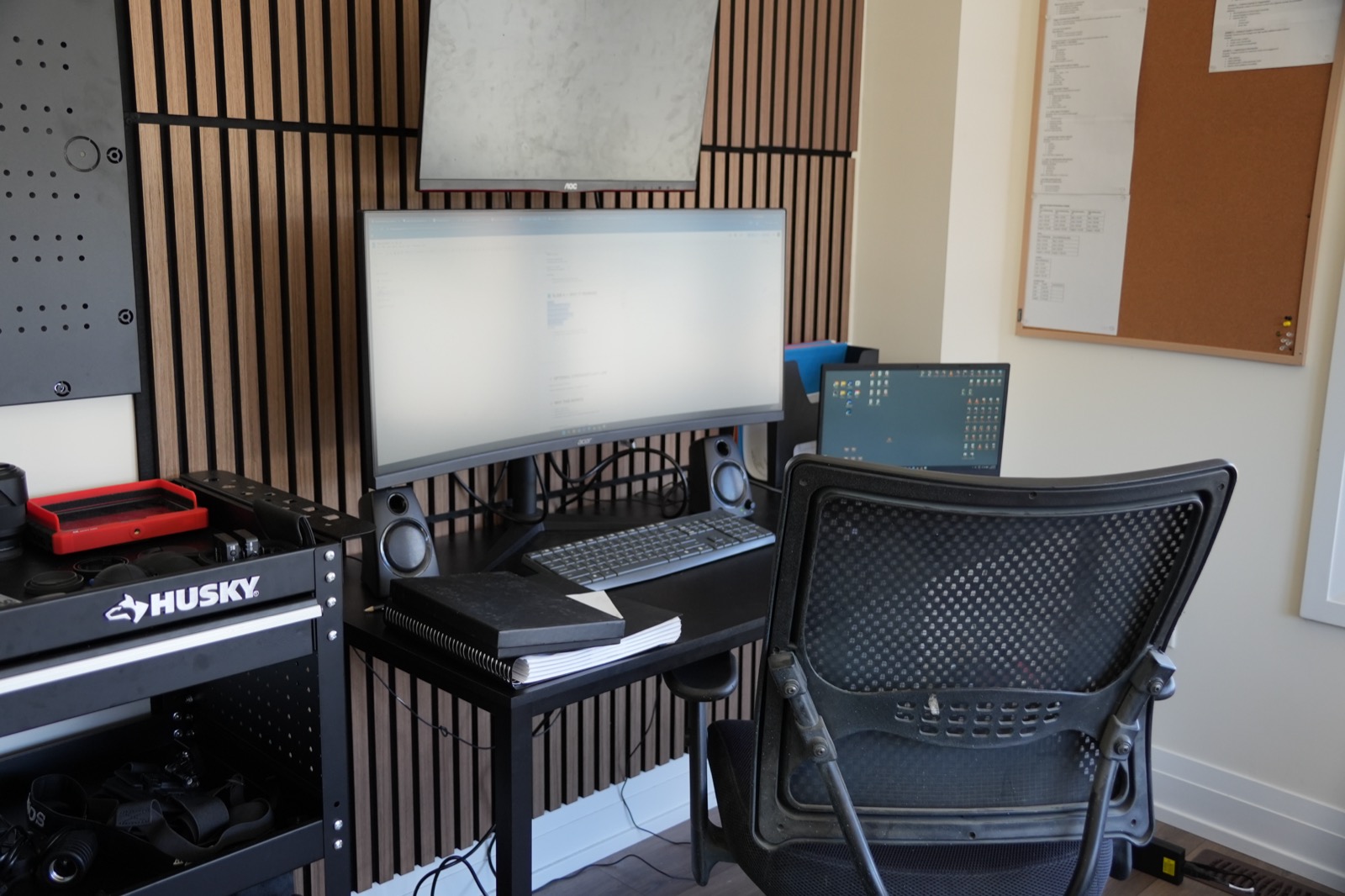
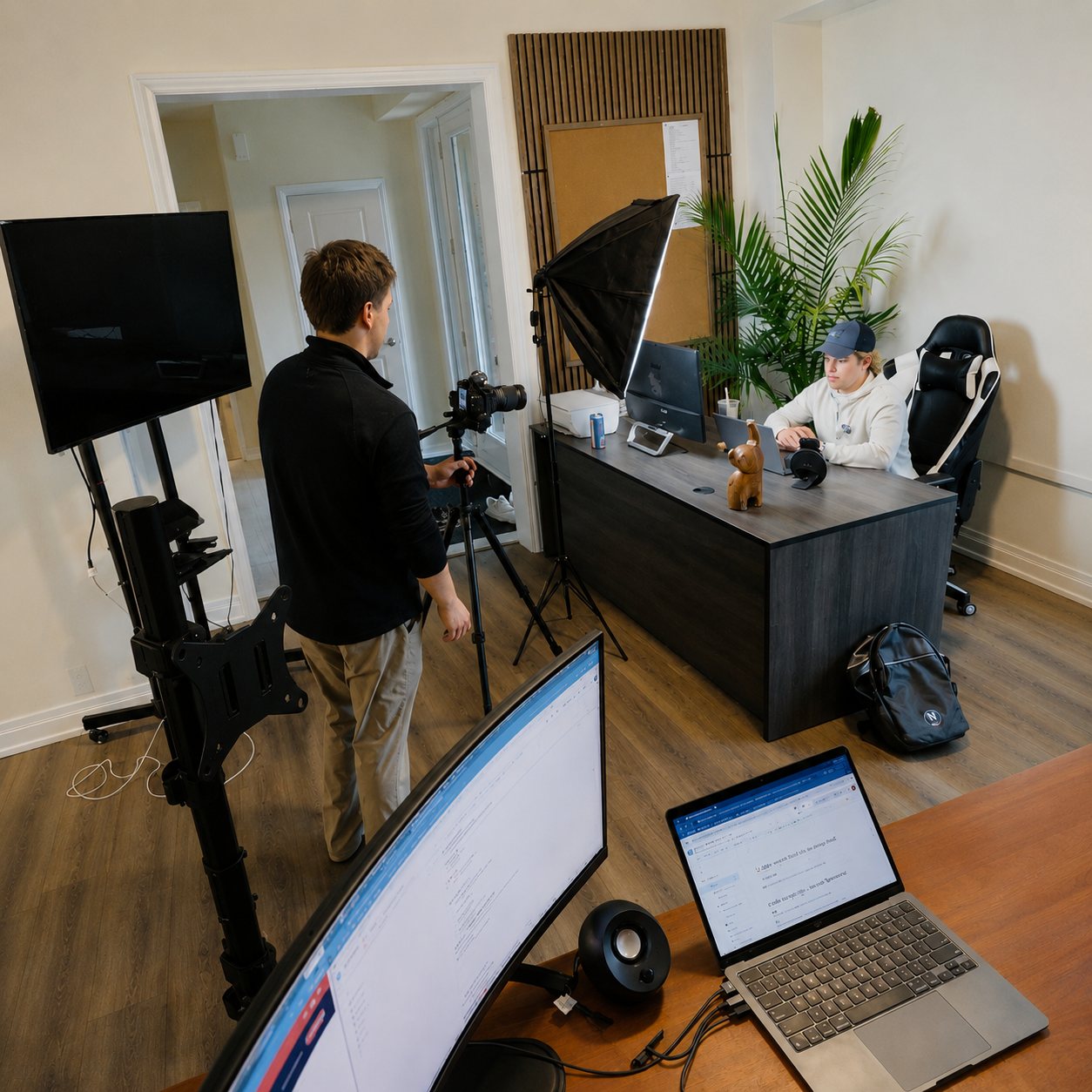
The office and the studio are in Minesing, just west of Barrie. Come and sit in it, see what is actually on the screens, and ask the person who would be on your account what they would do first.

 The office
5.0 ★ on Google
5.0Google rating“Working with NewLife Marketing has been a great experience. Their team has travelled to our locations to film professional content and turn it into Meta ad campaigns focused on generating real leads for our stores. The campaigns have been profitable, the communication has been consistent, and they’re always looking for ways to improve performance and bring us more opportunities. It’s been great having a marketing team that’s willing to show up, understand our business, and put in the work. We’d highly recommend NewLife Marketing to any business looking to grow through digital advertising.”
Last step
You will talk to Cruz or Keegan, not a sales rep. If the honest answer is that you do not need us yet, that is what you will hear, and you keep the plan either way.