
Step 1 of 5
Hours
Not features. How many hours a week does the current way cost, and who spends them. A project that cannot answer that is a project with no way of knowing whether it worked.
 5.0 Google rating
Custom Software Development In Ottawa
Software Developer Ottawa projects are priced on the new thing and spent on the old data, which is the line nobody puts in a quote and nobody can avoid.
Trusted by Ontario businesses












On this page
The whole scope, in the order it is explained below.
Why good ones do not reply
A vague brief in a busy market is not evaluated; it is declined quietly.
Invest Ottawa, 2025
Invest Ottawa, 2025
An enquiry that says we need a system built, without a boundary, a budget range or a decision date, costs a developer an hour to scope and has maybe a one-in-five chance of becoming work. In a market with this much demand, that hour goes elsewhere.
The enquiries that get answered are the ones that make the first hour cheap: here is the thing that is slow, here is roughly what the manual version costs us, here is the range we have in mind, here is who decides and by when.
None of that requires knowing what to build. It requires knowing what the problem costs, which is information only you have and which most briefs leave out entirely.
That single change — stating the cost of the problem rather than the shape of the solution — reliably improves both the number of replies and the quality of what comes back.
The half nobody quotes
The build is estimated carefully. The migration is assumed to be an afternoon.
Whatever the new system replaces contains years of records entered by different people under different conventions. Addresses in four formats, a field that meant one thing until 2022, duplicates nobody ever merged, and a column somebody repurposed for notes.
Moving that is not a technical task, it is a decision task, and the decisions belong to you: which records come across, which get archived, what happens to the ones that are plainly wrong, and who rules on the ambiguous ones.
Budget it as its own line with its own hours. Projects that go badly over are far more often undone by this than by anything to do with the software itself, and it is the part a demo never touches.
The useful shortcut is to migrate less. Bring across what is live and what the last two years need, and keep the old system readable for the rest. That decision alone routinely halves the work.
What finished means
Written before the build, in your words, describing outcomes rather than features.
Not a feature list. A short set of sentences describing things somebody will do with it: a new job is entered in under a minute, last month’s figures come out matching the accounts, a person who has never seen it can complete the common task without being shown.
Each of those is checkable by you rather than by the developer, which is the whole point. A feature list is checked by the person who built it, and it is always complete.
Write them before work starts and they double as the scope. Anything not serving one of them is a change request rather than an omission, and that distinction is where most project disputes actually live.
Who runs the checks matters as much. Somebody who does the job daily, on real data, for a week, before the old process is switched off — and with the authority to say it is not ready.
Where the value usually is
The highest-return project in most businesses is not new software.
The quote lives in one system, the job in another, the invoice in a third, and somebody retypes the same five fields three times. Nothing is broken and everything takes longer than it should.
Joining those is usually days rather than months, costs far less than any of the systems it connects, and removes the step most likely to introduce an error. It is also unglamorous, which is why it rarely gets proposed.
The same applies at the front door. A form that emails somebody is trivial; a form that creates a record, notifies the right person and appears in the pipeline is an integration, and integrations are where fixed-price estimates break.
Pay for a short investigation before the estimate. A few hours spent opening the systems converts the largest unknown into a number, and it is the cheapest insurance available on a fixed price.
The contractor question
Three shapes of supplier, and the right one depends on what happens after delivery.
Ask each supplier which of the three they would choose if it were their money. The answer is informative whether or not they are the one you hire.
One practical note on the first option, because it is the most common arrangement and the one most often mishandled. A single developer working on your repository, with your hosting and your accounts, is a low-risk arrangement; the same developer working on their own infrastructure and handing you a finished thing is a high-risk one, and the difference costs nothing to arrange at the start. Settle it in the first email rather than in the last.
Our scope
A short answer to the question this page opened with.
We build the capture-to-record path and the joins between tools a business already pays for, and we buy the advertising that fills them — over $70,000 a month in Ontario spend, run by the owner personally. That combination is the reason we reply to small, specific briefs rather than to open ones.
A brief that gets a reply from any decent software developer ottawa names one process, says roughly what it costs in hours today, and asks for a price on the first phase only. Briefs that ask for a full system quote against a feature list get ignored by good suppliers and answered enthusiastically by the wrong ones.
What we decline: open-ended product development, bookkeeping, payroll, inventory systems, and replacing an industry package that already works. We are in Minesing rather than the city, and this work is done remotely.
The build, which is quoted once, from hosting and third-party services, which are monthly and are somebody else’s bill, from maintenance, which is the one nobody budgets and the one that never stops. Then ask what you end up holding: the code, in a repository you can reach; the accounts, in your name; the data, exportable in full. A build you cannot leave with is a subscription with a large deposit.
Next step
That number is the brief, and it is the one thing only you can supply. Tell us and we will say whether there is a project.
NewLife Marketing · 70 Bearberry Rd, Minesing, ON L9X 2E1 · 705-302-1097 · Based in Minesing, building for businesses across Ontario.
How it works
Five steps, and the first one is arithmetic rather than software.
Step 1 of 5
Not features. How many hours a week does the current way cost, and who spends them. A project that cannot answer that is a project with no way of knowing whether it worked.
Step 2 of 5
Most problems are solved by configuring something that exists. Building is for the part that is genuinely yours, and that part is almost always smaller than it looks at the start.
Step 3 of 5
Where this has to talk to what you already run. The joins are where the cost and the risk both live, and they are the part a feature list never mentions.
Step 4 of 5
Something in real use within weeks rather than a specification that takes a quarter to agree. Nobody knows what they want until they have used a version of it.
Step 5 of 5
The code, the accounts, the data, and a written answer to who maintains it. Without those, you have rented a system and the rent is open-ended.
Proof first
Every number published on this site came from paid media or production work, with the client named on it.
The ABM platform, the HQ, and the reporting - documented in full.
See what we built →The build behind one of our longest-running partnerships.
See the partnership →Named clients, real figures, and what each one was spending.
See all case studies →The most useful thing we can show is software we built for ourselves and still run, because it has had to survive its own maintenance. Ask anybody quoting for work in Ottawa what they have built that they still use, and who fixes it when it breaks.
The person on your account
Sales Director & Head of Client Communication — NewLife Marketing
Scopes your engagement before a dollar moves — what you actually need, what it should cost, and the goals the work will be judged against. Then he leads your day-to-day communication and checks those goals monthly.
Straight answers
Straight answers before you ever book a call.
Usually because the brief makes the first hour expensive. In a market with 63,400+ tech workers and no shortage of demand, a vague enquiry gets declined quietly rather than evaluated. State what the problem costs you, the range you have in mind, who decides and by when — and the replies change.
Buy, unless you can name something the tool genuinely cannot do that costs you real hours. Work out what the manual version costs first: hours a week times a wage is the budget, and without that number the project has no size and gets priced on impressions.
A single developer is cheapest, fastest and exposed to one person’s availability, which is fine for a small finishable project provided you hold the repository and the accounts. An agency is continuity, and worth paying for where a two-week outage would actually hurt. A configured platform is often the right answer and the one least likely to be proposed.
By paying for a short investigation first. Integration work is only predictable once somebody has looked at what each system will actually allow, and a few hours there converts the largest unknown into a number. It is the cheapest insurance available on a fixed-price build.
Why NewLife
Everything we do runs on one system we call The Film-to-Funnel System: in-house film → paid ads → landing page → CRM follow-up → optimize. Here is how that stacks up against doing it yourself or hiring a typical agency.
| In-house | Typical agency | NewLife | |
|---|---|---|---|
| Creative | You film it on a phone | Outsourced or stock footage | Our in-house cinema crew, filmed on-site |
| Who does the work | You, between running the business | A junior account manager | Cruz and the senior team, directly |
| The system | Disconnected tools that don't talk | Ads, then hands-off | Film → ads → landing page → CRM, one connected system |
| Your accounts & data | Yours, but no time to run them | Often held hostage | Always yours - you keep everything |
| Follow-up | Manual, when you remember | Rarely their problem | Automated speed-to-lead in the CRM |
| Local knowledge | You know your market | A national, generic playbook | Real local research for every market you target |
Where to go next
Come say hi
The office and the studio are in Minesing, just west of Barrie. Come and sit in it, see what is actually on the screens, and ask the person who would be on your account what they would do first.

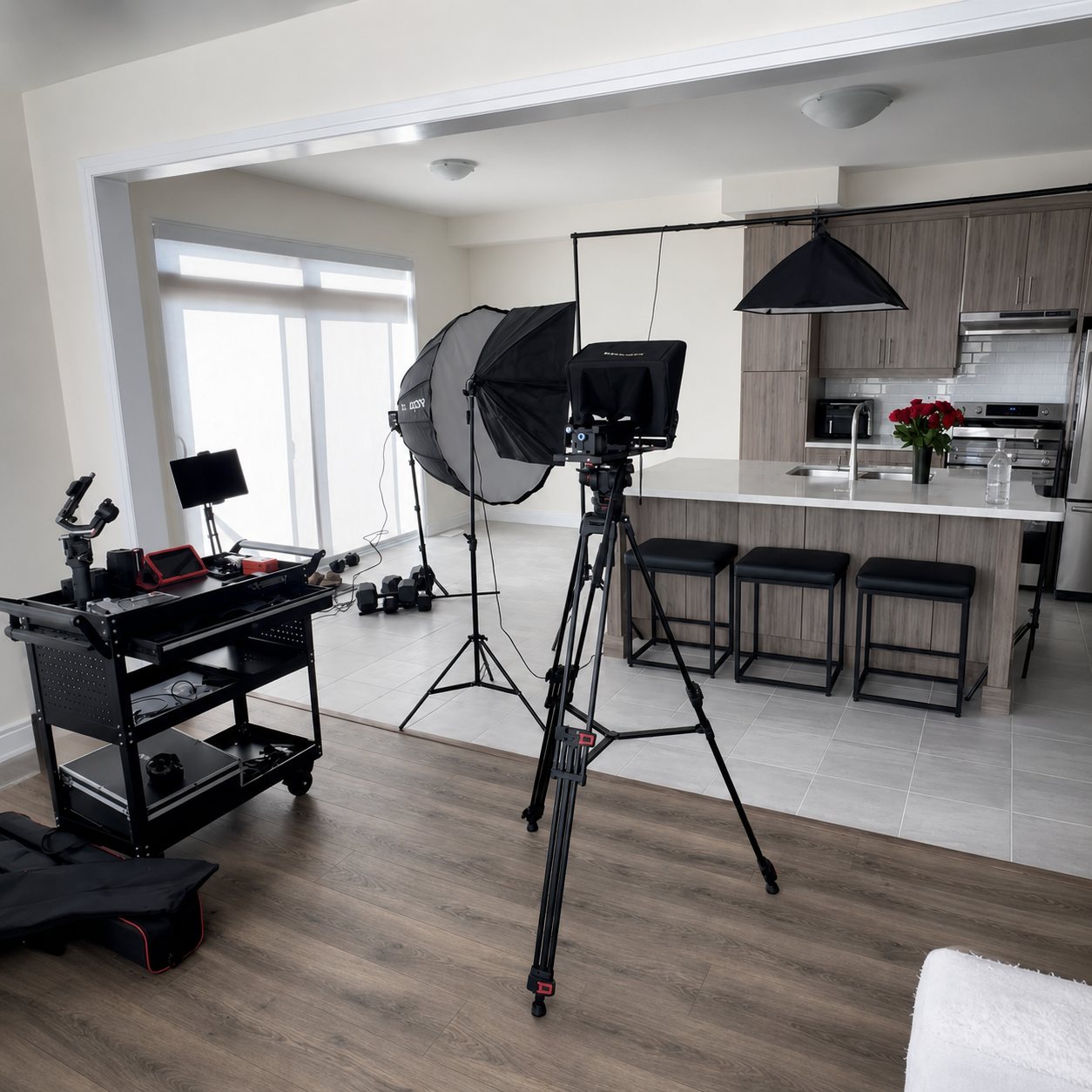
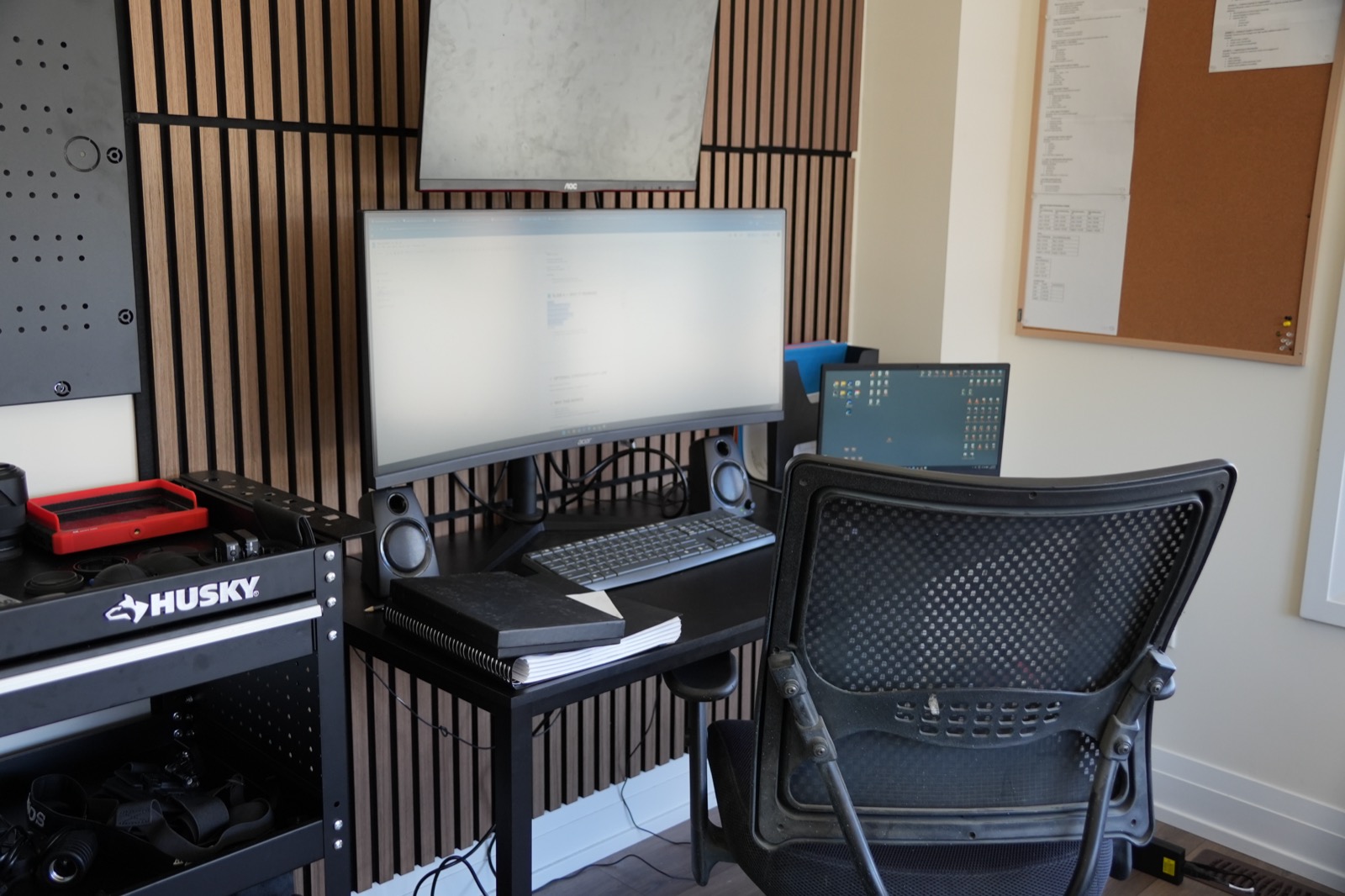
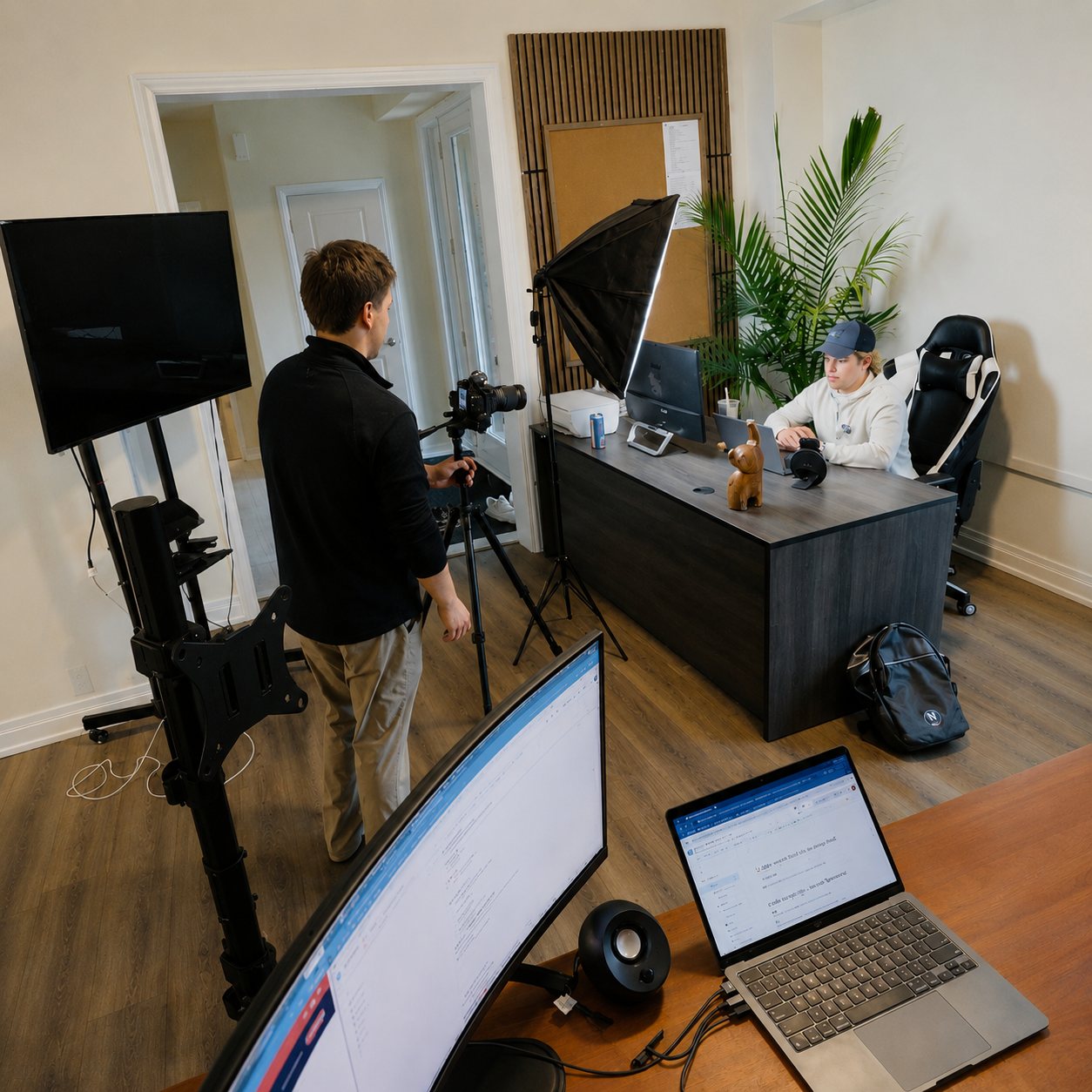 The office
5.0 ★ on Google
5.0Google rating“Working with NewLife Marketing has been a great experience. Their team has travelled to our locations to film professional content and turn it into Meta ad campaigns focused on generating real leads for our stores. The campaigns have been profitable, the communication has been consistent, and they’re always looking for ways to improve performance and bring us more opportunities. It’s been great having a marketing team that’s willing to show up, understand our business, and put in the work. We’d highly recommend NewLife Marketing to any business looking to grow through digital advertising.”
Last step
You will talk to Cruz or Keegan, not a sales rep. If the honest answer is that you do not need us yet, that is what you will hear, and you keep the plan either way.