
Step 1 of 5
Audit
Before anything is changed, we read what the account has actually been paying for. On a neglected account this one report explains most of the waste, and it is free to read.
 5.0 Google rating
Google Ads Management In Sault Ste. Marie
Sault Ste Marie Pay Per Click PPC work has no neighbouring market to spill into, so a budget runs out of searches long before it runs out of money.
Trusted by Ontario businesses












On this page
The whole scope, in the order it is explained below.
What is easy here
In most markets the geography setting is where the money leaks. Here it is the one thing you can get right by accident.
Statistics Canada, 2021 Census of Population
Ontario Ministry of Transportation, Highway 17 distances
A radius drawn generously around this city reaches highway and forest rather than a neighbouring market with higher click prices and customers you cannot serve. That single fact removes the commonest and most expensive mistake in local paid advertising.
It also makes the budget calculable in a way it rarely is. A defined population, a knowable cost to reach a meaningful share of it more than once, and no second market quietly absorbing the overflow.
The flip side arrives about three weeks in. An audience that can be covered completely can be exhausted completely, and cost per result climbing with nothing changed in the account is the audience having seen it rather than the campaign failing.
So the discipline here is not about waste. It is about knowing when to stop, which is a different skill and one that almost no monthly retainer is structured to encourage.
That is worth saying plainly to anybody quoting for the work. A sault ste marie pay per click ppc engagement that is paid monthly, indefinitely, for an account that should run in bursts has an incentive pointing the wrong way: the arrangement earns most when the campaign never stops, and the campaign performs best when it does. None of that requires anybody to behave badly for the outcome to be poor, which is exactly why it is worth settling in the first conversation rather than the fourth.
What is hard here
Not money and not targeting. Material, and relevant searches.
In a finite audience the same people see the same advertisement repeatedly within weeks. A library of real material is what lets a campaign keep running; one asset is a three-week campaign.
At three or four enquiries a month, a single month cannot distinguish a good one from a bad one. Accounts here get cut and restarted on noise more often than they fail.
Plan all three before launch: a budget sized to the inventory that exists, enough distinct material for a quarter, and a reporting period of three months rather than one.
The inventory point deserves one more sentence because it is the least intuitive. A daily budget is an instruction to spend, and an account pointed at a market with almost nothing in it will reach for whatever else is available to spend on: broader matches, automatic placements, audiences nobody chose. Nothing reports that as a problem. The budget is spent, the clicks are real, the enquiries are not, and the account looks busy throughout.
What the advertisement says
The text is written once, read by everybody, and treated as an afterthought.
It has to repeat what was searched, so the reader knows they are in the right place. It has to say something specific that the three advertisements around it do not — a price position, a timescale, a guarantee, an area covered. And it has to ask for one action.
Most fall down on the middle one. “Quality service, free quotes, family run” describes every competitor on the page, and a reader with four identical options picks the first.
The specific thing does not have to be flattering. “Minimum job $400” wins the right clicks and loses the wrong ones, which improves the cost per enquiry twice over.
Write three versions and let them run against each other. The one that wins is usually not the one anybody expected, and that is the cheapest market research available.
Give each one long enough to be readable. At the volumes most local accounts run at, a fortnight produces too few clicks to separate two near-identical performers, and declaring a winner early is how a worse advertisement ends up running for a year on the strength of a quiet Tuesday.
Keep the losing versions written down somewhere. The same three ideas get re-proposed every eighteen months as new people look at the account, and a short note saying which was tried and what happened saves repeating the experiment at full price.
One more thing worth saying about the text: it is read by people who are comparing, not by people who are browsing. Somebody who has typed a problem into a search box has already decided to solve it and is choosing between four suppliers in the space of about ten seconds. Everything that is true of your business but true of the other three as well is wasted room on the line.
That is why the specific detail wins so reliably. A timescale, a minimum, a named area, an hour at which somebody answers — each of those is a fact a competitor either cannot match or has not thought to state, and either outcome works in your favour. It also sets an expectation the business then has to meet, which is a useful discipline rather than a risk.
There is a related question about who writes it, and the answer is usually the wrong person. Copy produced by whoever built the account is written from the account outwards: it describes the service in the words the business uses internally. Copy produced by whoever answers the telephone is written from the customer inwards, in the words people actually use when they ring, and it reliably outperforms the first kind.
So the cheapest thing any owner can do before approving an advertisement is read it out loud and ask whether a customer would recognise themselves in it. If the sentence would sound odd said to somebody across a counter, it will read oddly on a screen as well.
And keep the number of versions small. Two or three distinct propositions tested properly beat eight variations of one, because eight split the available clicks into groups too small to tell apart and the test never concludes.
None of this is a one-off exercise, but nor is it continuous. Twice a year is a reasonable cadence for a local account: once before the busy season and once after it, each time with the previous notes in front of you. More often than that and the clicks are spread too thinly to decide anything; less often and the text drifts out of step with what the business actually offers.
The free extra lines
An advertisement can occupy twice the room for no extra charge, and often does not.
Extra links to specific pages, a line of additional text, the telephone number, the location, a list of services — all of them are free additions that make the entry physically bigger on the screen.
Bigger matters more than it should. An advertisement occupying four lines against a competitor’s two is taking attention before anybody has read either.
The extra links also do real work: somebody who wanted a particular service lands on that service rather than on a general page, and the gap between those is measured in enquiries.
They take twenty minutes to add. In most accounts that have never been looked at properly, this is the single largest improvement available on the first afternoon.
Changing one thing
The commonest fault in a self-run account, and it looks like diligence.
Bids adjusted, budgets moved, advertisements rewritten and targeting narrowed, all in the same fortnight. Something then improves or declines and nothing can be attributed to anything.
At small volumes it is worse, because the week-to-week variation is mostly noise and reacting to noise produces changes that are random by construction.
So: one change, then a fixed period of leaving it alone, then a look. For a small account that period is a month rather than a week, however uncomfortable that is.
Write the change down with the date. Six months of that list is the only account history anybody will ever have, and it is what makes the next decision better than a guess.
The platform keeps its own change history, which is useful and not sufficient: it records what was altered and not why. A line of reasoning beside each entry is what turns a log into something a successor can read, and successors are the normal case rather than the exception in small accounts that change hands every couple of years.
Our scope
Narrow, and shaped to a market that does not need a large account.
We build and run Google and Meta accounts against cost per enquiry, write the pages the ads point at, and set up the tracking that connects an enquiry to its source. We manage over $70,000 a month in advertising spend for Ontario businesses and the owner runs the paid media personally.
Bursts with a stated end rather than a permanent drip, retargeting running underneath them, enough material filmed in advance to last a quarter, and the remainder of the budget spent on the profile and the pages. That is a less profitable recommendation than a monthly retainer and in this market it is the correct one.
We are in Minesing, a long way south. For an advertising account that changes nothing; for filming it means travel, which we price as its own visible line rather than folding it into a fee.
The media budget, which goes to Google, and the management fee, which goes to the agency. A single number a month tells you neither, and an agency taking a percentage of spend is paid more for spending more. Ask for both figures in writing, ask what happens to the account if you leave, and ask whose name it is in.
Next step
In a market you can saturate, that answer belongs in the plan. Tell us what you sell and we will say what a burst should cost and when it should stop.
NewLife Marketing · 70 Bearberry Rd, Minesing, ON L9X 2E1 · 705-302-1097 · Based in Minesing, running paid media across Ontario including the north.
How it works
Five steps, and the first one costs nothing but reading.
Step 1 of 5
Before anything is changed, we read what the account has actually been paying for. On a neglected account this one report explains most of the waste, and it is free to read.
Step 2 of 5
Campaigns split so that a budget decision is possible: by what you sell, by what it is worth, and by where it is worth it. An account that cannot be turned down in one place cannot be managed.
Step 3 of 5
A conversion is a booked job or a sale, not a click on a phone number. Tracking is verified against what the business actually received before a single bid is changed.
Step 4 of 5
Starting on the searches with the clearest intent and the tightest match, then widening deliberately once there is evidence rather than hope.
Step 5 of 5
Every search term the account paid for, read weekly and sorted: promote it, block it, or leave it. This is most of what separates an account that improves from one that drifts.
Proof first
Every number on this site came from paid media or production work, with the client named. There is no traffic graph here and you should be wary of them elsewhere.
A Portuguese grill that came to us with almost no online presence.
Read the case study →Named clients, real figures, and what each one was spending.
See all case studies →That account was not run in Sault Ste Marie, and we are not going to imply otherwise. It is published, named and checkable, which is more than a logo wall offers. Ask any agency you shortlist for the cost per booked job before and after, and ask who counted it.
The person on your account
Founder & CEO · Head of Operations & Paid Media — NewLife Marketing
Runs your strategy call, builds and manages your paid media accounts personally, and owns the monthly numbers you will be shown. On your calls you talk to Cruz or Keegan: never a rep.
Straight answers
Straight answers before you ever book a call.
This is the rare market where it barely matters. With no comparable city for 300 km, a generous radius reaches highway and forest rather than a neighbouring market with higher prices and customers you cannot serve. The expensive mistake available everywhere else is simply not available here.
Because the audience has seen it. A market that can be covered completely can be exhausted completely, and cost per result climbing with nothing changed in the account is saturation rather than failure. The fix is new material and a rebuilt audience, planned before launch rather than improvised.
From three numbers: what a customer is worth over the relationship, what share of enquiries convert, and the maximum defensible cost per enquiry that follows. Then size it to how many people are actually out there looking, which here is less than most approved budgets assume.
The Business Profile and the landing page. The profile decides a large share of a local result and here the competing set is only the businesses in this city, so it matters more than elsewhere. Advertising magnifies whatever the page already does, so paid traffic over a slow page is paying to lose people faster.
Why NewLife
Everything we do runs on one system we call The Film-to-Funnel System: in-house film → paid ads → landing page → CRM follow-up → optimize. Here is how that stacks up against doing it yourself or hiring a typical agency.
| In-house | Typical agency | NewLife | |
|---|---|---|---|
| Creative | You film it on a phone | Outsourced or stock footage | Our in-house cinema crew, filmed on-site |
| Who does the work | You, between running the business | A junior account manager | Cruz and the senior team, directly |
| The system | Disconnected tools that don't talk | Ads, then hands-off | Film → ads → landing page → CRM, one connected system |
| Your accounts & data | Yours, but no time to run them | Often held hostage | Always yours - you keep everything |
| Follow-up | Manual, when you remember | Rarely their problem | Automated speed-to-lead in the CRM |
| Local knowledge | You know your market | A national, generic playbook | Real local research for every market you target |
Where to go next
The province-wide page this one localises: the six campaign types, the five controls, and what an engagement includes.
Explore Google Ads →Local search and national search are two different jobs. What decides each.
See SEO in Sault Ste Marie →The published numbers, all from paid media and production, with the client named on every one.
View case studies →Come say hi
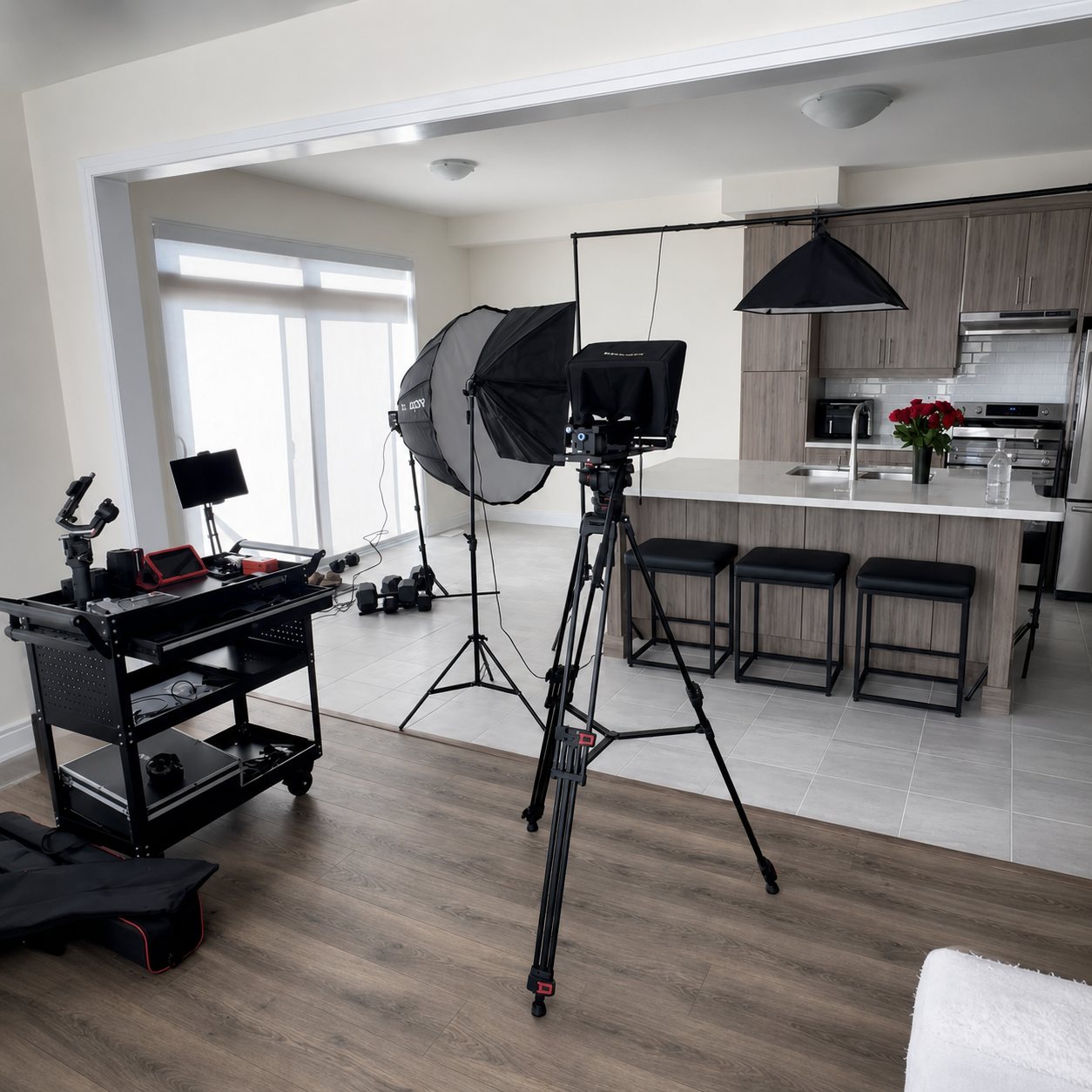
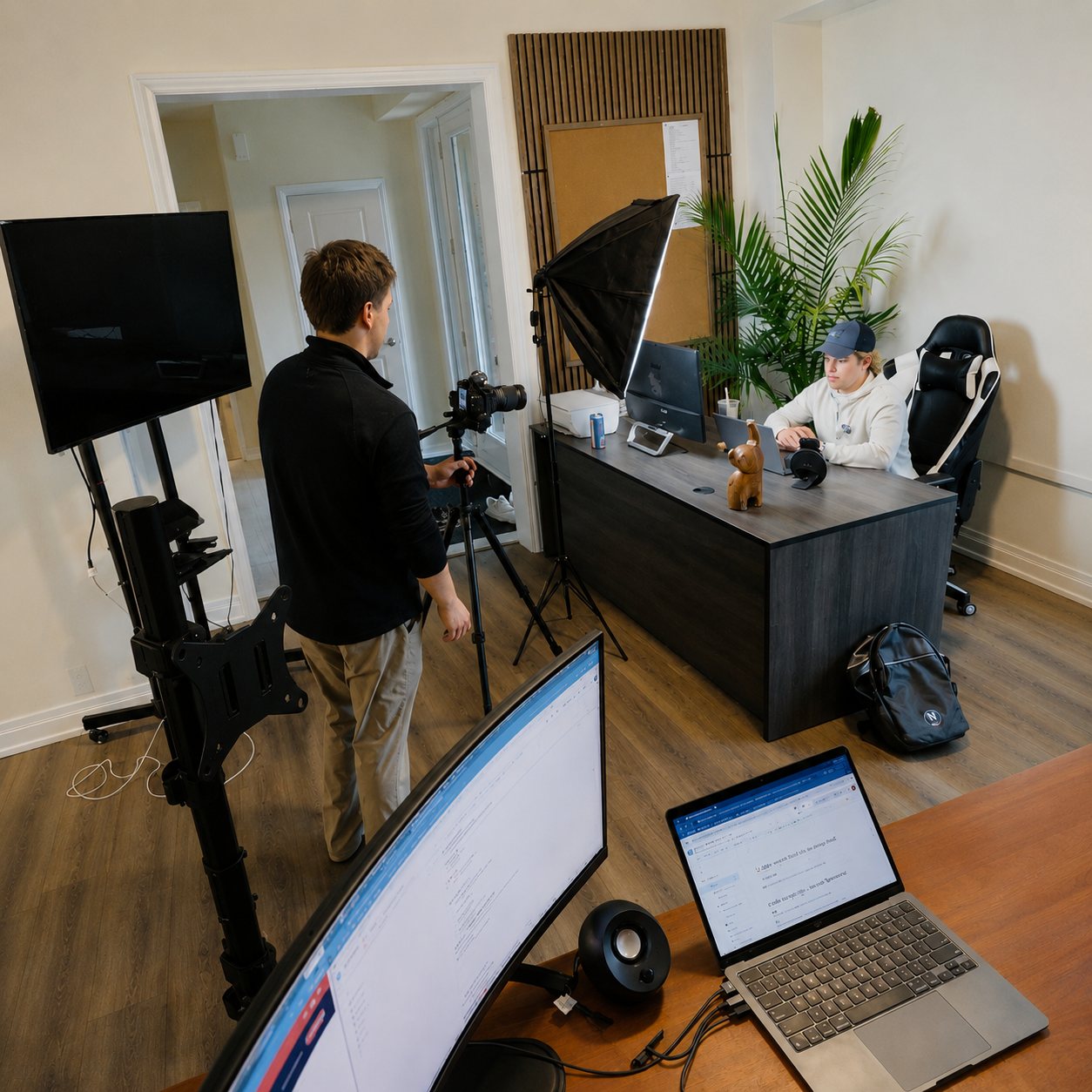
The office and the studio are in Minesing, just west of Barrie. Come and sit in it, see what is actually on the screens, and ask the person who would be on your account what they would do first.


 The office
5.0 ★ on Google
5.0Google rating“Working with NewLife Marketing has been a great experience. Their team has travelled to our locations to film professional content and turn it into Meta ad campaigns focused on generating real leads for our stores. The campaigns have been profitable, the communication has been consistent, and they’re always looking for ways to improve performance and bring us more opportunities. It’s been great having a marketing team that’s willing to show up, understand our business, and put in the work. We’d highly recommend NewLife Marketing to any business looking to grow through digital advertising.”
Last step
You will talk to Cruz or Keegan, not a sales rep. If the honest answer is that you do not need us yet, that is what you will hear, and you keep the plan either way.