
Step 1 of 5
Audit
Before anything is changed, we read what the account has actually been paying for. On a neglected account this one report explains most of the waste, and it is free to read.
 5.0 Google rating
Google Ads Management In Newmarket
PPC Agency Newmarket work goes wrong in the first week far more often than the twentieth, and what settles it is a handful of decisions made before any money moves.
Trusted by Ontario businesses












On this page
The whole scope, in the order it is explained below.
The setting that decides everything
Statistics Canada, 2021 Census of Population
Statistics Canada, 2021 Census of Population
A radius drawn around the town reaches a fraction of the region. A radius drawn around the region reaches into the larger centres to the south, where click prices are set by much bigger budgets and the searcher has closer alternatives.
Nothing in the account announces that crossing. What you see is a cost per click drifting upward and a conversion rate drifting down, and the usual response is to adjust bids, which addresses none of it.
The fix is a list rather than a circle: the municipalities you genuinely serve, named, with travel beyond them priced as its own line. That is nine small decisions, each of which can be answered from your own invoices.
It costs nothing and takes an afternoon, and it is worth more than any optimisation applied afterwards.
How to decide the nine
Apply each to each place and the account configures itself.
Your own records answer this. A place that has produced three good jobs is a different proposition from one that has produced an enquiry you declined.
Drive time against job value. A single price across a region quietly subsidises the furthest customers with the nearest ones, and the account makes that worse by bidding for both equally.
The further from home, the more local alternatives the searcher has. Winning a click there is more expensive and converting it is harder.
If the honest answer is probably not, exclude it. Paying for clicks you would decline is the purest form of waste in a regional account.
Four questions, nine places, one afternoon. The resulting list is also the answer to what the pages should say about where you go, which is the single most-read sentence on most local websites, and it is worth revisiting once a year rather than treating as permanent.
The smallest sensible budget
Worth working out before committing, because a budget too small produces no answer at all.
Take the typical click price in your category and multiply by the number of clicks it takes to produce one enquiry — usually somewhere between twenty and fifty. That is the cost of one enquiry, and you need several before anything is readable.
A month that produces two enquiries has not tested anything. The variation between two and five is noise, and decisions made from it are coin flips with a cost attached.
So the honest minimum is whatever produces fifteen or twenty enquiries over a test period. Where that figure is beyond the budget, the correct answer is to narrow the targeting until it is reachable rather than to spread thinly and hope.
Narrowing is usually possible: one service, one area, the hours that convert. A campaign that is genuinely small and genuinely focused can answer a question that the same money spread wide cannot.
It also helps to decide in advance what each outcome would mean. If the test produces enquiries at twice what a customer is worth, the answer is to stop rather than to spend more looking for a different result. If it produces them at half, the answer is to widen carefully, one variable at a time. Writing both sentences down before the money goes out removes the hardest decision from the moment it is hardest to make.
By hour and by place
Two adjustments most small accounts never make, both visible in reports they already have.
Once enough enquiries have accumulated, split them by hour of day and by place. Both reports usually show something nobody predicted: a town producing nothing, an evening producing most of it.
The adjustment is then obvious and reversible: spend more where it works, less where it does not, and watch for a month before deciding whether the pattern was real.
The caution is sample size. A town with four enquiries is not evidence, and cutting it on that basis is a decision made from noise dressed up as data.
Which is why this is a quarterly exercise rather than a monthly one at small volumes. Done too often it produces constant churn; done once a quarter it compounds.
What a report should contain
Anything longer is a document designed to be weighed rather than read.
Spend, enquiries, cost per enquiry. Those three, month by month, going back as far as the arrangement does, on one page.
Then a list of what was actually changed in the month and why. Four lines is normal for a small account and four lines is enough — what matters is that it exists and can be checked against what happened.
What should not be there: impressions, click-through rates, average positions, scores, or anything described as reach. None of them corresponds to money and all of them move on their own.
A supplier who sends twelve pages of the second kind and none of the first is reporting activity. The distinction is easy to see once you have asked for the one-page version and watched what arrives.
Ask for it monthly and read it quarterly. A single month at these volumes moves for reasons nobody controls, and the value of the document is the row of months beside each other rather than any one of them.
Our scope
Stated plainly, because the fee structure changes the advice you get.
We build and run Google and Meta accounts against cost per enquiry, write the pages the ads point at, and set up the tracking that connects an enquiry to its source. We manage over $70,000 a month in advertising spend for Ontario businesses and the owner runs the paid media personally.
As a ppc agency newmarket we state the municipalities included and why, what happens weekly and monthly, what triggers a call between reports, and what the account would be handed back as if you left. The first of those four is the one most proposals leave as a radius setting.
We do not sell percentage-of-spend management, because it pays us to recommend the opposite of what a regional account usually needs. We are in Minesing, about an hour away, which matters only for filming.
The media budget, which goes to Google, and the management fee, which goes to the agency. A single number a month tells you neither, and an agency taking a percentage of spend is paid more for spending more. Ask for both figures in writing, ask what happens to the account if you leave, and ask whose name it is in.
Next step
Send us the account and we will show you which municipalities it is actually paying for, and what each one has produced.
NewLife Marketing · 70 Bearberry Rd, Minesing, ON L9X 2E1 · 705-302-1097 · Based in Minesing, running paid media across central Ontario and York Region.
How it works
Five steps, and the first one costs nothing but reading.
Step 1 of 5
Before anything is changed, we read what the account has actually been paying for. On a neglected account this one report explains most of the waste, and it is free to read.
Step 2 of 5
Campaigns split so that a budget decision is possible: by what you sell, by what it is worth, and by where it is worth it. An account that cannot be turned down in one place cannot be managed.
Step 3 of 5
A conversion is a booked job or a sale, not a click on a phone number. Tracking is verified against what the business actually received before a single bid is changed.
Step 4 of 5
Starting on the searches with the clearest intent and the tightest match, then widening deliberately once there is evidence rather than hope.
Step 5 of 5
Every search term the account paid for, read weekly and sorted: promote it, block it, or leave it. This is most of what separates an account that improves from one that drifts.
Proof first
Every number on this site came from paid media or production work, with the client named. There is no traffic graph here and you should be wary of them elsewhere.
A Portuguese grill that came to us with almost no online presence.
Read the case study →Named clients, real figures, and what each one was spending.
See all case studies →That account was not run in Newmarket, and we are not going to imply otherwise. It is published, named and checkable, which is more than a logo wall offers. Ask any agency you shortlist for the cost per booked job before and after, and ask who counted it.
The person on your account
Founder & CEO · Head of Operations & Paid Media — NewLife Marketing
Runs your strategy call, builds and manages your paid media accounts personally, and owns the monthly numbers you will be shown. On your calls you talk to Cruz or Keegan: never a rep.
Straight answers
Straight answers before you ever book a call.
Most often the targeting is reaching the larger centres to the south, where prices are set by bigger budgets and the searcher has closer alternatives. Nothing in the account announces the crossing: you see a drifting cost per click and a falling conversion rate, and adjusting bids addresses none of it.
Four questions per place, answered from your own records: have you served there profitably, what does the travel cost, how many local alternatives does the searcher have, and would you take the job tomorrow. Nine places, one afternoon, and the resulting list is also what the pages should say.
No. A customer forty minutes away is worth less than an identical one ten minutes away, and an account bidding the same for both is losing money on the half it is proudest of. Set the maximum defensible cost per enquiry per municipality rather than once for the region.
Where you go, before anything else. A reader two municipalities away is asking that question first, and a page that does not answer loses them regardless of how well the campaign is built. Advertising magnifies whatever the page already does.
Why NewLife
Everything we do runs on one system we call The Film-to-Funnel System: in-house film → paid ads → landing page → CRM follow-up → optimize. Here is how that stacks up against doing it yourself or hiring a typical agency.
| In-house | Typical agency | NewLife | |
|---|---|---|---|
| Creative | You film it on a phone | Outsourced or stock footage | Our in-house cinema crew, filmed on-site |
| Who does the work | You, between running the business | A junior account manager | Cruz and the senior team, directly |
| The system | Disconnected tools that don't talk | Ads, then hands-off | Film → ads → landing page → CRM, one connected system |
| Your accounts & data | Yours, but no time to run them | Often held hostage | Always yours - you keep everything |
| Follow-up | Manual, when you remember | Rarely their problem | Automated speed-to-lead in the CRM |
| Local knowledge | You know your market | A national, generic playbook | Real local research for every market you target |
Where to go next
Come say hi
The office and the studio are in Minesing, just west of Barrie. Come and sit in it, see what is actually on the screens, and ask the person who would be on your account what they would do first.

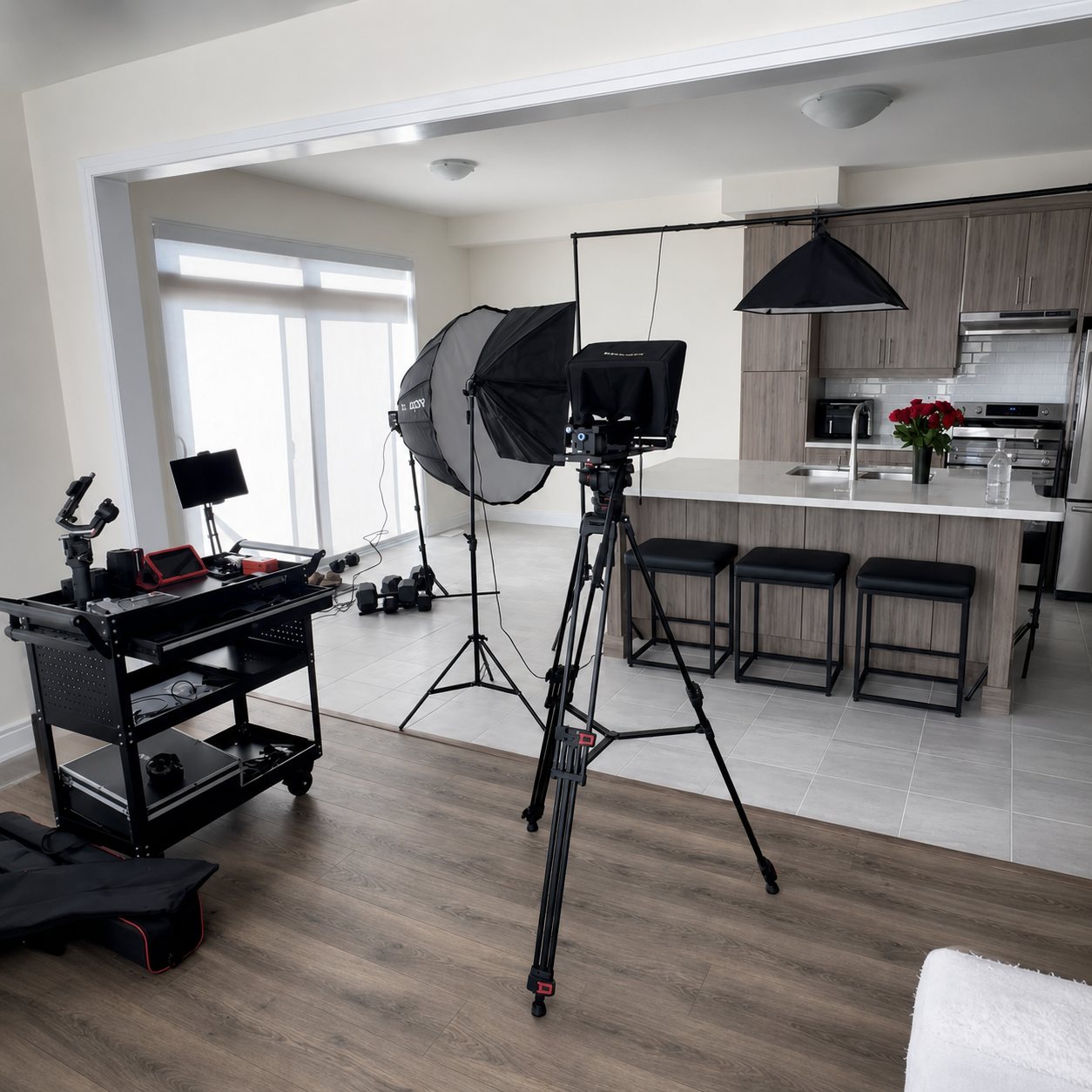
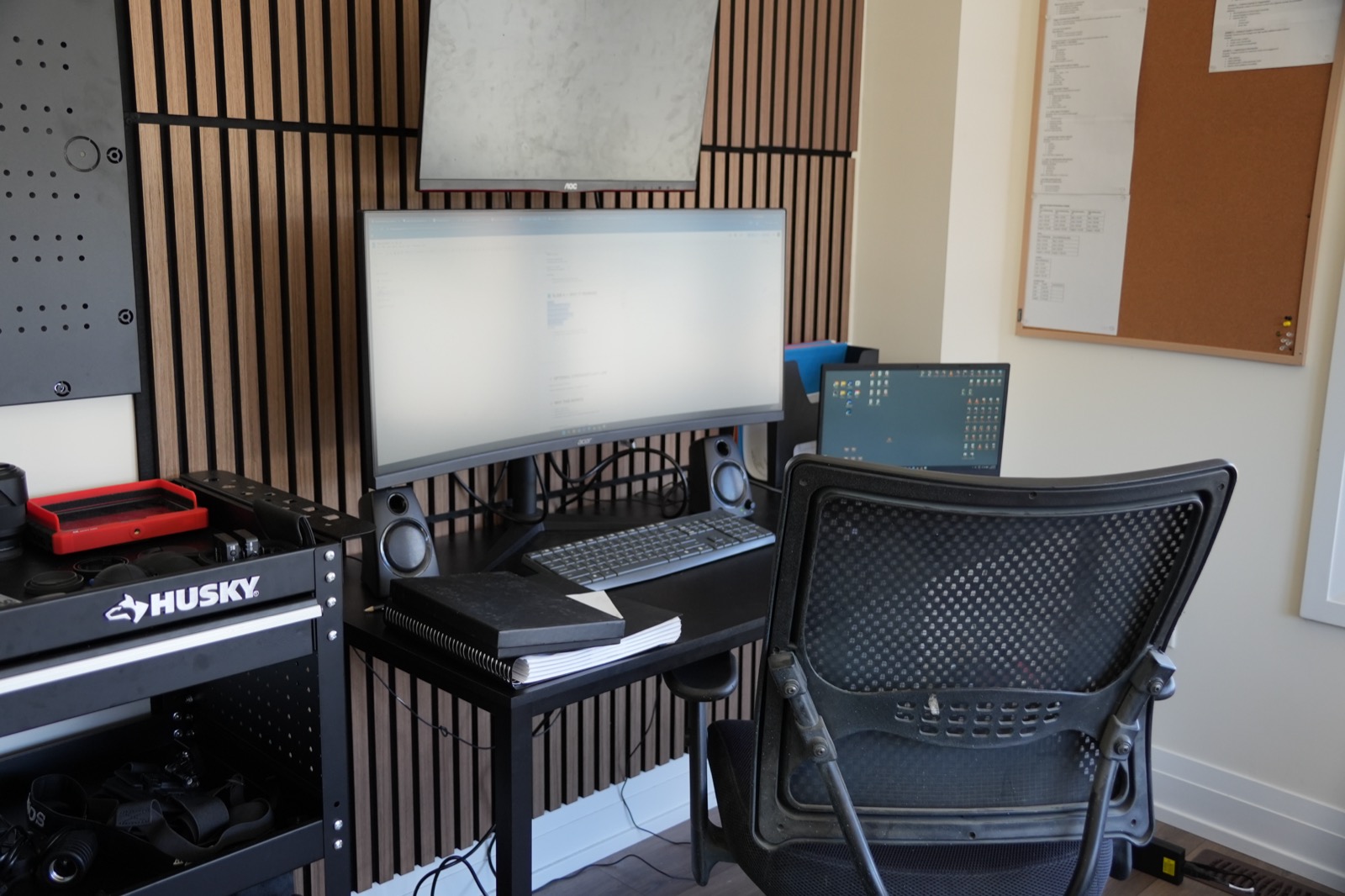
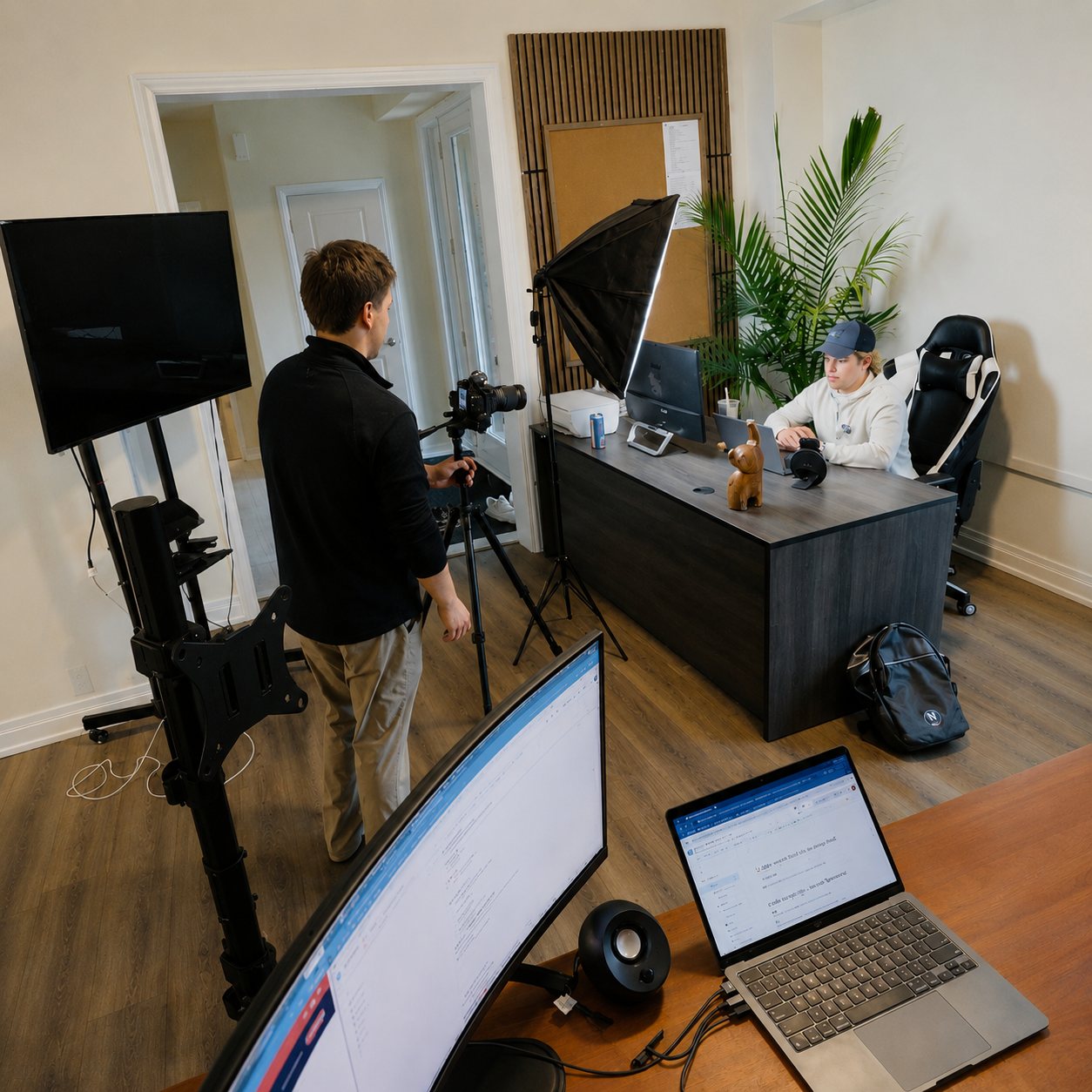 The office
5.0 ★ on Google
5.0Google rating“Working with NewLife Marketing has been a great experience. Their team has travelled to our locations to film professional content and turn it into Meta ad campaigns focused on generating real leads for our stores. The campaigns have been profitable, the communication has been consistent, and they’re always looking for ways to improve performance and bring us more opportunities. It’s been great having a marketing team that’s willing to show up, understand our business, and put in the work. We’d highly recommend NewLife Marketing to any business looking to grow through digital advertising.”
Last step
You will talk to Cruz or Keegan, not a sales rep. If the honest answer is that you do not need us yet, that is what you will hear, and you keep the plan either way.