
Step 1 of 5
Map it
Every way somebody currently reaches you, and what happens to each one. Drawn on paper before any software is chosen, because most of what gets bought is a solution to the wrong map.
 5.0 Google rating
CRM Systems In Peterborough
Peterborough CRM Setup turns on two fields almost nobody argues about: where the job is, and what time of year it came in.
Trusted by Ontario businesses












On this page
The whole scope, in the order it is explained below.
Why those two
Both are obvious once stated and both are routinely left out of the form.
Statistics Canada, 2021 Census of Population
Statistics Canada, 2021 Census of Population
Parks Canada, Trent-Severn Waterway 2026 hours of operation
A third of the people in this area live outside the city, down roads that take twenty-five minutes. Two jobs at the same price are not the same job when one of them costs an hour of driving, and nothing in a default CRM configuration will ever tell you which was which.
Season is the second. Parks Canada opens the waterway in mid-May and closes it in mid-October, and for a large share of businesses here the year has a shape dictated by that. A record that does not say when somebody bought cannot tell you whether your quiet February is normal or a warning.
Both are one extra field on a form and one extra column in a report. The reason they are usually missing is not difficulty; it is that nobody was asked what the system would be used to decide.
That question is the actual configuration work, and it takes an hour.
What to capture
Everything else can be added later. These four are painful to backfill.
Not a mailing address — the place the work happens, and ideally the drive time. It is what turns a revenue report into a profit report.
Asked out loud, written down, every time. In a dispersed catchment most business arrives by routes no tracking parameter survives, and this is the only record of them.
With the season, not just the date. Against a published calendar it becomes the most useful column you have for planning next year.
The quote that went quiet, and why. It is the cheapest list of future customers any business owns and almost nobody keeps it.
Four fields, each a few seconds at the point of entry, and together they answer most of the questions a business this size actually has.
What it should do on its own
The point is not fewer staff. It is that the things everybody means to do actually happen.
An enquiry acknowledged within minutes rather than at the end of the day. A quote that follows itself up twice without anybody remembering. A review request that goes out at the moment the job finishes, which is the only moment it works.
Each of those is a decision somebody intends to make and forgets, and each is worth more than any report the system produces. They are also the parts that survive a busy season, which is exactly when they matter.
The seasonal version is the one most businesses here never build: a message to last year’s customers before the season opens. The list already exists, the cost is nothing, and it reliably outperforms advertising aimed at strangers because these people have already bought once.
That single sequence is frequently the entire return on setting the system up properly.
Where it goes wrong
Four failures, and not one of them is a software problem.
Too many stages. Fourteen columns on a board is a board nobody updates, and a board nobody updates is a spreadsheet with a monthly bill attached. Five stages that each mean something somebody can act on beats fourteen that describe a process nobody follows.Too many required fields. Every field somebody must fill in before they can save a record is a reason not to save the record. Four fields, and the rest optional, is how a system survives a busy week.Built by somebody who will never use it. The person who configures it and the person typing into it on a Friday afternoon are rarely the same person, and only one of them knows which steps are impossible on a phone, in a van, between jobs.No decision about what happens to the old data. Three years of enquiries in an inbox, a spreadsheet and somebody\u2019s notebook. Decide before the switch what moves, what gets archived and what is genuinely abandoned, because afterwards nobody will.Those four account for almost every abandoned system we are asked to look at, and all four are decided before any software is chosen.
Doing it in the right month
The install happens while somebody has an hour, which here is a narrow window.
A system goes in properly when the people who will use it can be asked what they need from it. For a business serving this catchment, that is not July, and anyone who has tried to roll one out mid-season knows exactly how it ends.
The right sequence is to decide the fields in winter, run them for a few weeks on paper if necessary, and have the habit established before the first busy week arrives. A habit formed in a quiet month survives a loud one; the reverse never happens.
It also means the first full season produces a complete year of data rather than a partial one, and a partial year cannot answer the question everybody wants answered, which is whether this year was better than last.
There is a second reason the quiet months are the right ones. Whatever you decide to capture has to be entered by whoever is standing in front of a customer, and that person has an opinion about which of the four fields is worth the seconds it costs. Asking them in February produces a form they will actually complete; imposing one in July produces a field that is left blank and a report that quietly lies for a year.
That is a small timing decision with an outsized effect, and it is free.
Our scope
Narrow, and said before a meeting rather than during one.
We build the capture-to-record path: forms that reach the system, the fields that make reporting possible, the automatic acknowledgements and follow-ups, and the tracking that connects an enquiry back to what produced it.
A peterborough crm setup project with us should leave you holding the field definitions, the automations in plain language, and an export you can take anywhere. A system you cannot leave is not a system you own, and in a market with this many suppliers that matters more than the feature list.
We do not take on bookkeeping, payroll or inventory systems, and we would not replace an industry package that already works. Naming that now is cheaper for both sides than discovering it in month three.
The build, which happens once, from the licence, which is monthly and goes to whoever makes the software, from support, which is somebody answering when it breaks. Then ask the two questions that decide whether you own this: whose name are the accounts in, and can the data be exported in full without asking anybody. A system you cannot leave with is one you are renting.
Next step
If not, that is the first field. Tell us what you would want to decide with it and we will say what the system has to capture.
NewLife Marketing · 70 Bearberry Rd, Minesing, ON L9X 2E1 · 705-302-1097 · Based in Minesing, building systems for businesses across central and eastern Ontario.
How it works
Five steps, and the first one is a sheet of paper.
Step 1 of 5
Every way somebody currently reaches you, and what happens to each one. Drawn on paper before any software is chosen, because most of what gets bought is a solution to the wrong map.
Step 2 of 5
Stages that mean something you can act on: new, contacted, quoted, won, lost. A board with fourteen stages is a board nobody updates, which is the same as no board at all.
Step 3 of 5
The acknowledgement that names a time, the reminder nobody sends, the follow-up on a quote that has gone quiet. Not a conversation pretending to be a person.
Step 4 of 5
The website forms, the phone, the inbox, the calendar. A system that has to be typed into twice is a system that will be typed into once and then abandoned.
Step 5 of 5
Your accounts, your data, exportable. A system you cannot leave with is one you are renting, and you find that out at the worst possible moment.
Proof first
Every number published on this site came from paid media or production work, with the client named on it.
The build behind one of our longest-running partnerships.
See the partnership →A Portuguese grill that came to us with almost no online presence.
Read the case study →Named clients, real figures, and what each one was spending.
See all case studies →A system is harder to show than a campaign is, because the result is an enquiry that did not get lost rather than a number that went up. The honest measure is the share of enquiries that get a reply inside an hour. Ask anybody quoting for work in Peterborough what that figure is for you now, and whether anything currently measures it.
The person on your account
Sales Director & Head of Client Communication — NewLife Marketing
Scopes your engagement before a dollar moves — what you actually need, what it should cost, and the goals the work will be judged against. Then he leads your day-to-day communication and checks those goals monthly.
Straight answers
Straight answers before you ever book a call.
Almost always the one already included in something you pay for, until you can name a decision it cannot support. The choice of system matters far less than whether four fields are captured consistently and whether one person owns it. Most failures here are configuration and habit, not software.
Where the customer actually was, how they heard of you, which part of the season they bought in, and what they did not buy. The first turns a revenue report into a profit report in a catchment where a third of the market is outside the city. The last is the cheapest list of future customers you own.
In the quiet half of the year. Parks Canada ran the 2026 navigation season from 15 May to 12 October, and for much of this catchment that is the commercial year. A habit formed in a quiet month survives a busy one; a system rolled out in July does not survive at all.
A message to last year’s customers before the season opens. The list already exists, the cost is nothing, and people who have bought once reliably outperform strangers. Most businesses here have never built it, and for many it pays for the whole setup in one season.
Why NewLife
Everything we do runs on one system we call The Film-to-Funnel System: in-house film → paid ads → landing page → CRM follow-up → optimize. Here is how that stacks up against doing it yourself or hiring a typical agency.
| In-house | Typical agency | NewLife | |
|---|---|---|---|
| Creative | You film it on a phone | Outsourced or stock footage | Our in-house cinema crew, filmed on-site |
| Who does the work | You, between running the business | A junior account manager | Cruz and the senior team, directly |
| The system | Disconnected tools that don't talk | Ads, then hands-off | Film → ads → landing page → CRM, one connected system |
| Your accounts & data | Yours, but no time to run them | Often held hostage | Always yours - you keep everything |
| Follow-up | Manual, when you remember | Rarely their problem | Automated speed-to-lead in the CRM |
| Local knowledge | You know your market | A national, generic playbook | Real local research for every market you target |
Where to go next
Come say hi
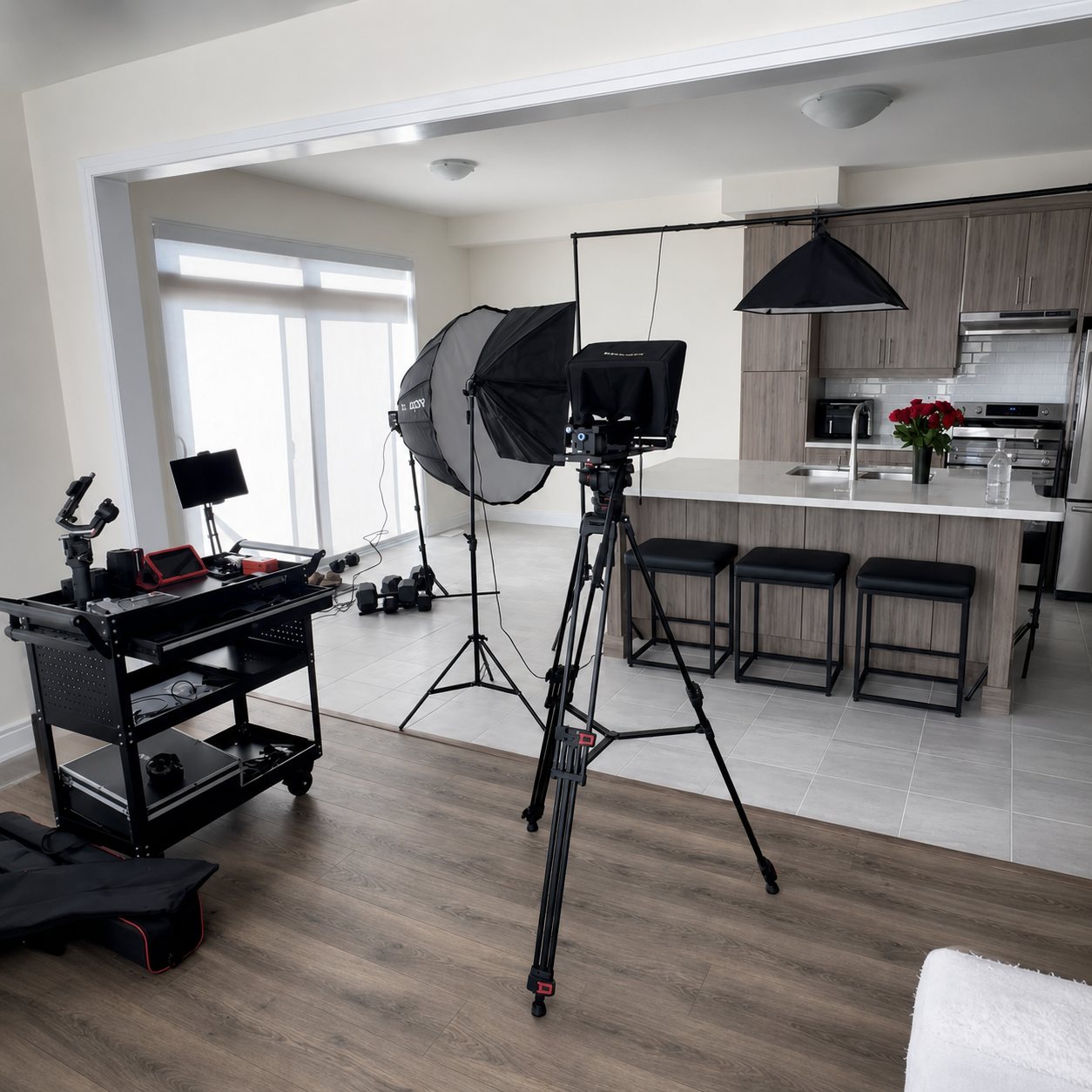
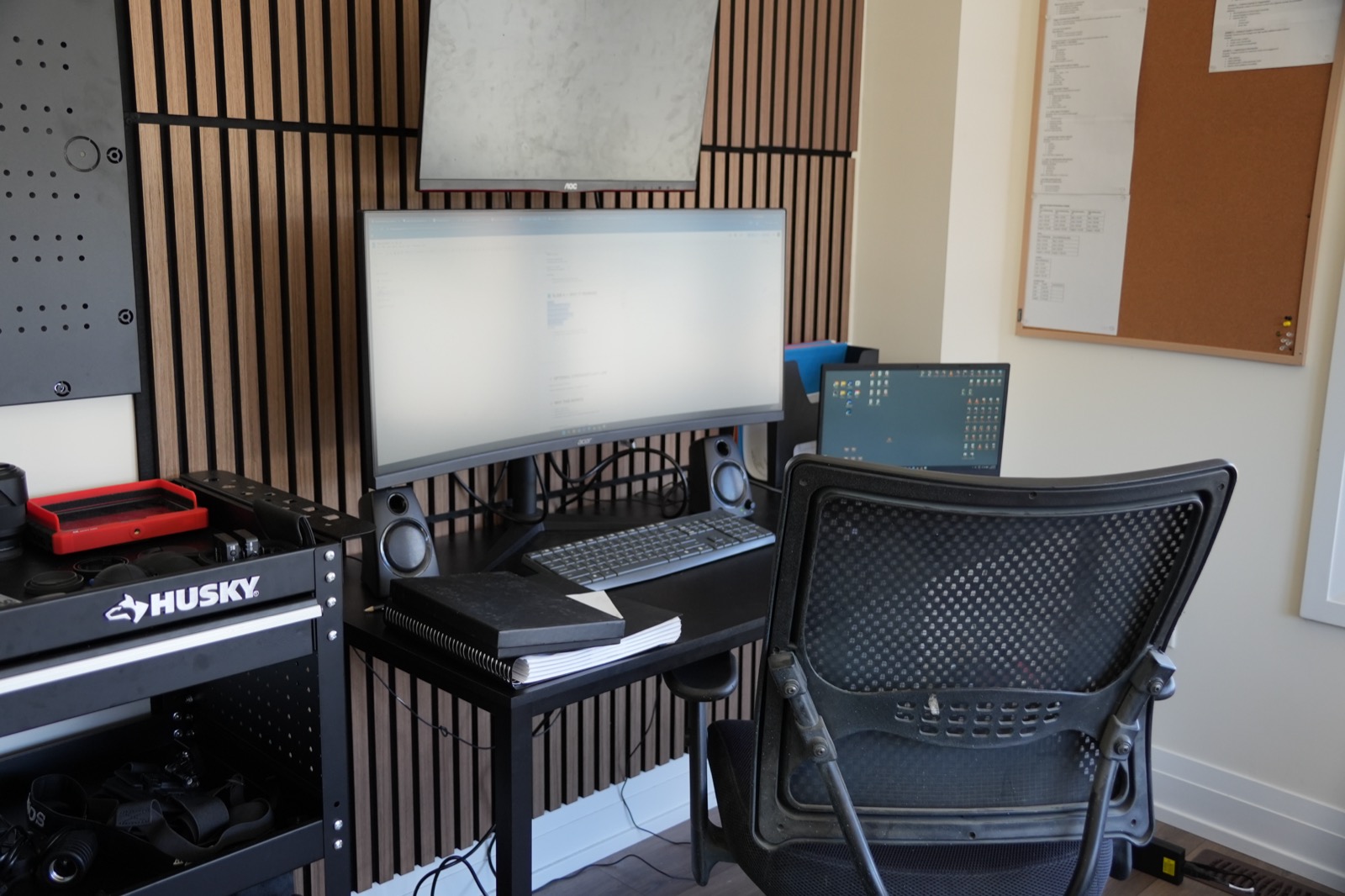
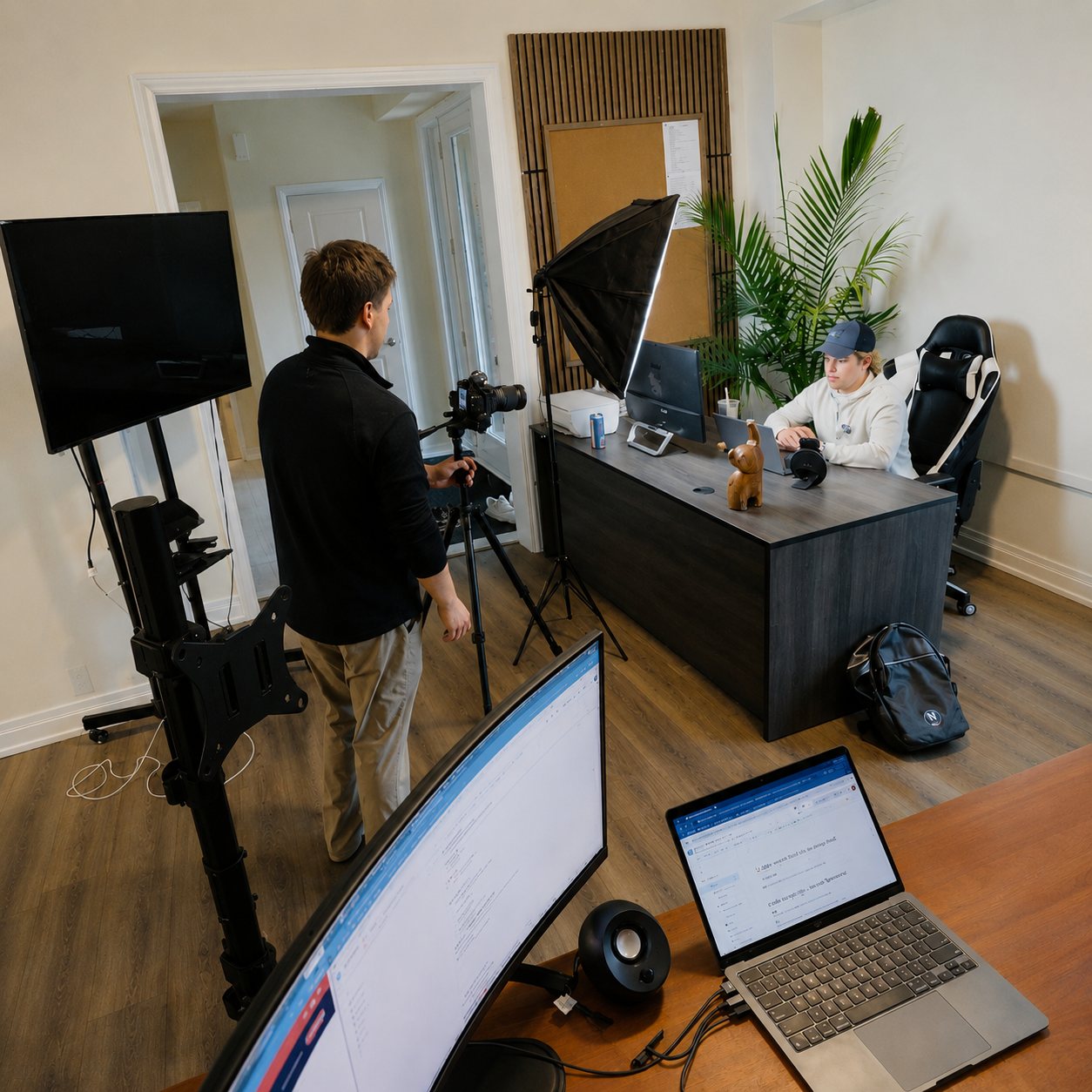
The office and the studio are in Minesing, just west of Barrie. Come and sit in it, see what is actually on the screens, and ask the person who would be on your account what they would do first.

 The office
5.0 ★ on Google
5.0Google rating“Working with NewLife Marketing has been a great experience. Their team has travelled to our locations to film professional content and turn it into Meta ad campaigns focused on generating real leads for our stores. The campaigns have been profitable, the communication has been consistent, and they’re always looking for ways to improve performance and bring us more opportunities. It’s been great having a marketing team that’s willing to show up, understand our business, and put in the work. We’d highly recommend NewLife Marketing to any business looking to grow through digital advertising.”
Last step
You will talk to Cruz or Keegan, not a sales rep. If the honest answer is that you do not need us yet, that is what you will hear, and you keep the plan either way.