
Step 1 of 5
Hours
Not features. How many hours a week does the current way cost, and who spends them. A project that cannot answer that is a project with no way of knowing whether it worked.
 5.0 Google rating
Mobile Software Development In Mississauga
Mobile Software Development In Mississauga is bought on the assumption people will find the app, and nobody downloads anything by accident.
Trusted by Ontario businesses












On this page
The whole scope, in the order it is explained below.
The question that decides it
Three capabilities genuinely require an installed application. Everything else is a website that works on a phone.
City of Mississauga Employment Survey, 2025
The three are: working reliably with no connection, using hardware the browser cannot reach properly, and sending notifications somebody will actually act on. Barcode scanning in a warehouse with no signal, a driver capturing proofs of delivery in a dead zone, a sensor over Bluetooth.
If the requirement is none of those, what gets called mobile software development in Mississauga is really a responsive website, which does the job, is reachable by a link, needs no approval to update, and costs a fraction of two native applications plus their maintenance.
Briefs arrive that way because "we need an app" is how the ambition gets described internally, and nobody downstream questions the framing. Questioning it is a twenty-minute conversation and it is frequently the most valuable twenty minutes in the project.
The hidden cost
The build is the part people budget for. The part that surprises them is everything that follows.
An application that is genuinely needed is usually needed on both major platforms, which is two builds or one cross-platform build with its own compromises. Then both go through a review process you do not control, on a timetable you do not set, every time something changes.
Then the operating systems update, annually, and an application that worked last year stops working or starts looking wrong. That is not a defect anybody caused; it is the cost of being installed software, and it recurs indefinitely.
Then there is distribution. A website is a link. An application has to be found, downloaded, and kept on a device where it competes for space with everything else, and the drop-off at each of those steps is severe for anything a person will use occasionally.
None of that is an argument against building one. It is an argument for being certain, because the commitment is permanent in a way a website is not.
When it genuinely is the answer
In a city built on logistics, manufacturing and distribution, these come up regularly and are worth doing properly.
Inside a warehouse, in a trailer, on a yard, in a basement plant room. Offline capture with reliable sync is genuinely hard in a browser and genuinely solved in an application.
Sustained barcode scanning, Bluetooth instruments, background location over a shift. The browser has improved and it is still the wrong tool for a scanner somebody uses four hundred times a day.
Where the whole point is that somebody is told now. Email is ignored and a browser cannot reliably interrupt. This is a narrow case and it is real.
Buying it
The commercial terms decide more than the technology choice, and they are negotiable now and not later.
Year two. A quote ending at launch ends on the day the maintenance obligation begins, and that obligation does not end.
The part nobody owns
The commonest post-mortem after a year of building is that adoption was never anybody’s job.
A business that has built something has usually spent nothing on who will install it and why they would bother. For an internal tool that is solvable by instruction. For anything customers must choose to install, it is a marketing problem the size of the build itself.
The honest version of the plan names who has to install it, what they get that they cannot get from a link, and how they will be told. If the answer to the middle question is nothing, the project is a website that has been made harder to reach.
Where we are most useful to a software project in this city is that half — the audience, the reason, and the distribution at a cost you can check. We would rather be hired for it than for the build.
There is a cheaper intermediate step worth knowing about before anybody commits to an installed application. A responsive web application can be saved to a phone’s home screen, open without browser chrome, and look to the user very much like an installed app, while remaining a link you can send and update without anybody’s approval. It will not work reliably offline and it cannot reach most hardware, so it does not solve the three cases above.
What it does solve is the much more common case where the real requirement was never technical: somebody wanted the thing to feel like a proper product on a phone. That is a design and packaging requirement, it costs a fraction of a native build, and it can be live in weeks rather than quarters.
Trying that first also produces evidence. If people use it, you have learned what an application would need to do and have a specification worth building against. If they do not, you have learned it for the price of a website rather than the price of two platforms and a decade of maintenance.
Our scope
Narrow on purpose, so a wasted meeting is avoided.
We build portals, dashboards and the connective work that makes existing systems talk to each other, and we build responsive web applications that work properly on a phone. Those requirements are knowable in advance, which makes them honestly quotable.
We do not build native mobile applications. Where the three cases above genuinely apply, you want a specialist mobile team and we will say so rather than taking the work. What we can usefully do first is the twenty-minute conversation that establishes whether you are in one of those cases, because the answer is frequently no and finding that out costs you nothing.
We are based in Minesing rather than Mississauga, which matters for filming and for nothing on this list.
The build, which is quoted once, from hosting and third-party services, which are monthly and are somebody else’s bill, from maintenance, which is the one nobody budgets and the one that never stops. Then ask what you end up holding: the code, in a repository you can reach; the accounts, in your name; the data, exportable in full. A build you cannot leave with is a subscription with a large deposit.
Next step
That one answer settles most of this. Tell us what the thing does and we can usually say within an hour whether it needs an application at all.
NewLife Marketing · 70 Bearberry Rd, Minesing, ON L9X 2E1 · 705-302-1097 · Based in Minesing, working with businesses across Ontario including Mississauga.
How it works
Five steps, and the first one is arithmetic rather than software.
Step 1 of 5
Not features. How many hours a week does the current way cost, and who spends them. A project that cannot answer that is a project with no way of knowing whether it worked.
Step 2 of 5
Most problems are solved by configuring something that exists. Building is for the part that is genuinely yours, and that part is almost always smaller than it looks at the start.
Step 3 of 5
Where this has to talk to what you already run. The joins are where the cost and the risk both live, and they are the part a feature list never mentions.
Step 4 of 5
Something in real use within weeks rather than a specification that takes a quarter to agree. Nobody knows what they want until they have used a version of it.
Step 5 of 5
The code, the accounts, the data, and a written answer to who maintains it. Without those, you have rented a system and the rent is open-ended.
Proof first
Every number published on this site came from paid media or production work, with the client named on it.
The ABM platform, the HQ, and the reporting - documented in full.
See what we built →The build behind one of our longest-running partnerships.
See the partnership →Named clients, real figures, and what each one was spending.
See all case studies →The most useful thing we can show is software we built for ourselves and still run, because it has had to survive its own maintenance. Ask anybody quoting for work in Mississauga what they have built that they still use, and who fixes it when it breaks.
The person on your account
Sales Director & Head of Client Communication — NewLife Marketing
Scopes your engagement before a dollar moves — what you actually need, what it should cost, and the goals the work will be judged against. Then he leads your day-to-day communication and checks those goals monthly.
Straight answers
Straight answers before you ever book a call.
A website, unless the thing has to work with no connection, needs hardware the browser cannot reach properly, or must interrupt somebody with a notification. Those three are the whole test. Everything else — a booking system, a portal, a catalogue, a dashboard — works as a responsive website, which is reachable by a link and updatable without anyone’s approval.
Annually and indefinitely, which is the part most quotes omit. Operating systems update every year, platform policies change, and an application that worked last year will need attention. Ask for a yearly maintenance figure before signing, not a first-year one, and treat a supplier who will not give one as a supplier who has not thought about year two.
Cross-platform frameworks are mature and they trade some performance and some access to platform features for a single codebase. For most business applications that trade is worth it. For anything doing sustained hardware work — heavy scanning, continuous location, instrument integration — the native route is usually still the right one and the cost difference is real.
You should, in your company’s name, with your own payment method and your own administrator. A business that discovers its application is published under its supplier’s account has discovered it cannot update its own software, and untangling that afterwards ranges from tedious to impossible. It is a five-minute decision at the start.
Why NewLife
Everything we do runs on one system we call The Film-to-Funnel System: in-house film → paid ads → landing page → CRM follow-up → optimize. Here is how that stacks up against doing it yourself or hiring a typical agency.
| In-house | Typical agency | NewLife | |
|---|---|---|---|
| Creative | You film it on a phone | Outsourced or stock footage | Our in-house cinema crew, filmed on-site |
| Who does the work | You, between running the business | A junior account manager | Cruz and the senior team, directly |
| The system | Disconnected tools that don't talk | Ads, then hands-off | Film → ads → landing page → CRM, one connected system |
| Your accounts & data | Yours, but no time to run them | Often held hostage | Always yours - you keep everything |
| Follow-up | Manual, when you remember | Rarely their problem | Automated speed-to-lead in the CRM |
| Local knowledge | You know your market | A national, generic playbook | Real local research for every market you target |
Where to go next
Come say hi
The office and the studio are in Minesing, just west of Barrie. Come and sit in it, see what is actually on the screens, and ask the person who would be on your account what they would do first.


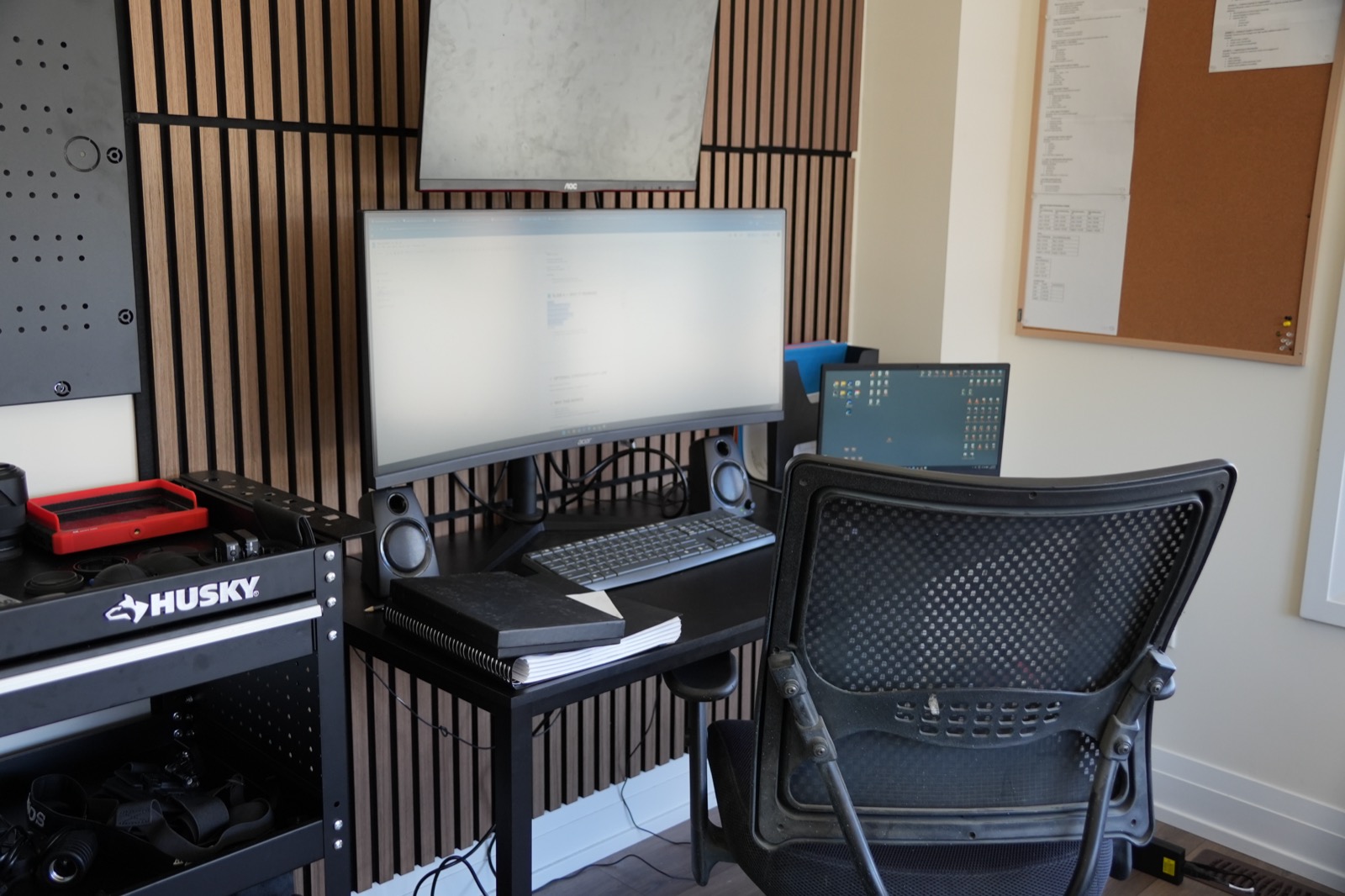
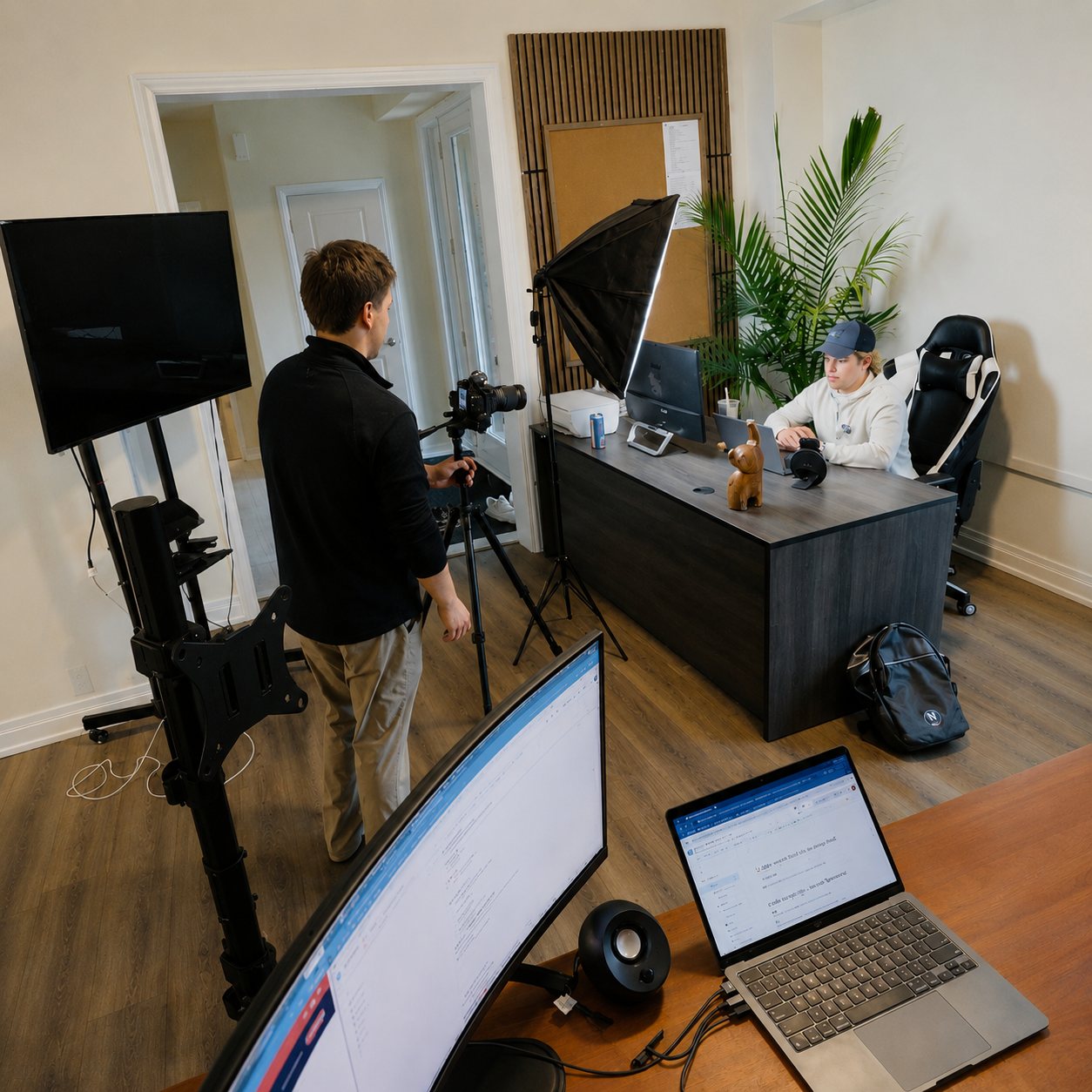 The office
5.0 ★ on Google
5.0Google rating“Working with NewLife Marketing has been a great experience. Their team has travelled to our locations to film professional content and turn it into Meta ad campaigns focused on generating real leads for our stores. The campaigns have been profitable, the communication has been consistent, and they’re always looking for ways to improve performance and bring us more opportunities. It’s been great having a marketing team that’s willing to show up, understand our business, and put in the work. We’d highly recommend NewLife Marketing to any business looking to grow through digital advertising.”
Last step
You will talk to Cruz or Keegan, not a sales rep. If the honest answer is that you do not need us yet, that is what you will hear, and you keep the plan either way.