
Step 1 of 5
The list
Not a segment, not a job title. A list of companies, written down, that somebody senior agrees with. Everything after this is execution; this is the only strategic decision in it.
 5.0 Google rating
Go-To-Market Strategy In Toronto
A Go To Market Strategy Agency Toronto engagement is mostly deciding what not to do, and the businesses that find that frustrating are the ones who need it most.
Trusted by Ontario businesses












On this page
The whole scope, in the order it is explained below.
The context
Toronto is the easiest market in the country to launch into and the hardest to be noticed in, and those are the same fact.
City of Toronto Employment Survey, 2025
City of Toronto Employment Survey, 2025
City of Toronto, 2024 boundary review
The City of Toronto's 2025 Employment Survey counted 5,160 establishments opening in a single year. Each of them is somebody's launch, and a good share of them will spend money describing themselves in terms that could describe four competitors.
In a thin market a vague proposition still gets found, because there is nothing else. Here it does not. The cost of being imprecise is not that people disagree with you; it is that nobody can tell you apart from the alternative they already have.
So the work here is mostly subtraction: narrowing who it is for until the claim becomes specific enough to be worth making.
Five questions
If a strategy document does not answer all five in a sentence each, it is a plan rather than a strategy.
Who exactly is this for? Not an industry and a company size. A description specific enough that you could name ten companies that fit and ten that nearly fit and do not. If the second list is hard to write, the first one is not real.What are they doing instead today? Everything you sell competes with a spreadsheet, a person, or carrying on as they are. Naming the real alternative is what makes the rest of the argument possible.Why would they change? Something has to happen in their year that makes the current way intolerable. A business that cannot name that event is selling to people who have no reason to move this quarter.How do they find out? One route, chosen deliberately, that you will be good at. Not five, each done badly, which is what a budget split evenly across channels actually produces.What would prove this wrong? The question nobody asks. A strategy that no evidence could disprove is a statement of hope, and it will survive three quarters of evidence that it is not working.The common failure
Most of the wasted money in a launch is spent on infrastructure that assumes a decision nobody made.
The pattern is recognisable. A site is built, a CRM is configured, sequences are written, advertising accounts are opened, and only then does anybody discover that the audience is wrong or the message does not land. Every one of those assets now has to be redone, and the budget that would have funded the second attempt was spent on the first.
The cheaper order is to test the five answers before building anything that assumes them. Ten conversations with real buyers cost nothing but time and will settle more than a quarter of advertising. A single landing page and a small spend will tell you whether the phrasing lands, before a full site is built around it.
Talks to buyers, writes down the five answers, and tests the riskiest one for the smallest amount of money. Nothing gets built until the answer that would invalidate the build has been checked.
Sequencing
What should actually happen, in order, and what should deliberately not happen yet.
Buyer conversations, competitor teardown, and the five answers written down in a page anybody can argue with. No advertising, no building. The output is a document, and its value is that it can be wrong in public.
One page, one message, one channel, a small budget. The question is not whether it produces revenue. It is whether the phrasing attracts the right person at a cost that could ever work.
Only now the site, the system and the sequences, built around the answer that held up rather than the one assumed in week one. This is also the point at which a budget means something.
The thing not to do in those ninety days is hire a team around an unvalidated proposition. It is the most expensive form of commitment available and the hardest to reverse.
Pricing the risk
Rank the decisions by what it would cost to discover the answer late, then test in that order.
Not all five carry the same risk. Getting the channel wrong costs a quarter of wasted media and is reversible. Getting the buyer wrong costs the product roadmap, the pricing and the sales hiring, and is not.
So the sequence of testing should follow the cost of being wrong rather than the ease of testing. The temptation is the reverse, because channel tests are quick and satisfying while buyer interviews are slow and uncomfortable, and a quarter can disappear into optimising a channel that is pointed at the wrong person.
A useful exercise in the first week: for each of the five decisions, write one sentence describing what you would have to undo if it turned out to be wrong in twelve months. The decision with the longest sentence is the one to test first, and it is almost never the channel.
The second-order benefit is that it makes the strategy arguable. A document in which each decision carries its own stated downside is one a sceptical colleague can engage with, which is more than can be said for most launch decks.
Our part
A narrow and honest scope is more useful to a founder than a capability list.
We run the evidence phase, write the five answers with you, build and run the smallest test, and then build the machine around whatever survived — site, paid media, CRM and reporting. We manage over $70,000 a month in advertising spend for Ontario businesses, and the owner runs the paid media personally.
We do not do pricing strategy, channel partner recruitment, or sales team hiring. Those are specialist disciplines and a marketing firm offering all of them is offering a diagram rather than a service.
One practical note on how the evidence phase runs, because it is the part founders are most sceptical about. The buyer conversations are not surveys and they are not sales calls. They are twenty minutes asking somebody who has recently solved the problem you solve how they went about it: what triggered the search, who else was involved, what they looked at first, what nearly stopped them buying. Ten of those produce the vocabulary, the objections and the trigger events, and they produce them in the buyer’s words rather than yours.
Founders usually resist this on the grounds that they already know their market, and they usually do know it. What they do not have is the phrasing. A founder describes the product; a buyer describes a Tuesday that went badly. Advertising written in the first register reaches people who already understand the category, which in a new market is almost nobody.
The other reason to do it early is that these conversations are the cheapest source of the proof the fifth decision needs. Somebody who talks for twenty minutes about solving this problem is frequently willing to be a reference, a pilot or a quote, and asking at the end of the call costs nothing.
And where the evidence phase says the proposition is not ready, we would rather tell you that and stop than spend a launch budget demonstrating it slowly. That is the one promise a go to market strategy agency Toronto founders should insist on, because it is the only one that costs the agency anything.
Research, which is somebody finding out about named companies, from creative, which is making something worth forwarding, from media, which is paying to put it in front of them. Then ask the question that decides whether any of it works: who on your side receives the list of accounts that engaged, and what do they do with it that week. Without an answer, the output of the whole programme is being thrown away.
Next step
If you can name ten companies that should buy this, send the list. If you cannot, that is the first and cheapest piece of work.
NewLife Marketing · 70 Bearberry Rd, Minesing, ON L9X 2E1 · 705-302-1097 · Based in Minesing, working with founders across Ontario.
How it works
Five steps, and the first one is a list rather than a budget.
Step 1 of 5
Not a segment, not a job title. A list of companies, written down, that somebody senior agrees with. Everything after this is execution; this is the only strategic decision in it.
Step 2 of 5
An economic buyer, a champion, an evaluator, a blocker, a user. They want different things and almost nobody writes for more than one of them.
Step 3 of 5
A specific reason this company should care, in a form the champion can send internally without explaining it. Generic material dies in the first forward.
Step 4 of 5
Advertising against the list, email, direct contact, events. The channel matters far less than everyone being pointed at the same names.
Step 5 of 5
The list of accounts showing interest, going to whoever sells, every week. That handover is the entire output, and it is routinely nobody’s job.
Proof first
Every number published on this site came from paid media or production work, with the client named on it.
Account research, scoring and the signal layer - documented in full.
See what we built →Named clients, real figures, and what each one was spending.
See all case studies →This kind of work is slow to show, because the result is a named company agreeing to a meeting rather than a number that moved. The honest measure is how many of your target accounts have engaged at all this quarter. Ask any agency for that figure, and ask who sends it to whoever sells.
The person on your account
Sales Director & Head of Client Communication — NewLife Marketing
Scopes your engagement before a dollar moves — what you actually need, what it should cost, and the goals the work will be judged against. Then he leads your day-to-day communication and checks those goals monthly.
Straight answers
Straight answers before you ever book a call.
Unanswerable until the five decisions are made, which is the point of the question. What can be said is that the budget should be split: a small amount for the test and the larger part held back until the test has told you which version to spend it on. Committing the whole budget to the first guess is the most common and most expensive launch error.
More so, because now there is evidence. A launch that underperformed has produced data about who did and did not respond, which is exactly the input the five questions need and which a pre-launch company does not have. The useful work is a post-mortem that takes it seriously rather than a relaunch that changes the colours.
The evidence phase is weeks, not months, and it is tempting to extend it because research is comfortable and commitment is not. The discipline is to stop at the point where more conversations stop changing the answers, write the five decisions down, and go and test the riskiest one.
Sometimes, and the honest caveat is that the work is different: with no customers there is no closed-won history to build a target list from, so the evidence has to come from conversations with people who are not yet buyers. That is slower and noisier. It is still far cheaper than discovering the same thing through a year of advertising.
Why NewLife
Everything we do runs on one system we call The Film-to-Funnel System: in-house film → paid ads → landing page → CRM follow-up → optimize. Here is how that stacks up against doing it yourself or hiring a typical agency.
| In-house | Typical agency | NewLife | |
|---|---|---|---|
| Creative | You film it on a phone | Outsourced or stock footage | Our in-house cinema crew, filmed on-site |
| Who does the work | You, between running the business | A junior account manager | Cruz and the senior team, directly |
| The system | Disconnected tools that don't talk | Ads, then hands-off | Film → ads → landing page → CRM, one connected system |
| Your accounts & data | Yours, but no time to run them | Often held hostage | Always yours - you keep everything |
| Follow-up | Manual, when you remember | Rarely their problem | Automated speed-to-lead in the CRM |
| Local knowledge | You know your market | A national, generic playbook | Real local research for every market you target |
Come say hi
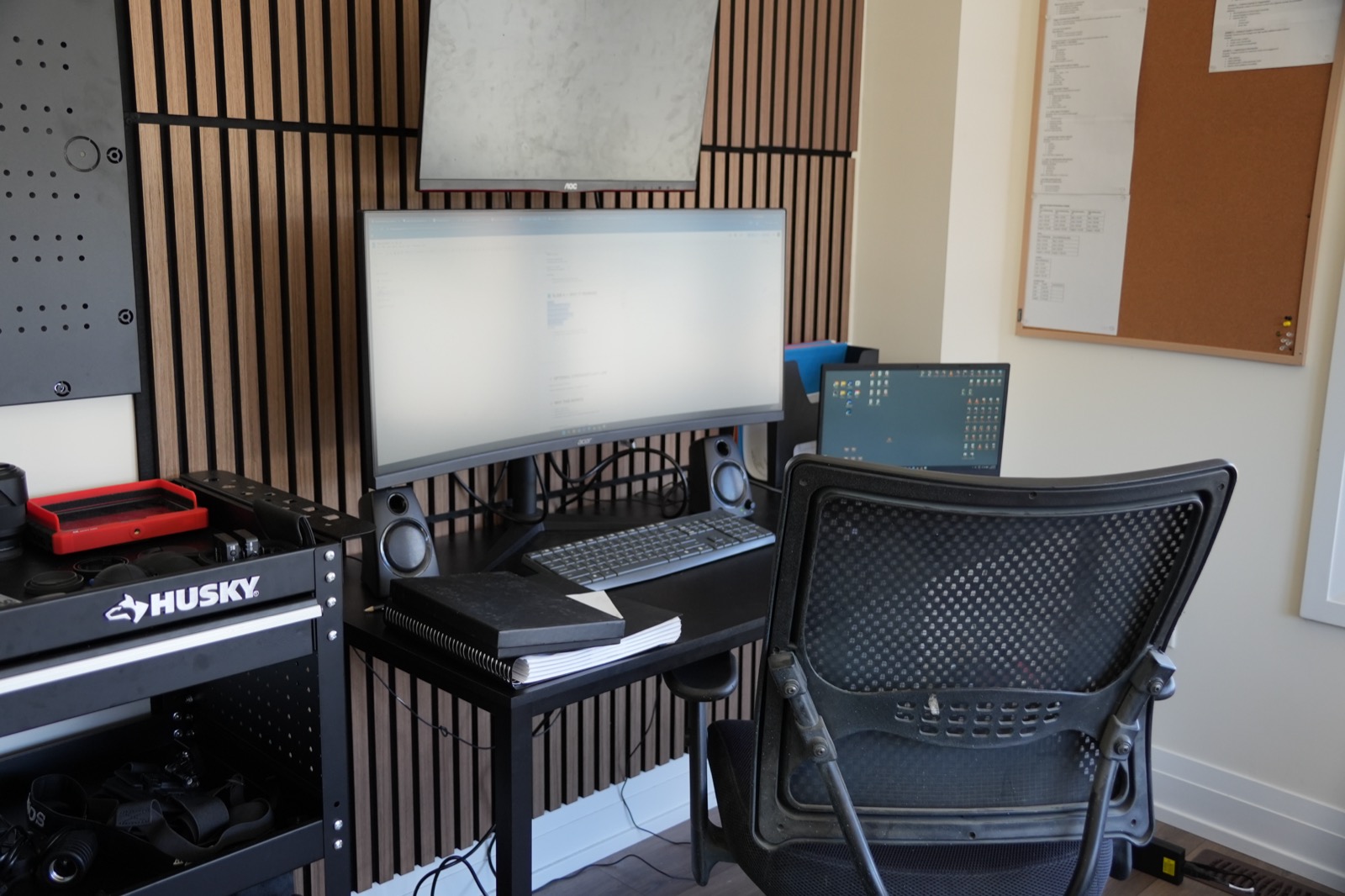
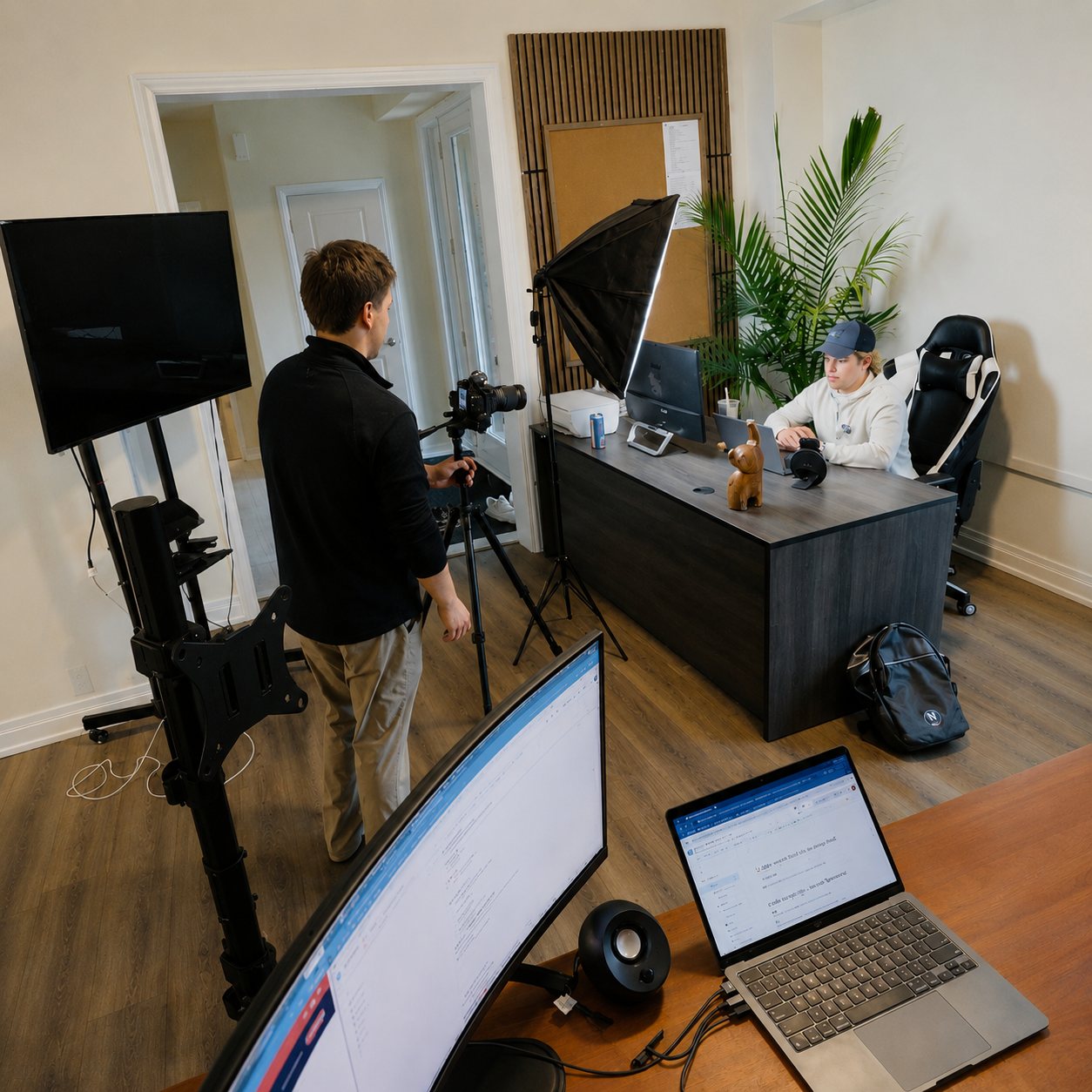
The office and the studio are in Minesing, just west of Barrie. Come and sit in it, see what is actually on the screens, and ask the person who would be on your account what they would do first.


 The office
5.0 ★ on Google
5.0Google rating“Working with NewLife Marketing has been a great experience. Their team has travelled to our locations to film professional content and turn it into Meta ad campaigns focused on generating real leads for our stores. The campaigns have been profitable, the communication has been consistent, and they’re always looking for ways to improve performance and bring us more opportunities. It’s been great having a marketing team that’s willing to show up, understand our business, and put in the work. We’d highly recommend NewLife Marketing to any business looking to grow through digital advertising.”
Last step
You will talk to Cruz or Keegan, not a sales rep. If the honest answer is that you do not need us yet, that is what you will hear, and you keep the plan either way.