
Step 1 of 5
Tracking
Browser-only tracking loses a large share of conversions to ad blockers and browser settings, which means the account optimises on a partial picture. Nothing else is worth doing until this is right.
 5.0 Google rating
Facebook Ads In Brampton
Facebook Ads Brampton has no shortage of people to reach. What it is short of is a reason to stop paying for most of them.
Trusted by Ontario businesses












On this page
The whole scope, in the order it is explained below.
The inverted constraint
In a small market the audience saturates and tells you. Here it does not.
Statistics Canada, 2021 Census of Population
In a town of fifty thousand a campaign reaches everybody who matters within a month and then starts paying to repeat itself. Frequency climbs, cost per result climbs with it, and the account complains loudly enough that somebody acts.
Here a broad audience is effectively bottomless. You can spend indefinitely without reaching the same person too often, which sounds like freedom and is mostly a trap: the spend continues, reach climbs, cost per result drifts upward, and no automatic signal says the targeting is wrong.
So the useful work is subtraction. Excluding the people who will never buy, the placements that produce clicks and nothing else, and the geography you cannot serve, until the cost per enquiry moves.
What to exclude
Each is free, reversible and usually unexamined.
Prospecting campaigns routinely re-advertise to people who already bought. Uploading the customer list as an exclusion costs an afternoon and improves every prospecting number immediately.
Automatic placements put the budget wherever it is cheapest, which is not the same as wherever it works. Check results by placement after a month and remove the ones producing clicks without enquiries.
A radius drawn from a pin in a city this size spills into Mississauga, Caledon and Vaughan. If you cannot serve them profitably you are paying to reach them; if you can, they should be a separate campaign so the cost is visible.
An interest-based audience that cannot be described in a sentence is a guess with a budget. Either you can say who these people are and why, or the audience should be broader and the creative should do the sorting.
What the platform does now
The thing agencies sold for a decade has largely been automated, and in a market this large that matters more than elsewhere.
Detailed interest targeting has narrowed and broad targeting with automated optimisation performs well, because the platform tests creative against people faster than any human can. The lever moved: what you give the system to choose between now matters more than who you told it to find.
In a small town that change is softened, because there are only so many people and the system runs out of room. Here it is the whole game. A campaign with one piece of creative is asking the platform to find the right people in a city of 656,480 using a single signal, and it will do it badly.
Several distinct pieces — different arguments rather than different crops of one image — give the system something to sort with. That is a production decision as much as a media one, and it is the line most often missing from a quote.
A proposal that is mostly about audience segments is describing a job the platform now does.
A city that grew 10.6%
A large share of this audience arrived in the last five years and has no supplier relationship to displace.
That is an advantage and it changes the message. A newcomer is not being asked to switch; they are being asked to choose for the first time, and the obstacle is not loyalty but unfamiliarity.
What works in that situation is evidence rather than persuasion: the work being done, the person they will deal with, the thing answered that everybody asks before committing. A stranger scrolling at home will watch ninety seconds of real work and will not fill in a form asking for a consultation.
So the structure that works is two stages. Cheap, broad attention against something genuinely worth watching, then a much smaller ask retargeted at the people who watched most of it. The enquiries come from the second stage and the first is what makes it affordable.
Judged on the first stage alone the channel looks like a failure, which is why it is so often abandoned a month before it would have started working.
Measurement
Every reported number here is produced by the party being paid, which is a fact to plan around rather than a scandal.
Attribution inside the platform counts an impression or a click as the cause of a purchase within a window it chooses. Where somebody saw an advertisement, then searched your name, then enquired, both this platform and your search account will claim it. Add the reports together and you have more business than your bank does.
The defence is not a better attribution model. It is one blunt question asked monthly: what changed in total enquiries and total revenue in the months the spend ran against the months it did not. It lags, it is crude, and nobody has an incentive to inflate it.
In a city where a great deal of business arrives through referral and community networks, add the oldest instrument: ask every arriving customer how they heard of you and record the answer. Across a quarter it captures the routes no tracking parameter survives.
Both habits cost a minute per enquiry and they are the only report lines that come from your business rather than from a platform.
Our part
In a market constrained by creative rather than money, production is the bottleneck being removed.
We run Meta accounts against cost per enquiry and film the material they run on. One shooting day of real work produces enough cuts to give the platform something to sort with, and the marginal cost of the fifth cut is a fraction of the first.
A facebook ads brampton account needs two things we cannot supply: what a customer is worth, which sets the ceiling on what an enquiry may cost, and something real to film, because in a bottomless audience relevance is the only thing that makes the impressions cheap.
We manage over $70,000 a month in advertising spend for Ontario businesses and the owner runs the paid media personally. We are based in Minesing rather than Brampton, so filming here involves travel, which we price as its own line rather than folding it into a fee.
The media budget, which goes to Meta, from the management fee, which goes to the agency, from the creative, which is somebody making the advertisements and is the part that decides the result. A single monthly number hides all three. Ask how many new advertisements a month, who makes them, whose account it is, and what happens to the audiences and the pixel history if you leave.
Next step
Give us read access and we will show you what share of the spend went to people you could never serve or had already sold to.
NewLife Marketing · 70 Bearberry Rd, Minesing, ON L9X 2E1 · 705-302-1097 · Based in Minesing, running paid social across Ontario including Brampton.
How it works
Five steps, and the first one is not about advertising at all.
Step 1 of 5
Browser-only tracking loses a large share of conversions to ad blockers and browser settings, which means the account optimises on a partial picture. Nothing else is worth doing until this is right.
Step 2 of 5
One advertisement is not a test. Several genuinely different ones - different opening, different claim, different footage - because the creative decides most of the result and the targeting decides far less than people expect.
Step 3 of 5
Ad sets begin in prospecting on a small budget. Most will not work, which is the point: the budget is buying an answer rather than reach.
Step 4 of 5
A set that proves out graduates to scaling or retargeting. One that does not is stopped. The verdict is reached at a threshold agreed in advance, not when somebody feels uneasy.
Step 5 of 5
Launch, gather to the threshold, decide, replace. Running that cycle properly is most of what separates an account that improves from one that drifts.
Proof first
Every number published on this site came from paid media or production work, with the client named on it.
A Portuguese grill that came to us with almost no online presence.
Read the case study →Named clients, real figures, and what each one was spending.
See all case studies →That account was not run in Brampton, and we are not going to imply otherwise. It is published, named and checkable, which is more than a screenshot of a dashboard offers. Ask any agency what a customer cost before and after, and ask who counted it.
The person on your account
Founder & CEO · Head of Operations & Paid Media — NewLife Marketing
Runs your strategy call, builds and manages your paid media accounts personally, and owns the monthly numbers you will be shown. On your calls you talk to Cruz or Keegan: never a rep.
Straight answers
Straight answers before you ever book a call.
Work backwards from a customer rather than forwards from a budget. If a customer is worth four hundred dollars and one enquiry in four becomes one, a hundred dollars an enquiry is break-even. Below that the only other constraint is having enough results each week for the account to settle, which is a smaller figure than most people assume.
Look at how many times the average person has seen it before looking at anything else. In a city this size the number climbs faster than expected, and past three or four the same spending reaches people who have already decided against you. New material fixes it; a larger budget makes it worse.
More than one, and in a city this size the number is set by what the platform needs to sort with rather than by how fast the audience tires. Several distinct arguments running at once will outperform one polished piece, and that is a production budget decision before it is a media one.
Usually, and it is the first place to look. Material that has already run carries a record of how it performed, which is information you paid for and which no new piece has. Anything shot on a phone by somebody doing the actual work is frequently the best of it.
Why NewLife
Everything we do runs on one system we call The Film-to-Funnel System: in-house film → paid ads → landing page → CRM follow-up → optimize. Here is how that stacks up against doing it yourself or hiring a typical agency.
| In-house | Typical agency | NewLife | |
|---|---|---|---|
| Creative | You film it on a phone | Outsourced or stock footage | Our in-house cinema crew, filmed on-site |
| Who does the work | You, between running the business | A junior account manager | Cruz and the senior team, directly |
| The system | Disconnected tools that don't talk | Ads, then hands-off | Film → ads → landing page → CRM, one connected system |
| Your accounts & data | Yours, but no time to run them | Often held hostage | Always yours - you keep everything |
| Follow-up | Manual, when you remember | Rarely their problem | Automated speed-to-lead in the CRM |
| Local knowledge | You know your market | A national, generic playbook | Real local research for every market you target |
Where to go next
Come say hi
The office and the studio are in Minesing, just west of Barrie. Come and sit in it, see what is actually on the screens, and ask the person who would be on your account what they would do first.

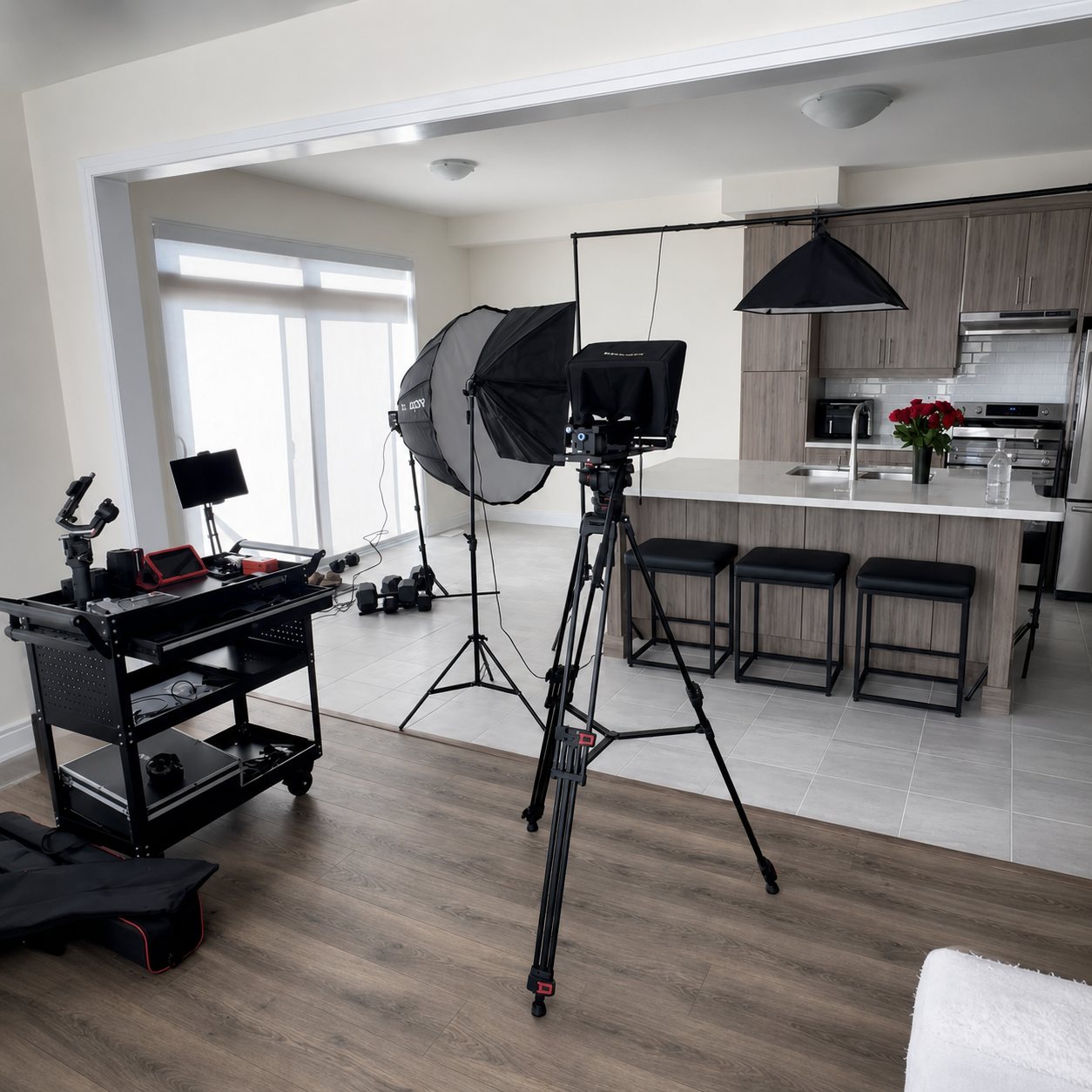
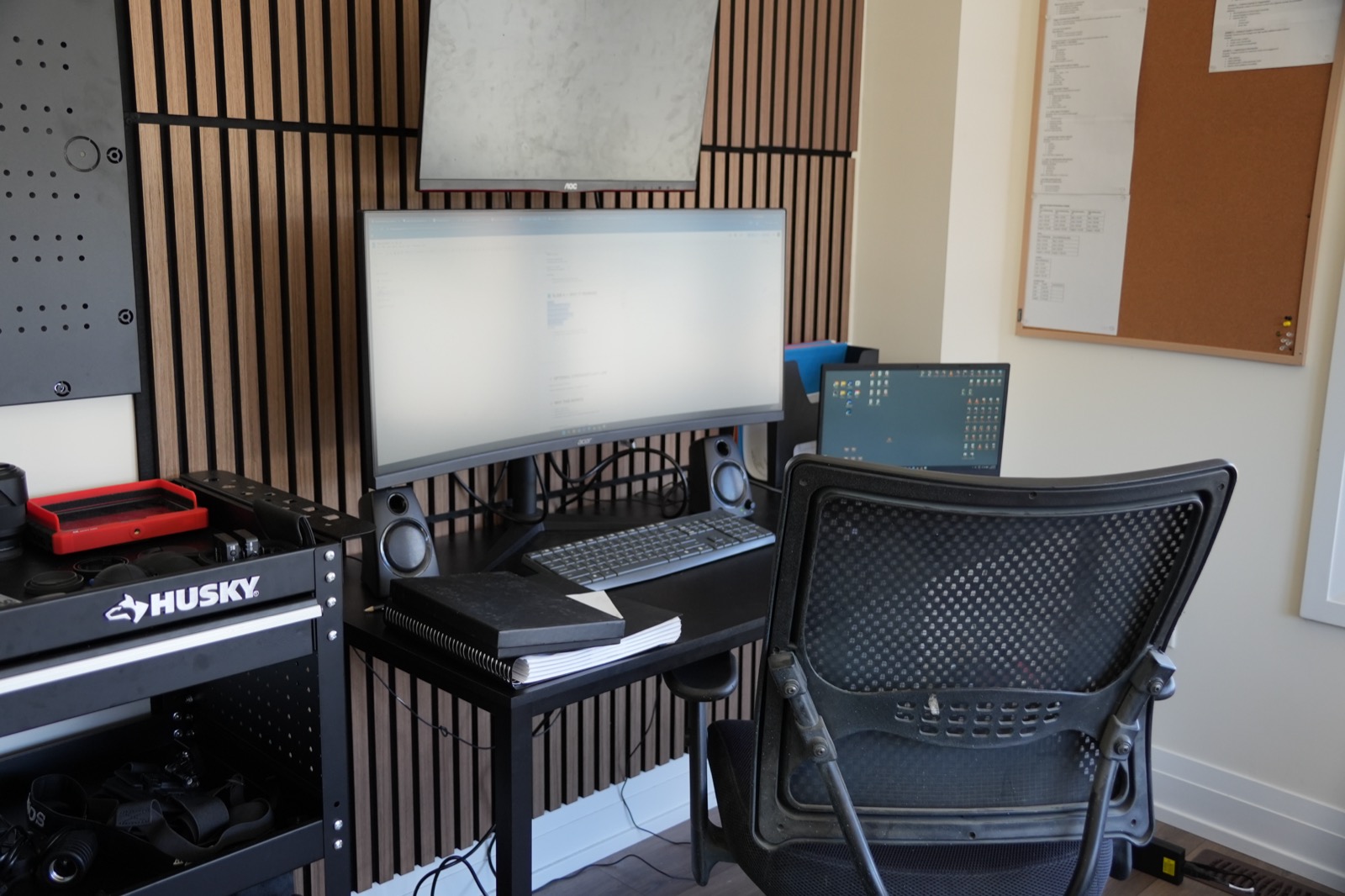
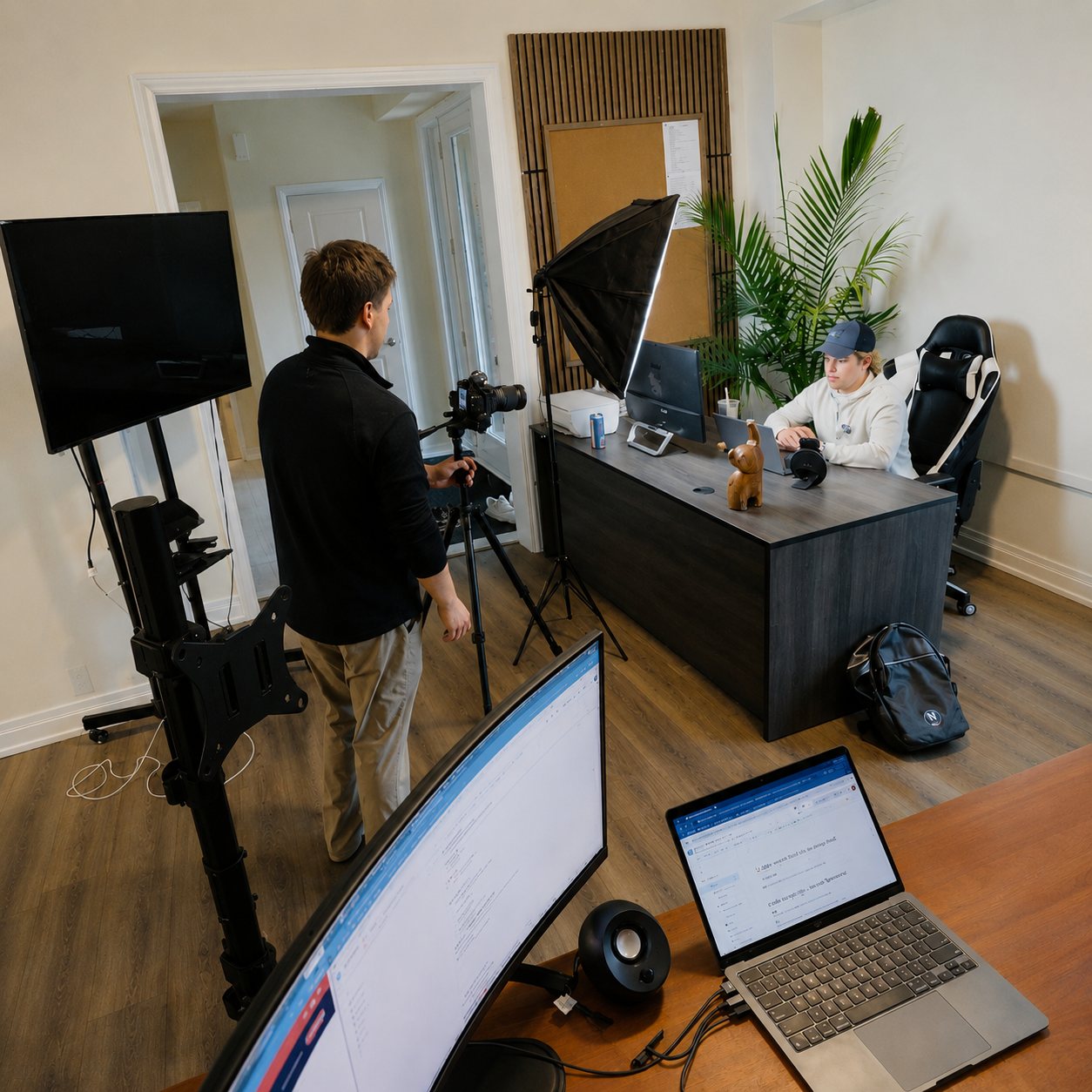 The office
5.0 ★ on Google
5.0Google rating“Working with NewLife Marketing has been a great experience. Their team has travelled to our locations to film professional content and turn it into Meta ad campaigns focused on generating real leads for our stores. The campaigns have been profitable, the communication has been consistent, and they’re always looking for ways to improve performance and bring us more opportunities. It’s been great having a marketing team that’s willing to show up, understand our business, and put in the work. We’d highly recommend NewLife Marketing to any business looking to grow through digital advertising.”
Last step
You will talk to Cruz or Keegan, not a sales rep. If the honest answer is that you do not need us yet, that is what you will hear, and you keep the plan either way.