
Step 1 of 5
Tracking
Browser-only tracking loses a large share of conversions to ad blockers and browser settings, which means the account optimises on a partial picture. Nothing else is worth doing until this is right.
 5.0 Google rating
Facebook Ads In Mississauga
Facebook Ads Agency Mississauga work is improved more by who you exclude than by who you target, and almost no proposal mentions exclusion at all.
Trusted by Ontario businesses












On this page
The whole scope, in the order it is explained below.
The inverted constraint
In a small market the audience saturates. Here it does not, and that changes which lever matters.
Statistics Canada, 2021 Census
City of Mississauga Employment Survey, 2025
In a town of fifty thousand, a campaign reaches everybody who matters within a month and then starts paying to repeat itself. Here, a broad audience is effectively bottomless: you can spend indefinitely without ever reaching the same person too often.
That sounds like freedom and is mostly a trap. A bottomless audience means nothing forces a correction. The spend continues, the reach climbs, the cost per result drifts upward, and no automatic signal says the targeting is wrong — because frequency, the number that complains loudest in a small market, stays comfortable.
So the discipline a Facebook ads agency Mississauga clients keep brings is imposed rather than inherited. The useful work is subtraction: excluding the people who will never buy, excluding the placements that produce clicks and nothing else, and narrowing until the cost per enquiry moves.
How small is too small
The platform will accept a tiny audience and then spend badly inside it.
Below a certain size the delivery system has nowhere to optimise. It shows the same people the same advertisement repeatedly, the cost climbs, and the account looks like it stopped working when it simply ran out of room.
The instinct that causes it is reasonable: narrow until only ideal customers remain. On a platform that finds people by behaviour rather than by filter, that instinct is backwards.
So the better shape is a broad audience and a specific advertisement. The message does the filtering, and the people it does not speak to scroll past at no cost.
This is the opposite of how the platform was sold a decade ago, and a great deal of advice still in circulation describes the older behaviour. An account built on it is recognisable at a glance: many small audiences, each with a handful of conditions, each spending too little to settle into anything.
Where genuine exclusions are needed — existing customers, areas you do not serve, applicants rather than buyers — those are subtractions rather than narrowings, and they behave completely differently.
The practical check is the estimated size the interface shows while a campaign is being set up. Watch it as each condition is added, and notice the point at which a reasonable-sounding requirement removes most of the available people. That moment is usually the one worth arguing about, and it passes without comment in almost every setup.
What is actually being sold
Two campaigns identical in every setting will differ enormously on this alone.
Somebody scrolling was not looking for you. Whatever interrupts them has to be worth stopping for, and “contact us for a quote” is not worth stopping for.
What works is a specific, low-commitment reason to act now: a price for a defined thing, a date, a short piece of genuinely useful information, a sample.
That is a commercial decision rather than a media one, and it belongs to the business rather than to whoever runs the account. A supplier who never raises it is managing settings around a proposition nobody tested.
It is also the cheapest thing to change. Rewriting the offer takes a morning and routinely moves results more than a quarter of optimisation.
Ask any Facebook Ads Agency Mississauga businesses are considering what they would change about the offer before they touch the account. The ones who answer have run campaigns here; the ones who talk about audiences have run software.
Selling to companies on a consumer platform
In a city of 23,700 businesses, a great many advertisers here are trying to reach people in a professional capacity on a platform they use personally.
It can work, and the mechanism is not job-title targeting, which this platform does poorly compared with professional networks. It is that a defined geography plus a strong, specific message finds the right people inexpensively because the impressions are cheap.
The constraint is the ask. A stranger scrolling at home will not request a demonstration of an industrial product. They will watch ninety seconds of the thing actually working, and they will download a specific piece of information if it is genuinely useful and requires nothing of them.
So the campaign structure that works is two-stage: cheap, broad attention against something worth watching, then retargeting against a much smaller ask for the people who watched most of it. The second stage is where the enquiries come from and the first is what makes it affordable.
Judged on the first stage alone, the channel looks like it does not work for business-to-business selling. Judged end to end, it is frequently the cheapest top of funnel available in a city this size.
Where the click lands
Two options with opposite trade-offs, and the right answer depends on what happens next.
A form that opens inside the application is pre-filled and quick, so far more people complete it. It also collects people who barely read anything, and the enquiry quality is correspondingly lower.
A page on your own site asks more and therefore gets fewer, better enquiries — provided the page loads quickly, because a slow page loses most of a mobile audience before it appears.
The deciding factor is what you do with an enquiry. A business that rings within minutes can handle the volume the in-platform form produces; one that replies the next day cannot, and should ask for more effort up front.
Whichever is used, the enquiry has to reach somebody. In-platform forms sit unread in an interface nobody opens unless they are deliberately connected to an inbox or a record system.
That connection is a setup task rather than a monthly one, and it is the single commonest thing a new Facebook Ads Agency Mississauga engagement discovers was never done. Enquiries from the previous arrangement are frequently still sitting there.
Our part
A short offer, said before a meeting rather than during one.
We buy the attention and make the material it runs on. The owner runs the paid media personally and we manage over $70,000 a month in advertising spend for Ontario businesses.
What we would raise first is almost never the targeting. It is what the advertisement offers and where the click lands, because those decide the result and the account settings decide the margin.
What we do not sell: daily posting, community management, inbox monitoring, or a post count. Those are real services and they are not ours.
We are based in Minesing. For running an account that changes nothing; for filming it means travel, which we price as its own visible line rather than folding it into a fee.
The media budget, which goes to Meta, from the management fee, which goes to the agency, from the creative, which is somebody making the advertisements and is the part that decides the result. A single monthly number hides all three. Ask how many new advertisements a month, who makes them, whose account it is, and what happens to the audiences and the pixel history if you leave.
Next step
Give us read access and we will show you what share of the spend went to people you could never serve or had already sold to.
NewLife Marketing · 70 Bearberry Rd, Minesing, ON L9X 2E1 · 705-302-1097 · Based in Minesing, running paid social across Ontario including Mississauga.
How it works
Five steps, and the first one is not about advertising at all.
Step 1 of 5
Browser-only tracking loses a large share of conversions to ad blockers and browser settings, which means the account optimises on a partial picture. Nothing else is worth doing until this is right.
Step 2 of 5
One advertisement is not a test. Several genuinely different ones - different opening, different claim, different footage - because the creative decides most of the result and the targeting decides far less than people expect.
Step 3 of 5
Ad sets begin in prospecting on a small budget. Most will not work, which is the point: the budget is buying an answer rather than reach.
Step 4 of 5
A set that proves out graduates to scaling or retargeting. One that does not is stopped. The verdict is reached at a threshold agreed in advance, not when somebody feels uneasy.
Step 5 of 5
Launch, gather to the threshold, decide, replace. Running that cycle properly is most of what separates an account that improves from one that drifts.
Proof first
Every number published on this site came from paid media or production work, with the client named on it.
A Portuguese grill that came to us with almost no online presence.
Read the case study →Named clients, real figures, and what each one was spending.
See all case studies →That account was not run in Mississauga, and we are not going to imply otherwise. It is published, named and checkable, which is more than a screenshot of a dashboard offers. Ask any agency what a customer cost before and after, and ask who counted it.
The person on your account
Founder & CEO · Head of Operations & Paid Media — NewLife Marketing
Runs your strategy call, builds and manages your paid media accounts personally, and owns the monthly numbers you will be shown. On your calls you talk to Cruz or Keegan: never a rep.
Straight answers
Straight answers before you ever book a call.
Unlike a small town, the audience does not set a ceiling, so the budget is set by what an enquiry is worth and how much data you need to optimise. Start at a level that produces enough results weekly to tell one piece of creative from another, and raise it only when the cost per enquiry holds steady as you do. Spend that climbs while cost per enquiry climbs is buying worse people.
Yes, but not by targeting job titles, which this platform does weakly. It works through a two-stage structure: cheap broad attention against something genuinely worth watching, then a smaller ask retargeted at the people who watched. Judged on the first stage alone it looks like a failure; judged end to end it is often the cheapest top of funnel available here.
In a market this size it is rarely audience fatigue, which is the usual culprit in a small town. More often it is that the campaign is being allowed to find cheaper and less relevant people because nothing is excluding them. Check results by placement, by geography and by audience, and start subtracting rather than adding budget.
Yes, and we would before making anything new, because existing material carries performance history you have already paid for. The common finding is not that it is poor but that there is one piece of it, which in a city this size starves the platform of anything to sort with.
Why NewLife
Everything we do runs on one system we call The Film-to-Funnel System: in-house film → paid ads → landing page → CRM follow-up → optimize. Here is how that stacks up against doing it yourself or hiring a typical agency.
| In-house | Typical agency | NewLife | |
|---|---|---|---|
| Creative | You film it on a phone | Outsourced or stock footage | Our in-house cinema crew, filmed on-site |
| Who does the work | You, between running the business | A junior account manager | Cruz and the senior team, directly |
| The system | Disconnected tools that don't talk | Ads, then hands-off | Film → ads → landing page → CRM, one connected system |
| Your accounts & data | Yours, but no time to run them | Often held hostage | Always yours - you keep everything |
| Follow-up | Manual, when you remember | Rarely their problem | Automated speed-to-lead in the CRM |
| Local knowledge | You know your market | A national, generic playbook | Real local research for every market you target |
Where to go next
Come say hi
The office and the studio are in Minesing, just west of Barrie. Come and sit in it, see what is actually on the screens, and ask the person who would be on your account what they would do first.

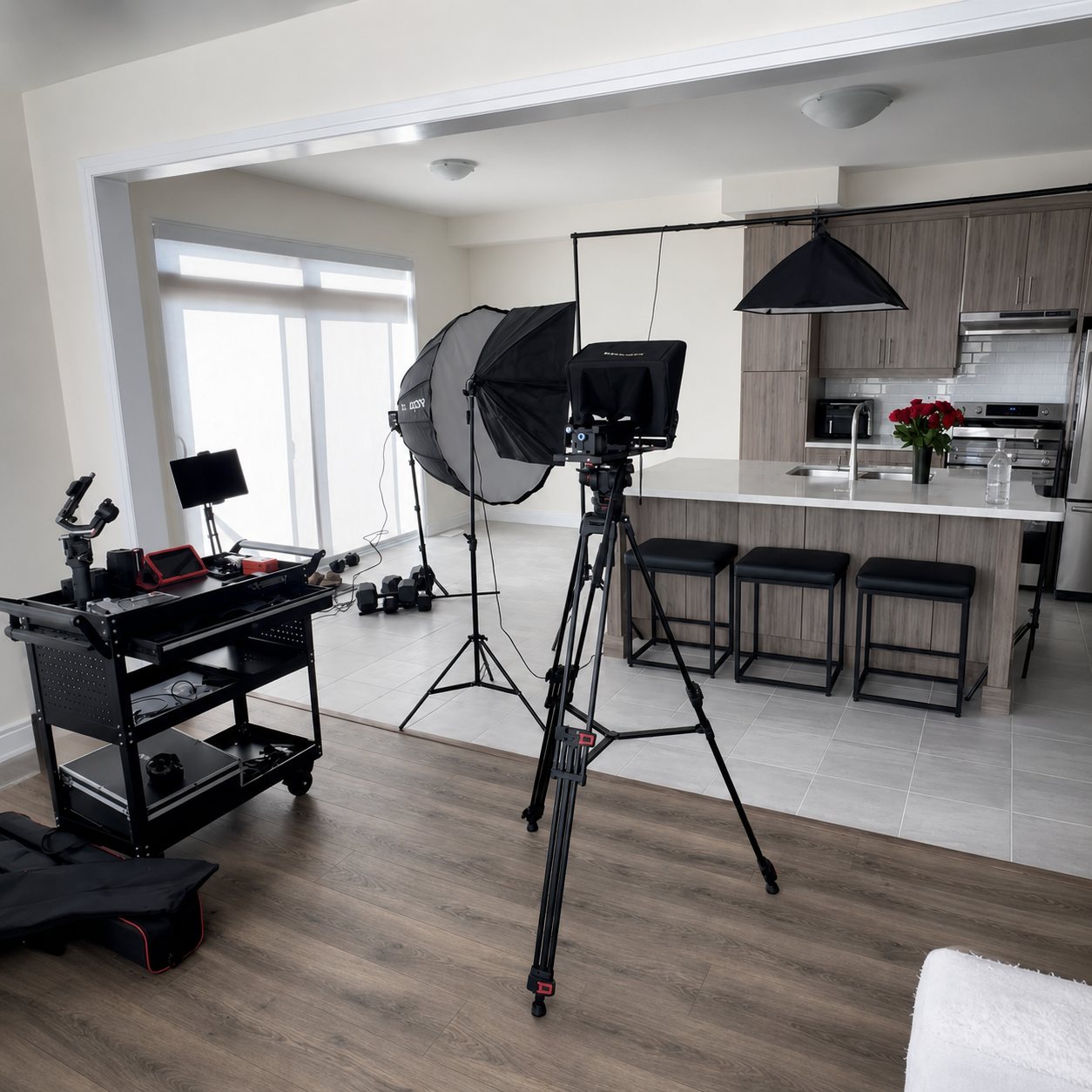
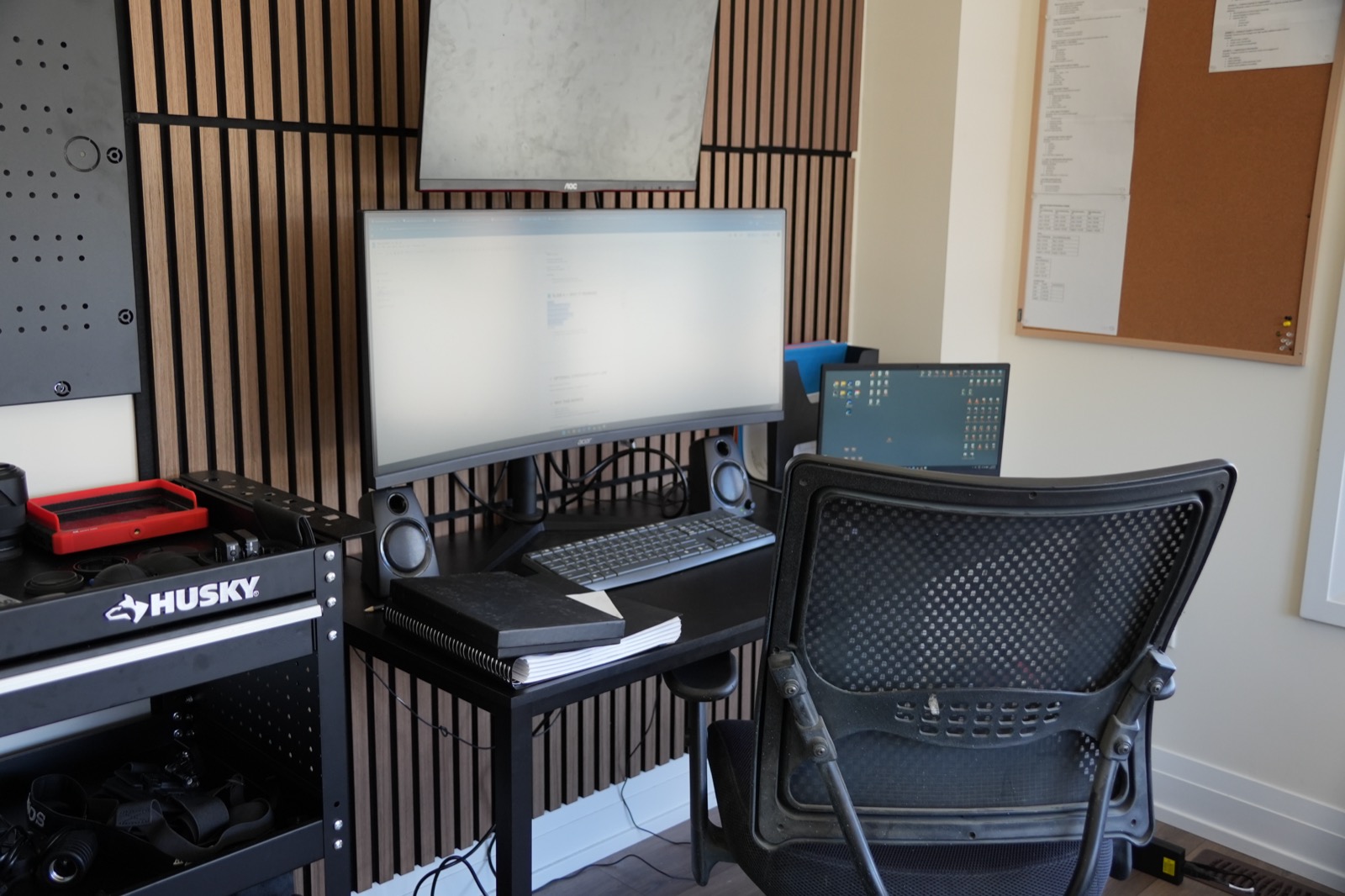
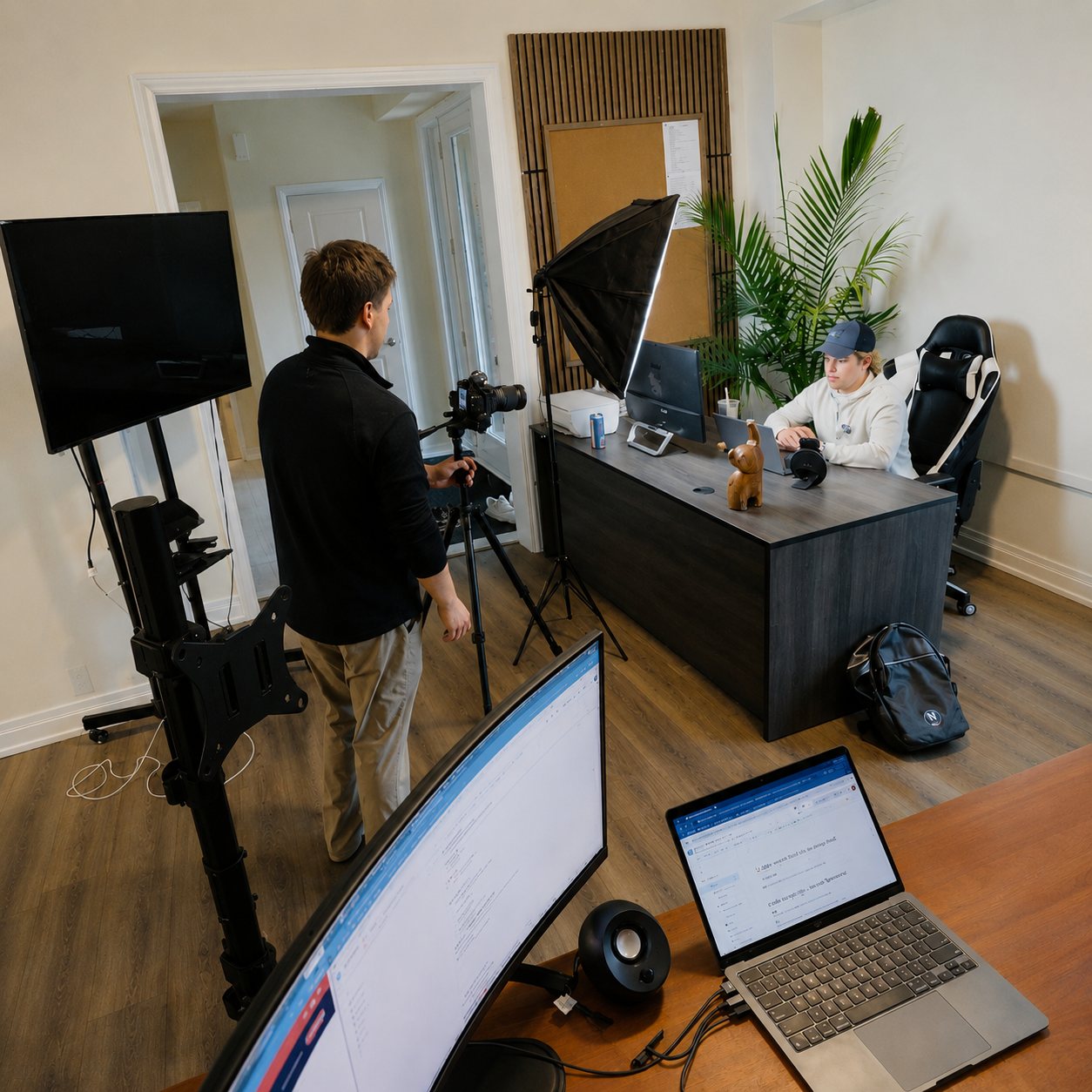 The office
5.0 ★ on Google
5.0Google rating“Working with NewLife Marketing has been a great experience. Their team has travelled to our locations to film professional content and turn it into Meta ad campaigns focused on generating real leads for our stores. The campaigns have been profitable, the communication has been consistent, and they’re always looking for ways to improve performance and bring us more opportunities. It’s been great having a marketing team that’s willing to show up, understand our business, and put in the work. We’d highly recommend NewLife Marketing to any business looking to grow through digital advertising.”
Last step
You will talk to Cruz or Keegan, not a sales rep. If the honest answer is that you do not need us yet, that is what you will hear, and you keep the plan either way.