
Step 1 of 5
Hours
Not features. How many hours a week does the current way cost, and who spends them. A project that cannot answer that is a project with no way of knowing whether it worked.
 5.0 Google rating
Custom Software Development In London
Custom Software Development London On projects go better when the first document is a test the finished thing has to pass, rather than a list of features it should have.
Trusted by Ontario businesses












On this page
The whole scope, in the order it is explained below.
Where it will live
Three questions with dull answers that decide what you actually own.
Where does it run, who pays that bill, and whose name is on the account? A build hosted inside a supplier’s own infrastructure is a build you cannot move, and the discovery usually happens at the moment you most want to move it.
What is backed up, how often, and has a restore ever been tested? An untested backup is a belief rather than a backup, and the test takes an hour.
And what happens when it stops outside working hours. For an internal tool the honest answer is often “it waits until Monday”, which is fine if it is agreed in advance and a disaster if it is assumed otherwise.
None of these are technical questions and all three are cheaper to settle in the first week than in any week after it.
What goes in the contract
A page of sentences you could check yourself, agreed before anybody starts.
A feature list is checked by whoever built it and is always complete. An acceptance test is checked by you, on real data, and is frequently not.
So write the second kind: a new job can be entered in under a minute; last month comes out matching the accounts; somebody who has never seen it completes the common task unaided. Short, specific, and phrased as something a person does.
Tie payment to those rather than to milestones named after internal stages. A milestone called “back end complete” is unverifiable by the person paying for it, which makes it a strange thing to attach money to.
It also protects the supplier, which is why good ones welcome it. A written test is a defined finish line, and the alternative is a project that ends whenever the client runs out of changes.
Where the value usually is
Frequently in the job only one person knows how to do.
Every established business has one: the quoting method, the scheduling logic, the way a particular calculation is done. It lives in one head, it is not written down, and the business politely does not think about what happens when that person is away for three weeks.
Turning that into software is rarely about speed. It is about the knowledge existing somewhere other than one person, in a form somebody else can run without understanding why every rule is there.
It is also the hardest part to specify, because the person who does it cannot fully explain it. The rules come out in fragments, usually as exceptions, and getting them down takes several sessions rather than one meeting.
Which is exactly why it is worth doing. A process nobody can describe is a process nobody can take over, and the cost of discovering that during an emergency is not comparable to the cost of a build.
Start by recording it rather than building it. Three conversations, written up as a numbered list of rules and the exceptions to each, is a document with value on its own even if no software ever follows. Half the businesses that commission this work find the written version solves enough of the problem that the build gets smaller.
The boring safety work
Not an enterprise security programme. Four items, none of them expensive.
Individual logins rather than a shared one, so that leaving a job removes access and an audit can answer who changed what. Shared credentials are the single commonest weakness in small internal software and the easiest to avoid.
Nothing sensitive in a spreadsheet export that then lives in somebody’s downloads folder forever. Decide what may be exported and by whom, at the start.
An encrypted connection, which is free and standard, and a check that the thing is not quietly reachable from the public internet when it was only ever meant to be internal.
And a named person who removes access when somebody leaves. That is a process rather than a feature, and it is the one that actually fails.
Making the estimate honest
Twenty minutes of writing that prevents the awkward conversation in month three.
Every fixed price rests on assumptions: that a system has an interface, that the data is in the shape somebody described, that the person who knows the process will be available for the hours the project needs.
Written down and numbered, with what changes if each turns out to be wrong, those assumptions make a fixed price defensible rather than optimistic. Left unwritten, the first one that fails becomes a dispute about who should have known.
It also exposes the single most common cause of a stalled project, which is not technical at all: the one person who genuinely understands the process is also the person quoting, running jobs and answering the phone. Booking their hours as a recurring slot rather than asking for them when needed is the whole difference.
A supplier who produces that page unprompted has run projects before. One who treats it as excessive is about to find out why it exists.
There is one more line worth insisting on, and it costs nothing: what happens to the work if the project is stopped halfway. A build that is only valuable when finished is a different risk from one delivered in usable pieces, and the second is almost always achievable if it is asked for at the start. Agreeing it in advance also changes how the work is sequenced, because the supplier has to put something usable in front of you early rather than at the end.
Our scope
A short list, and the rest said out loud rather than discovered later.
We build the capture-to-record path, the joins between tools already in use, and the reporting that connects an enquiry back to what produced it. The advertising half is ours too — over $70,000 a month in Ontario spend, run personally by the owner.
Custom Software Development London On is worth buying when a named process costs real hours every week and no subscription product covers it. Where a product does cover it, rebuilding that product is the most expensive route to something slightly worse, and we would say so before quoting rather than after.
Open-ended product development, bookkeeping, payroll and inventory systems are outside what we do, as is replacing a working industry package. We are in Minesing; the work itself is remote.
The build, which is quoted once, from hosting and third-party services, which are monthly and are somebody else’s bill, from maintenance, which is the one nobody budgets and the one that never stops. Then ask what you end up holding: the code, in a repository you can reach; the accounts, in your name; the data, exportable in full. A build you cannot leave with is a subscription with a large deposit.
Next step
If you can name it in a sentence, there may be a project. If you cannot, there is probably a configuration. Tell us either way.
NewLife Marketing · 70 Bearberry Rd, Minesing, ON L9X 2E1 · 705-302-1097 · Based in Minesing, building for businesses across southwestern Ontario.
How it works
Five steps, and the first one is arithmetic rather than software.
Step 1 of 5
Not features. How many hours a week does the current way cost, and who spends them. A project that cannot answer that is a project with no way of knowing whether it worked.
Step 2 of 5
Most problems are solved by configuring something that exists. Building is for the part that is genuinely yours, and that part is almost always smaller than it looks at the start.
Step 3 of 5
Where this has to talk to what you already run. The joins are where the cost and the risk both live, and they are the part a feature list never mentions.
Step 4 of 5
Something in real use within weeks rather than a specification that takes a quarter to agree. Nobody knows what they want until they have used a version of it.
Step 5 of 5
The code, the accounts, the data, and a written answer to who maintains it. Without those, you have rented a system and the rent is open-ended.
Proof first
Every number published on this site came from paid media or production work, with the client named on it.
The ABM platform, the HQ, and the reporting - documented in full.
See what we built →The build behind one of our longest-running partnerships.
See the partnership →Named clients, real figures, and what each one was spending.
See all case studies →The most useful thing we can show is software we built for ourselves and still run, because it has had to survive its own maintenance. Ask anybody quoting for work in London what they have built that they still use, and who fixes it when it breaks.
The person on your account
Sales Director & Head of Client Communication — NewLife Marketing
Scopes your engagement before a dollar moves — what you actually need, what it should cost, and the goals the work will be judged against. Then he leads your day-to-day communication and checks those goals monthly.
Straight answers
Straight answers before you ever book a call.
Usually neither in their pure form. Configure a platform that already does most of the job and build only the small piece that joins it to your other systems. It is faster than building, cheaper over five years, and somebody else maintains the hard parts — and it is the option a developer is least likely to raise unprompted.
From what the manual version costs: hours a week times a wage. Without that number the project has no size and gets priced on impressions. It also tells you quickly when the honest answer is to carry on doing it by hand.
Often the job only one person knows how to do. The quoting method or the scheduling logic that lives in one head, is written down nowhere, and becomes a crisis the first time that person is away for three weeks. Getting it into software is slow work because the rules emerge as exceptions, and it is the part of a build with the clearest case behind it.
Pay for a short investigation first, then put the assumptions on their own page, numbered, with what changes if each is wrong. Twenty minutes of writing turns the awkward month-three conversation into a reference to something both sides already agreed.
Why NewLife
Everything we do runs on one system we call The Film-to-Funnel System: in-house film → paid ads → landing page → CRM follow-up → optimize. Here is how that stacks up against doing it yourself or hiring a typical agency.
| In-house | Typical agency | NewLife | |
|---|---|---|---|
| Creative | You film it on a phone | Outsourced or stock footage | Our in-house cinema crew, filmed on-site |
| Who does the work | You, between running the business | A junior account manager | Cruz and the senior team, directly |
| The system | Disconnected tools that don't talk | Ads, then hands-off | Film → ads → landing page → CRM, one connected system |
| Your accounts & data | Yours, but no time to run them | Often held hostage | Always yours - you keep everything |
| Follow-up | Manual, when you remember | Rarely their problem | Automated speed-to-lead in the CRM |
| Local knowledge | You know your market | A national, generic playbook | Real local research for every market you target |
Where to go next
Come say hi
The office and the studio are in Minesing, just west of Barrie. Come and sit in it, see what is actually on the screens, and ask the person who would be on your account what they would do first.


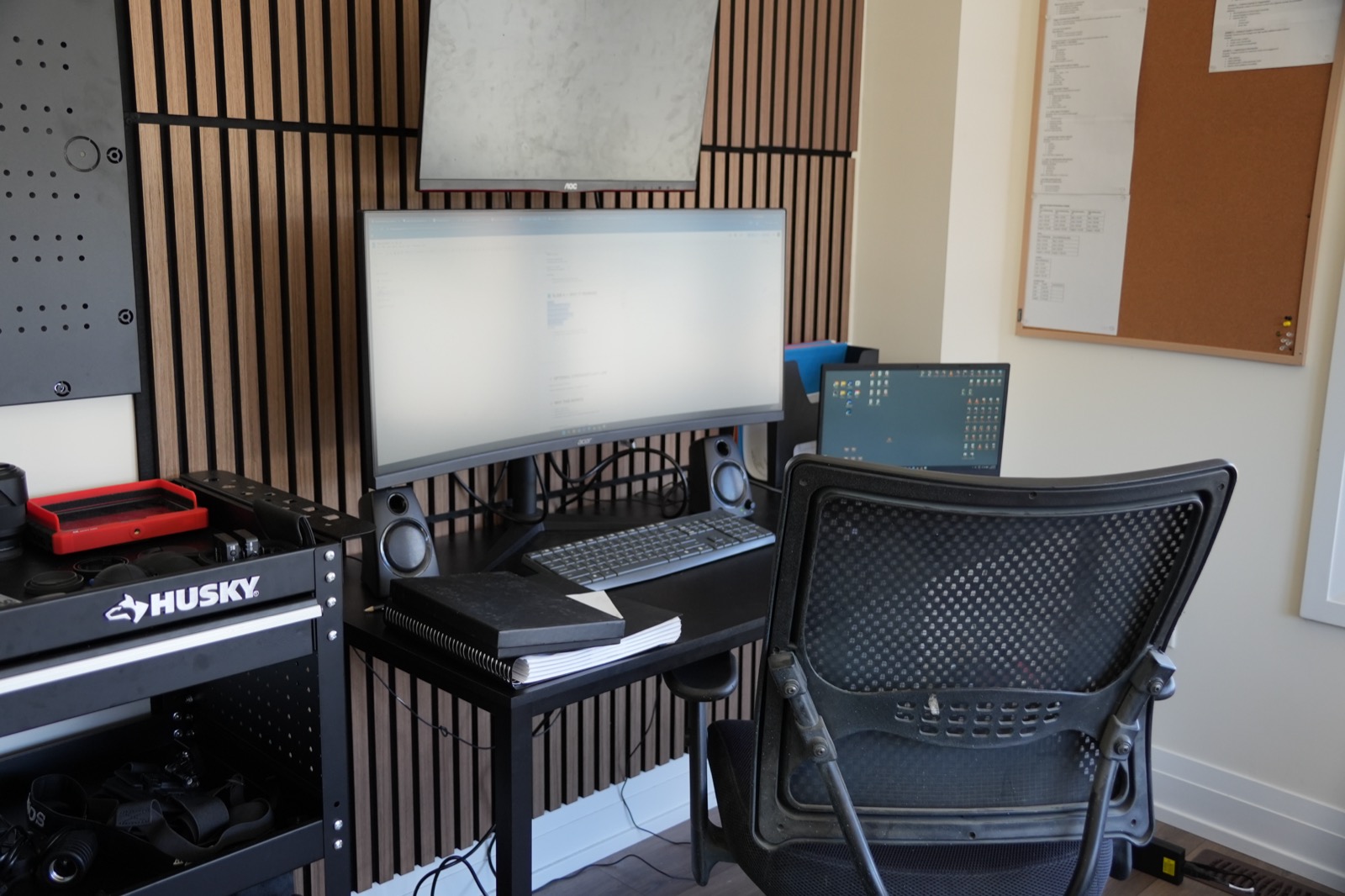
 The office
5.0 ★ on Google
5.0Google rating“Working with NewLife Marketing has been a great experience. Their team has travelled to our locations to film professional content and turn it into Meta ad campaigns focused on generating real leads for our stores. The campaigns have been profitable, the communication has been consistent, and they’re always looking for ways to improve performance and bring us more opportunities. It’s been great having a marketing team that’s willing to show up, understand our business, and put in the work. We’d highly recommend NewLife Marketing to any business looking to grow through digital advertising.”
Last step
You will talk to Cruz or Keegan, not a sales rep. If the honest answer is that you do not need us yet, that is what you will hear, and you keep the plan either way.