
Step 1 of 5
Hours
Not features. How many hours a week does the current way cost, and who spends them. A project that cannot answer that is a project with no way of knowing whether it worked.
 5.0 Google rating
Custom Software Development In Kitchener
Custom Software Development Kitchener has no shortage of expertise. What it has a shortage of is expertise available this quarter rather than next year.
Trusted by Ontario businesses












On this page
The whole scope, in the order it is explained below.
The local advantage and its cost
Both halves of that are real and the second is rarely discussed before a contract.
Communitech and Google’s Kitchener engineering office
The advantage is genuine. A region with this density of software work contains people who have built the thing you need before, and who will tell you within an hour if the idea is wrong.
The cost is prioritisation. A development firm whose other clients are funded companies with monthly retainers will, when something slips, protect those relationships. Nobody says so and everybody does it, and a small client discovers it as a week that quietly becomes three.
The defence is not to avoid capable suppliers. It is to ask directly where you sit in the order, who specifically is assigned, and what happens to your schedule when their largest client has an incident. A straight answer to that is a good sign; discomfort is also an answer.
A smaller, hungrier supplier is sometimes the better trade for a bounded project, and that is a judgement rather than a rule.
The question before the quote
Most enquiries describing a build describe something already on the market.
The honest way to settle it is arithmetic. Take the nearest existing product, add five years of licences at your expected user count, and set that against the build plus five years of maintaining it. If the numbers land close, buy the product: it is already debugged and somebody else pays to keep it current.
Where building genuinely wins it is usually because the licence cost does not scale at your volume, which is checkable, or because there is a system of record that nothing talks to, which is the strongest case and is usually an integration rather than an application.
What is rarely sufficient on its own is that the process is unusual. Processes grow around the limitations of whatever came before them, and some of that shape is scar tissue rather than requirement. Testing which is which costs a conversation and can remove most of a build.
A supplier who runs that arithmetic with you before quoting is telling you something useful about how the rest of the engagement will go.
The week after it goes live
The riskiest fortnight in any build is the one after the invoice.
Two processes run at once for a fortnight — the old one and the new one — and somebody compares the output. It is tedious, it costs real hours, and it is the only thing that reliably catches the difference between software that works and software that produces plausible wrong answers.
Budget those hours explicitly, because they are staff hours rather than supplier hours and they get left out of every quote by both sides.
Agree the fallback at the same time. If it is not right after two weeks, what happens? A written answer to that removes the pressure to accept something that is nearly working, which is how most bad systems get adopted.
And book the training for the second week rather than the first. People cannot absorb a new tool before they have a reason to use it, and a session given too early simply has to be given again.
The phase worth paying for
Discovery takes weeks, costs a fraction of the build, and is the thing most buyers try to skip.
It produces a document: what the system does, what it connects to, what happens at each decision point, and what is explicitly out of scope. Its value is not the writing. It is that the same document can go to three suppliers and produce three comparable quotes, which is impossible from a conversation.
In this region that matters more than usual, because the quality of available suppliers is high and the prices vary widely. Without a specification you are comparing opinions; with one you are comparing numbers.
The objection is always that you already know what you want. Discovery almost always reveals that two people in the room meant different things by the same word, and finding that out on paper costs a fraction of finding it out in code.
Insist on owning the output. A discovery phase whose deliverable stays with the supplier is a sales process you paid for.
Who decides
The commonest non-technical reason a build stalls.
One name, with the authority to settle a disagreement that afternoon rather than at the next meeting. Without it, a supplier receives conflicting instructions from two people who each believe they have been clear, and the honest response is to stop and wait.
Waiting is expensive on a fixed price and more expensive on time and materials, and it never appears as a line on an invoice. It appears as a project that took twice as long as expected for reasons nobody can point to.
The decision-maker does not need to be technical. They need to be available within a day and willing to overrule somebody, which is a different and rarer quality.
Where a business genuinely cannot name one, that is useful information before a contract rather than after. It usually means the process being automated is itself contested, and no software resolves that.
Our scope
Said in advance, because this market has plenty of suppliers who will quote for anything.
We build the joins between tools a business already pays for, the path from an enquiry to a record, and the reporting that connects the two. We run the advertising those enquiries come from as well — over $70,000 a month in Ontario spend, with the owner on the media personally.
A custom software development kitchener quote is the wrong purchase whenever a subscription product already covers the job, and in a region with this much software around, something usually does. We would rather point at the product and configure it than bill for rebuilding it slightly worse.
Open-ended product development, bookkeeping, payroll, inventory and anything replacing a working industry package are outside what we take on. We are based in Minesing, north of Barrie, and the work is remote.
The build, which is quoted once, from hosting and third-party services, which are monthly and are somebody else’s bill, from maintenance, which is the one nobody budgets and the one that never stops. Then ask what you end up holding: the code, in a repository you can reach; the accounts, in your name; the data, exportable in full. A build you cannot leave with is a subscription with a large deposit.
Next step
Ask that of every supplier you meet here. Then tell us what the system has to do that nothing else does, and we will say whether this is a build at all.
NewLife Marketing · 70 Bearberry Rd, Minesing, ON L9X 2E1 · 705-302-1097 · Based in Minesing, working with businesses across Ontario including Kitchener.
How it works
Five steps, and the first one is arithmetic rather than software.
Step 1 of 5
Not features. How many hours a week does the current way cost, and who spends them. A project that cannot answer that is a project with no way of knowing whether it worked.
Step 2 of 5
Most problems are solved by configuring something that exists. Building is for the part that is genuinely yours, and that part is almost always smaller than it looks at the start.
Step 3 of 5
Where this has to talk to what you already run. The joins are where the cost and the risk both live, and they are the part a feature list never mentions.
Step 4 of 5
Something in real use within weeks rather than a specification that takes a quarter to agree. Nobody knows what they want until they have used a version of it.
Step 5 of 5
The code, the accounts, the data, and a written answer to who maintains it. Without those, you have rented a system and the rent is open-ended.
Proof first
Every number published on this site came from paid media or production work, with the client named on it.
The ABM platform, the HQ, and the reporting - documented in full.
See what we built →The build behind one of our longest-running partnerships.
See the partnership →Named clients, real figures, and what each one was spending.
See all case studies →The most useful thing we can show is software we built for ourselves and still run, because it has had to survive its own maintenance. Ask anybody quoting for work in Kitchener what they have built that they still use, and who fixes it when it breaks.
The person on your account
Sales Director & Head of Client Communication — NewLife Marketing
Scopes your engagement before a dollar moves — what you actually need, what it should cost, and the goals the work will be judged against. Then he leads your day-to-day communication and checks those goals monthly.
Straight answers
Straight answers before you ever book a call.
For the code, location is largely irrelevant. For resolving ambiguity, somebody has to be present often enough to understand how the business runs, and that cadence is what to negotiate rather than the postcode. The specific local question here is prioritisation: ask where you sit in a supplier’s order and what happens when their largest client has an incident.
Enough that the first question should be whether you need it. Compare the build plus five years of maintenance against five years of licences for the nearest existing product. If the sums land close, buy the product. Where they do not, the specification from a discovery phase is what makes competing quotes comparable.
Plan for it rather than hope. Named people in the contract, a change log with dates, and a specification you own mean the project can move if it has to. A firm that will not name the assigned people is telling you the answer to this question in advance.
Whatever the contract says, so read that clause before signing. You want the source in a repository you control, documentation good enough for another developer to continue, and hosting in your own name. A supplier resisting any of the three is describing their retention strategy rather than a security policy.
Why NewLife
Everything we do runs on one system we call The Film-to-Funnel System: in-house film → paid ads → landing page → CRM follow-up → optimize. Here is how that stacks up against doing it yourself or hiring a typical agency.
| In-house | Typical agency | NewLife | |
|---|---|---|---|
| Creative | You film it on a phone | Outsourced or stock footage | Our in-house cinema crew, filmed on-site |
| Who does the work | You, between running the business | A junior account manager | Cruz and the senior team, directly |
| The system | Disconnected tools that don't talk | Ads, then hands-off | Film → ads → landing page → CRM, one connected system |
| Your accounts & data | Yours, but no time to run them | Often held hostage | Always yours - you keep everything |
| Follow-up | Manual, when you remember | Rarely their problem | Automated speed-to-lead in the CRM |
| Local knowledge | You know your market | A national, generic playbook | Real local research for every market you target |
Where to go next
Come say hi
The office and the studio are in Minesing, just west of Barrie. Come and sit in it, see what is actually on the screens, and ask the person who would be on your account what they would do first.

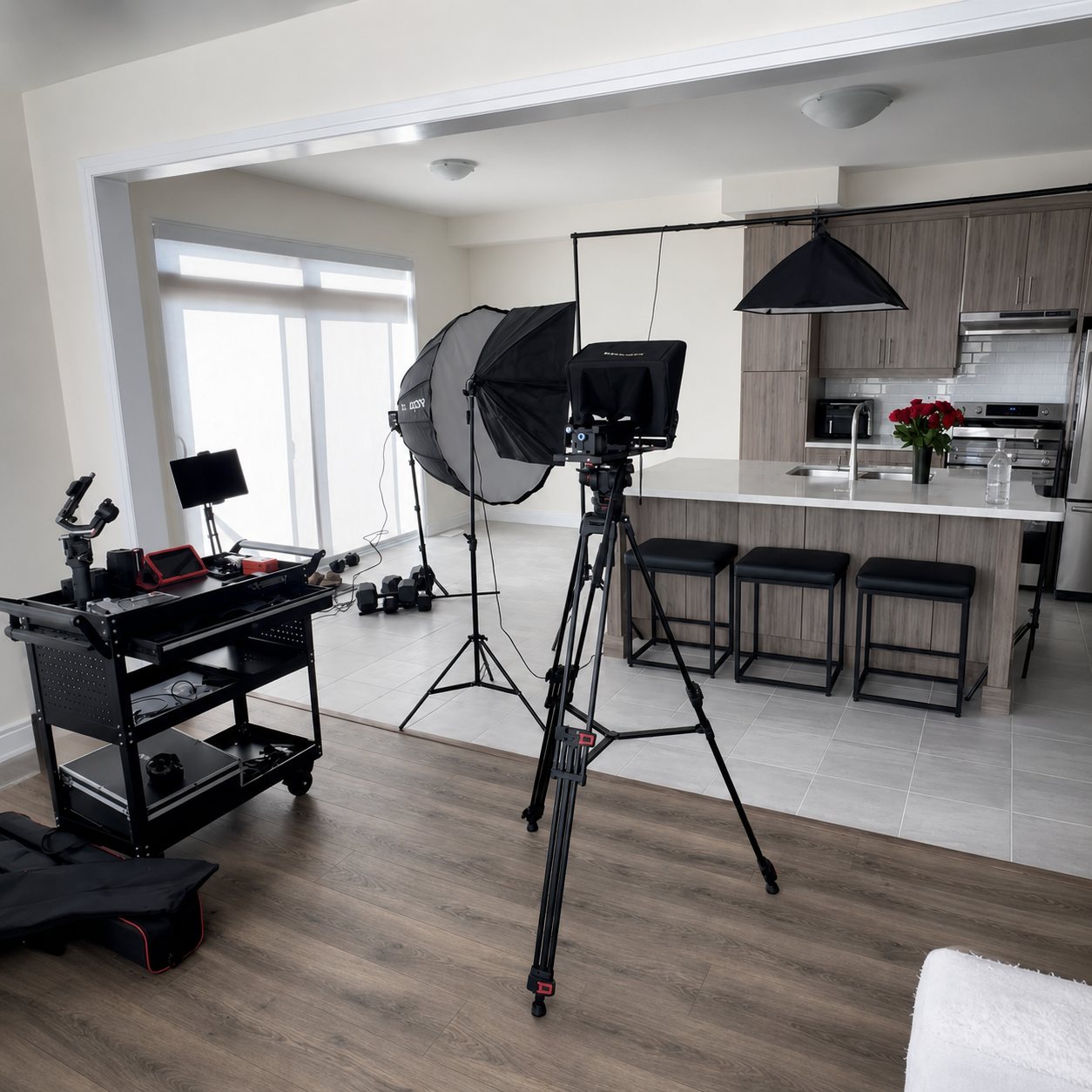
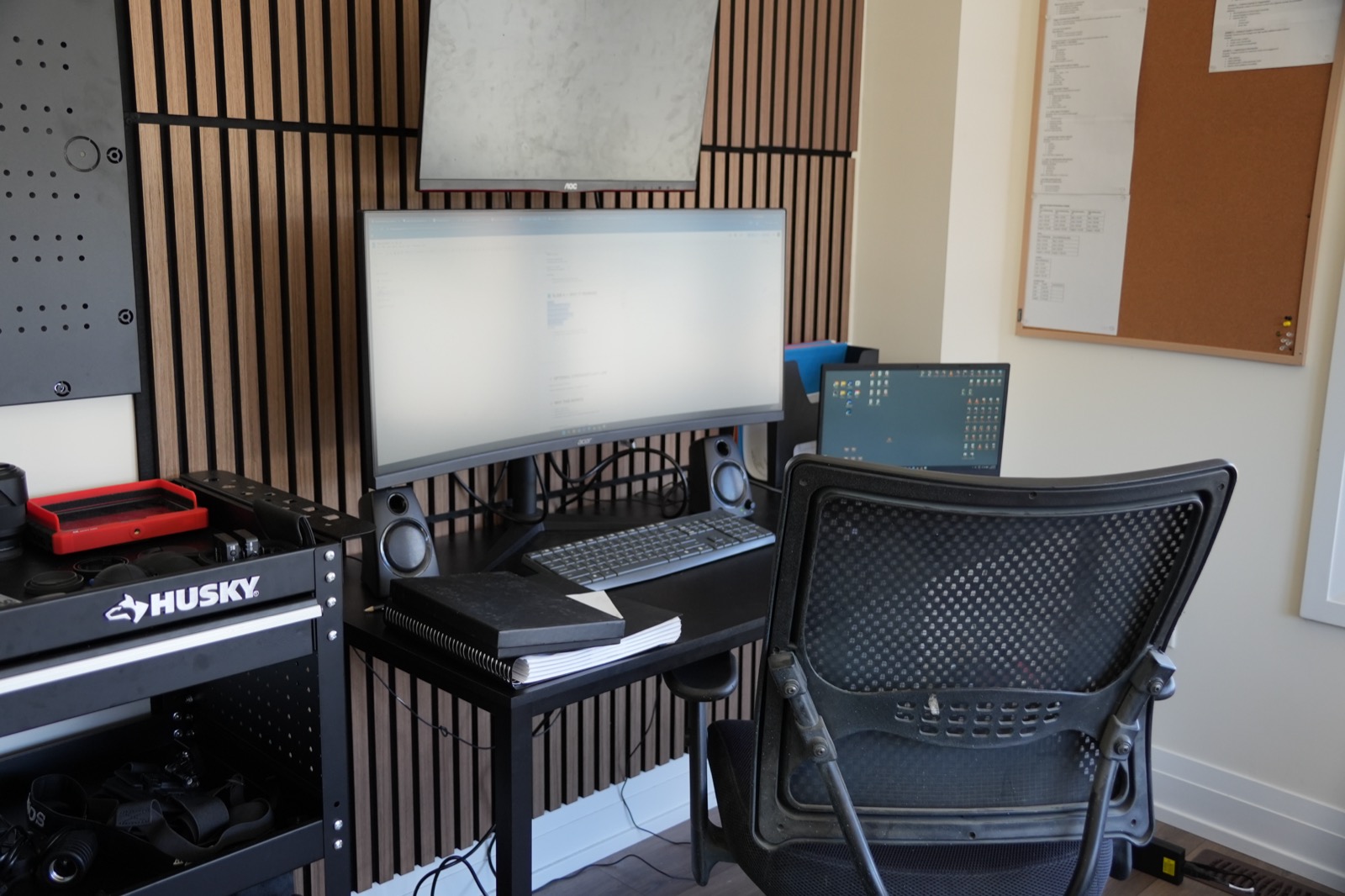
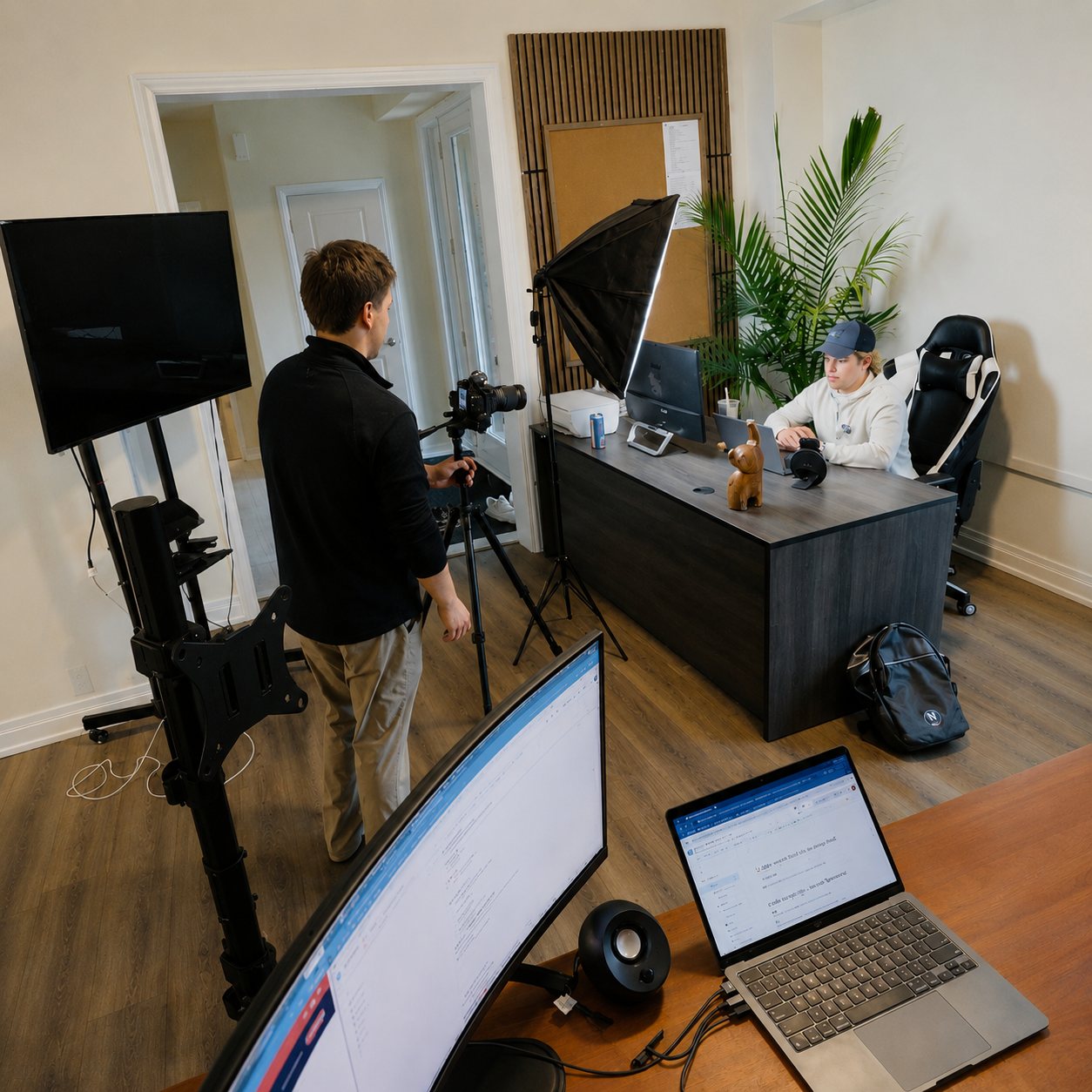 The office
5.0 ★ on Google
5.0Google rating“Working with NewLife Marketing has been a great experience. Their team has travelled to our locations to film professional content and turn it into Meta ad campaigns focused on generating real leads for our stores. The campaigns have been profitable, the communication has been consistent, and they’re always looking for ways to improve performance and bring us more opportunities. It’s been great having a marketing team that’s willing to show up, understand our business, and put in the work. We’d highly recommend NewLife Marketing to any business looking to grow through digital advertising.”
Last step
You will talk to Cruz or Keegan, not a sales rep. If the honest answer is that you do not need us yet, that is what you will hear, and you keep the plan either way.