
Step 1 of 5
Hours
Not features. How many hours a week does the current way cost, and who spends them. A project that cannot answer that is a project with no way of knowing whether it worked.
 5.0 Google rating
Custom Software Development In Brampton
Custom Software Developers Brampton usually hit a system the business does not own, chosen by somebody else, and the gap between two of those is where the work actually is.
Trusted by Ontario businesses












On this page
The whole scope, in the order it is explained below.
The real constraint
Capability is rarely the obstacle. Access is.
Statistics Canada, 2021 Census of Population
A franchise runs on a system the franchisor chose. A branch runs on one the parent company chose. A distributor runs on one the manufacturer chose. In each case the software that holds the operational truth is not theirs to modify, and frequently not theirs to read either.
So the useful first conversation is about boundaries rather than requirements. What can be exported. What has an interface, and whether your licence includes it. Who has to approve a connection, and how long that approval takes.
Those answers decide the project, and they are obtainable in a week. Starting a build before they are known is the commonest way a project in this city stalls for a quarter waiting on somebody who was never asked.
What usually gets built
The brief says "we need something built". The requirement underneath is usually narrower and cheaper.
Head office has a system. Accounts has another. Somebody keeps a spreadsheet because neither of them does the thing the branch actually needs, and a person retypes numbers between them every week.
That person is the requirement. The work is usually an integration measured in weeks rather than an application measured in quarters, and the application was a way of describing the pain rather than a specification of the cure.
Finding it is free: ask what spreadsheets exist outside the official systems and who maintains them. Each one carries three useful facts — what data is being moved, where from, how often — which is most of an integration specification written by the person who needs it.
The one caution: some workarounds exist because the process is wrong rather than because the software is. Automating those makes a bad process faster. Ask why the step exists before asking how to remove it.
Protecting the project
The commercial terms decide more than the technology, and they are negotiable now rather than later.
Produced in a short paid discovery phase and portable to another supplier. Without it the first developer owns the project by being the only party who understands it.
Half the integrations that fail do so because a vendor would not open an interface or a licence did not include it. Confirm that first; the answer can end the project.
In a franchise or branch structure this is the clause that is always missing. Get it before work starts, in writing, from somebody entitled to give it.
Integrations break when either end updates, which is a certainty rather than a defect. A quote ending at delivery ends on the day the obligation begins.
The question before any of it
Arithmetic rather than opinion, and it should happen before the decision.
Take the nearest existing product, add five years of licences at your expected user count, and set that against the build plus five years of maintaining it. If the numbers land close, buy the product: it is already debugged, somebody else pays to keep it current, and it does not stop working when one person leaves.
Where building genuinely wins it is usually because the licence cost does not scale at your volume, which is checkable, or because there is a system of record nothing talks to — which is the strongest case and is usually the integration described above rather than an application.
What is rarely sufficient on its own is that the process is unusual. Processes grow around the limitations of whatever came before them, and some of that shape is scar tissue.
There is one case specific to branch and franchise businesses: the product would do the job, and adopting it means changing a process the parent organisation signed off, which is expensive for reasons unrelated to software. That is a legitimate reason to build, and it should be stated as what it is.
The half nobody owns
The commonest post-mortem after a year of building is that distribution was never anybody’s job.
A business that has spent a year building has usually spent nothing on who will use the thing and how they will hear about it. The product launches, the team watches a dashboard, and the honest conclusion is that nobody owned the question.
No amount of further development fixes that. It is the same problem every other business faces: a defined audience, a reason to care, and a way of reaching them repeatedly for a knowable cost.
There is a related trap that catches companies which did the engineering well. A tool built for an internal process assumes knowledge the original users had; offered to strangers it has no onboarding and a vocabulary nobody outside recognises. Watching one stranger use it for ten minutes produces a shorter and more actionable list than a quarter of advertising.
Where we are most useful to a software project is that half, and we would rather be hired for it than for the build.
Our scope
Narrow on purpose, so a wasted meeting is avoided.
We build portals, dashboards and the connective work that makes existing systems agree with each other, plus the reporting that pulls from them rather than from a spreadsheet. Those requirements are knowable in advance, which makes them honestly quotable.
Custom Software Developers Brampton with an unformed requirement need a dedicated engineering team and a different commercial model. If an hour of conversation says that is what you need, we will say so rather than sell a discovery phase that reaches the same conclusion in three months.
We are based in Minesing rather than Brampton, which matters for filming and for nothing on this list. What we would want before quoting is the list of spreadsheets, who maintains them, and the name of whoever can authorise a connection to the system they feed.
The build, which is quoted once, from hosting and third-party services, which are monthly and are somebody else’s bill, from maintenance, which is the one nobody budgets and the one that never stops. Then ask what you end up holding: the code, in a repository you can reach; the accounts, in your name; the data, exportable in full. A build you cannot leave with is a subscription with a large deposit.
Next step
Name them and the project becomes schedulable. Tell us which spreadsheets hurt most and we can usually say within an hour whether this is weeks of work or quarters.
NewLife Marketing · 70 Bearberry Rd, Minesing, ON L9X 2E1 · 705-302-1097 · Based in Minesing, working with businesses across Ontario including Brampton.
How it works
Five steps, and the first one is arithmetic rather than software.
Step 1 of 5
Not features. How many hours a week does the current way cost, and who spends them. A project that cannot answer that is a project with no way of knowing whether it worked.
Step 2 of 5
Most problems are solved by configuring something that exists. Building is for the part that is genuinely yours, and that part is almost always smaller than it looks at the start.
Step 3 of 5
Where this has to talk to what you already run. The joins are where the cost and the risk both live, and they are the part a feature list never mentions.
Step 4 of 5
Something in real use within weeks rather than a specification that takes a quarter to agree. Nobody knows what they want until they have used a version of it.
Step 5 of 5
The code, the accounts, the data, and a written answer to who maintains it. Without those, you have rented a system and the rent is open-ended.
Proof first
Every number published on this site came from paid media or production work, with the client named on it.
The ABM platform, the HQ, and the reporting - documented in full.
See what we built →The build behind one of our longest-running partnerships.
See the partnership →Named clients, real figures, and what each one was spending.
See all case studies →The most useful thing we can show is software we built for ourselves and still run, because it has had to survive its own maintenance. Ask anybody quoting for work in Brampton what they have built that they still use, and who fixes it when it breaks.
The person on your account
Sales Director & Head of Client Communication — NewLife Marketing
Scopes your engagement before a dollar moves — what you actually need, what it should cost, and the goals the work will be judged against. Then he leads your day-to-day communication and checks those goals monthly.
Straight answers
Straight answers before you ever book a call.
Frequently yes, around the edges rather than inside the core system. The work that is usually available is connective: taking data the franchisor’s system can export and making it useful locally, or feeding a local capture back into it through an interface that already exists. Establish what is permitted in writing before anything is designed.
List the spreadsheets that exist outside your official systems and who updates them. If the pain is that data has to be moved between two things that already work, it is an integration and it is measured in weeks. If the pain is that something does not exist at all, it is an application and it is measured in quarters.
Enough that the first question should be whether you need it. Compare the build plus five years of maintenance against five years of licences for the nearest existing product. If the sums land close, buy the product. Where they do not, a specification from a short discovery phase is what makes competing quotes comparable.
Whatever the contract says, so read that clause before signing. You want the source in a repository you control, documentation good enough for another developer to continue, and any hosting in your own name. A supplier resisting any of the three is describing their retention strategy rather than a security policy.
Why NewLife
Everything we do runs on one system we call The Film-to-Funnel System: in-house film → paid ads → landing page → CRM follow-up → optimize. Here is how that stacks up against doing it yourself or hiring a typical agency.
| In-house | Typical agency | NewLife | |
|---|---|---|---|
| Creative | You film it on a phone | Outsourced or stock footage | Our in-house cinema crew, filmed on-site |
| Who does the work | You, between running the business | A junior account manager | Cruz and the senior team, directly |
| The system | Disconnected tools that don't talk | Ads, then hands-off | Film → ads → landing page → CRM, one connected system |
| Your accounts & data | Yours, but no time to run them | Often held hostage | Always yours - you keep everything |
| Follow-up | Manual, when you remember | Rarely their problem | Automated speed-to-lead in the CRM |
| Local knowledge | You know your market | A national, generic playbook | Real local research for every market you target |
Where to go next
Come say hi
The office and the studio are in Minesing, just west of Barrie. Come and sit in it, see what is actually on the screens, and ask the person who would be on your account what they would do first.


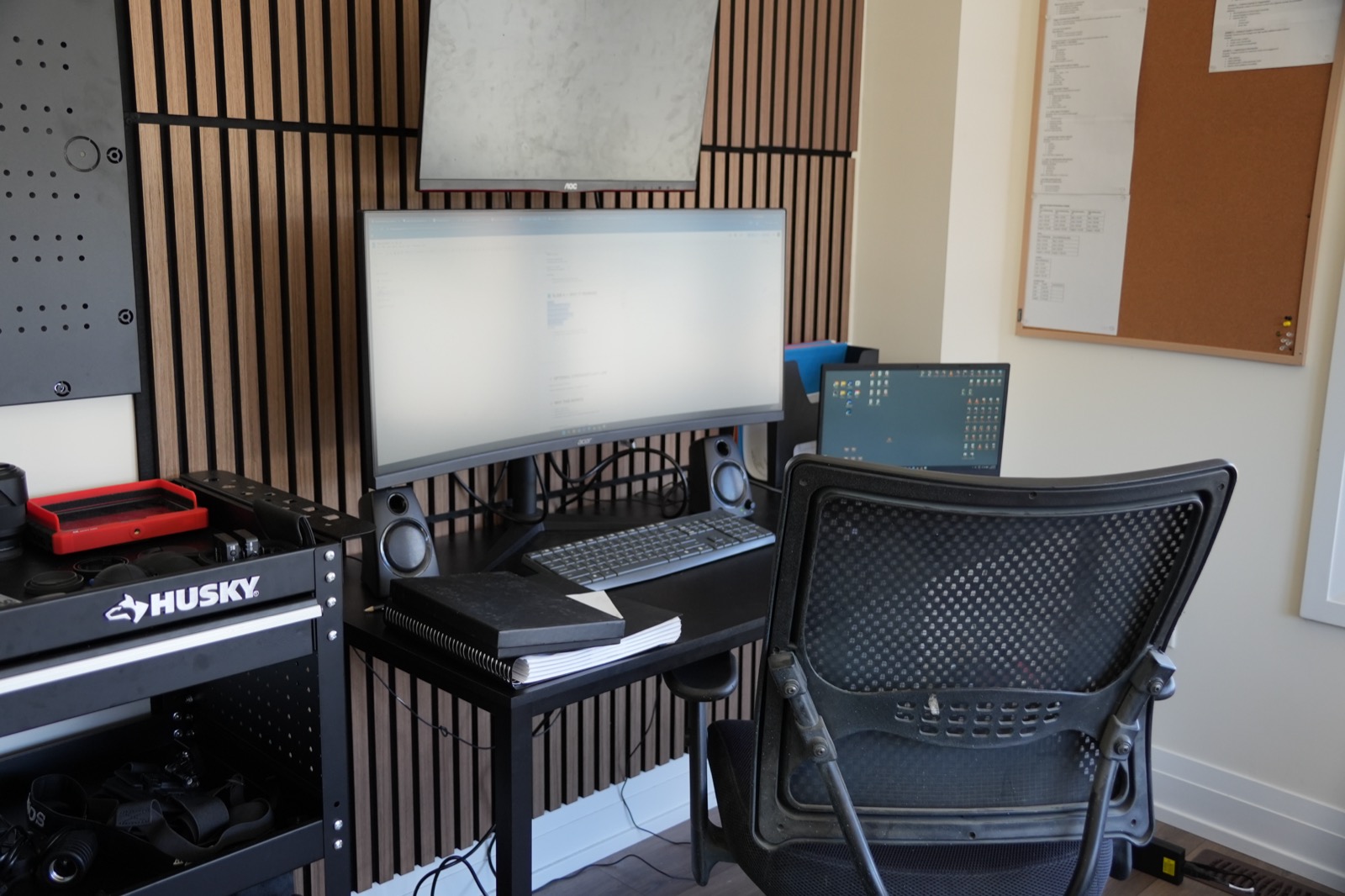
 The office
5.0 ★ on Google
5.0Google rating“Working with NewLife Marketing has been a great experience. Their team has travelled to our locations to film professional content and turn it into Meta ad campaigns focused on generating real leads for our stores. The campaigns have been profitable, the communication has been consistent, and they’re always looking for ways to improve performance and bring us more opportunities. It’s been great having a marketing team that’s willing to show up, understand our business, and put in the work. We’d highly recommend NewLife Marketing to any business looking to grow through digital advertising.”
Last step
You will talk to Cruz or Keegan, not a sales rep. If the honest answer is that you do not need us yet, that is what you will hear, and you keep the plan either way.