
Step 1 of 5
Map it
Every way somebody currently reaches you, and what happens to each one. Drawn on paper before any software is chosen, because most of what gets bought is a solution to the wrong map.
 5.0 Google rating
CRM Systems In Kingston
CRM Kingston earns its cost in the weeks nobody has time, which is also exactly when a system built badly gets abandoned.
Trusted by Ontario businesses












On this page
The whole scope, in the order it is explained below.
When leads get lost
Not in the quiet quarter, when a spreadsheet works fine.
Statistics Canada, 2021 Census of Population
A spreadsheet and a good memory are entirely adequate for most of the year. They stop being adequate in the fortnight when enquiries arrive faster than anybody can answer them, and that is also the fortnight in which the year is decided.
Leads do not get lost loudly. Nobody announces that a quotation was never sent or a voicemail never returned; the enquiry simply stops, and six weeks later somebody notices the month was quieter than it should have been.
So the right way to size a crm kingston project is not by the average week. It is by the worst one: how many enquiries arrive, how many people are handling them, and what has to be true for none of them to go unanswered.
Built to that standard, the system is over-engineered for ten months and exactly right for the two that matter.
What a season does to a system
A system is adopted in the quiet months and tested in the loud ones.
Anything needing a decision at the counter is the first thing to go when the queue is long. A dropdown with eleven options becomes whichever one is nearest the top, and a free-text field becomes empty.
So the test for a configuration is not whether it is complete. It is whether somebody could use it correctly while a customer waits, which rules out most of what gets designed in a planning meeting.
Design for the worst fortnight of the year and the rest of the year looks after itself. Design for a quiet Tuesday and the data stops being trustworthy exactly when you most need it to be.
The practical version is four fields, all of them obvious, none requiring a judgement call. Anything subtler belongs in a note somebody writes afterwards.
Before anything is bought
One page, by hand, before a product is chosen. It is the fastest specification anybody has found.
Sketch the report you would want to read every Monday morning. Not a dashboard — a page, with the handful of numbers the business is actually run on and nothing else.
Every field the system needs is now visible, because each number on that page has to come from somewhere. Everything not on the page is a field somebody wanted rather than a field anybody needs, and those are what make a system unusable.
It also settles arguments in advance. Two people wanting different configurations usually want different reports, and that disagreement is much easier to resolve on paper than inside a half-built system.
An afternoon of this routinely removes a third of the intended scope, which is an afternoon that pays better than any week of the build.
Keep the page afterwards. When somebody proposes a new field six months in, the question is which number on that page it improves, and a field that improves none of them is a field somebody wanted rather than one the business needs. That single question prevents most of the bloat that makes a crm kingston build unusable by its second year.
Designing for the peak
Three things that only matter when everybody is at capacity, which is when they matter most.
Acknowledge instantly. An automatic reply that names a person and a timeframe buys you hours of goodwill and costs nothing, and in a fortnight where a reply might otherwise take two days it is the difference between an enquiry that waits and one that goes elsewhere.
Make the next action visible without anybody asking. A list of what is overdue, by owner, that updates itself. In a quiet month people remember; in a busy one they do not, and the list is what stops a record from being quietly abandoned.
And make the hand-off cheap. When the person who took the enquiry is unavailable, the next person needs the context in one screen rather than in somebody’s head. That is a field-layout decision made at configuration time and it cannot be retrofitted during a busy week.
None of that is sophisticated. All of it is routinely missing from systems that cost a great deal.
Getting out again
Worth settling on the day it goes in, because it is unarguable afterwards.
Ask for an export of your own data before anything is configured, and confirm it arrives in a form somebody else could read. Businesses that ask after a relationship sours discover the answer is a screen they can print.
The same applies to the automations. A plain-language list of what fires, when, and what it says is a document that transfers; a flowchart inside somebody else’s account is not.
None of this assumes things go wrong. It is that a supplier who agrees readily is telling you something useful about how they work, and one who resists is telling you something more useful still.
It costs nothing at the start. Asked for at the end, it is a negotiation conducted from the weaker position.
Our scope
What we take on, and the condition we would attach to taking it on here.
We build sales and marketing systems and run the advertising that feeds them, managing over $70,000 a month in spend for Ontario businesses with the owner on the media personally. The seam between the two is the part we are genuinely better at than a generalist.
A crm kingston build should go live in the quiet half of the year, never four weeks before the peak, because a system nobody has used yet meets its first real test at the worst possible moment. We would rather postpone a start date than hand over in May.
Outside that: no ERP work, no multi-site deployments, no regulated data environments. We are based in Minesing, a few hours west, which is a travel line for filming and makes no difference to a build.
The build, which happens once, from the licence, which is monthly and goes to whoever makes the software, from support, which is somebody answering when it breaks. Then ask the two questions that decide whether you own this: whose name are the accounts in, and can the data be exported in full without asking anybody. A system you cannot leave with is one you are renting.
Next step
How many enquiries, how many people, and what has to be true for none of them to go unanswered. That sizes the whole project.
NewLife Marketing · 70 Bearberry Rd, Minesing, ON L9X 2E1 · 705-302-1097 · Based in Minesing, building systems for businesses across Ontario.
How it works
Five steps, and the first one is a sheet of paper.
Step 1 of 5
Every way somebody currently reaches you, and what happens to each one. Drawn on paper before any software is chosen, because most of what gets bought is a solution to the wrong map.
Step 2 of 5
Stages that mean something you can act on: new, contacted, quoted, won, lost. A board with fourteen stages is a board nobody updates, which is the same as no board at all.
Step 3 of 5
The acknowledgement that names a time, the reminder nobody sends, the follow-up on a quote that has gone quiet. Not a conversation pretending to be a person.
Step 4 of 5
The website forms, the phone, the inbox, the calendar. A system that has to be typed into twice is a system that will be typed into once and then abandoned.
Step 5 of 5
Your accounts, your data, exportable. A system you cannot leave with is one you are renting, and you find that out at the worst possible moment.
Proof first
Every number published on this site came from paid media or production work, with the client named on it.
The build behind one of our longest-running partnerships.
See the partnership →A Portuguese grill that came to us with almost no online presence.
Read the case study →Named clients, real figures, and what each one was spending.
See all case studies →A system is harder to show than a campaign is, because the result is an enquiry that did not get lost rather than a number that went up. The honest measure is the share of enquiries that get a reply inside an hour. Ask anybody quoting for work in Kingston what that figure is for you now, and whether anything currently measures it.
The person on your account
Sales Director & Head of Client Communication — NewLife Marketing
Scopes your engagement before a dollar moves — what you actually need, what it should cost, and the goals the work will be judged against. Then he leads your day-to-day communication and checks those goals monthly.
Straight answers
Straight answers before you ever book a call.
Almost any of the major platforms will do what a business this size needs, so the question matters less than it feels. What matters more is which one your team will actually type into during a busy fortnight and what it connects to. We would rather spend the first week on stage definitions than on a product comparison.
For ten months of the year, probably not. The question is what happens in the weeks when enquiries arrive faster than anybody can answer them, because that is when things get lost and it is also when the year is decided. Size the system by the worst week rather than the average one.
Usually, and it is nearly always cheaper than migrating. Most systems we are asked to replace are not broken; they are configured for a process the business has outgrown, with fields nobody fills in and stages nobody agreed. Reconfiguring around a re-decided process costs a fraction of a migration and keeps the history.
Only if source capture is built deliberately, which it rarely is by default. The work is carrying the campaign and the page that produced an enquiry into the record and onto the report. In a market this size the monthly numbers are small either way, so that field is the only evidence you will ever get.
Why NewLife
Everything we do runs on one system we call The Film-to-Funnel System: in-house film → paid ads → landing page → CRM follow-up → optimize. Here is how that stacks up against doing it yourself or hiring a typical agency.
| In-house | Typical agency | NewLife | |
|---|---|---|---|
| Creative | You film it on a phone | Outsourced or stock footage | Our in-house cinema crew, filmed on-site |
| Who does the work | You, between running the business | A junior account manager | Cruz and the senior team, directly |
| The system | Disconnected tools that don't talk | Ads, then hands-off | Film → ads → landing page → CRM, one connected system |
| Your accounts & data | Yours, but no time to run them | Often held hostage | Always yours - you keep everything |
| Follow-up | Manual, when you remember | Rarely their problem | Automated speed-to-lead in the CRM |
| Local knowledge | You know your market | A national, generic playbook | Real local research for every market you target |
Where to go next
Come say hi
The office and the studio are in Minesing, just west of Barrie. Come and sit in it, see what is actually on the screens, and ask the person who would be on your account what they would do first.

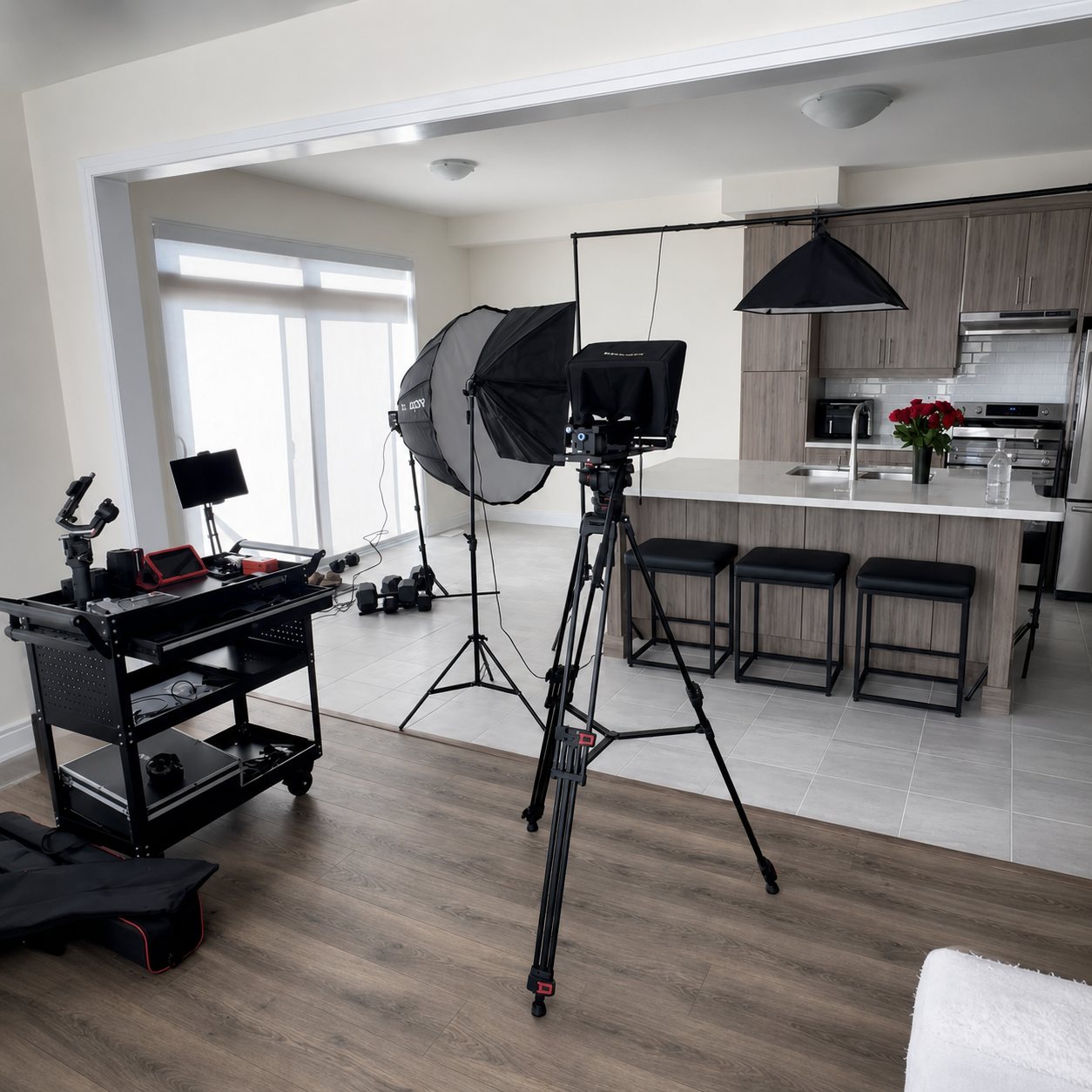
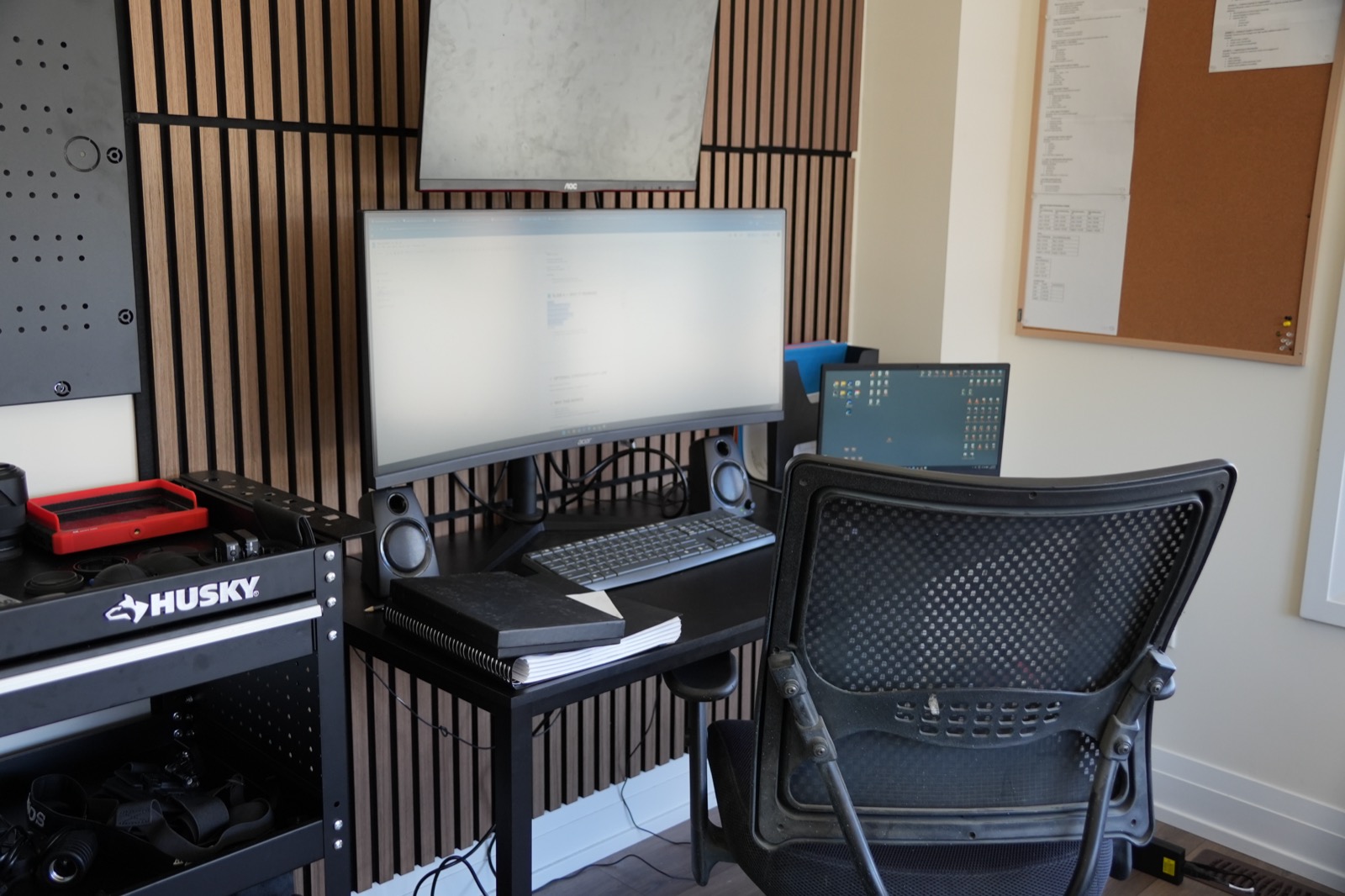
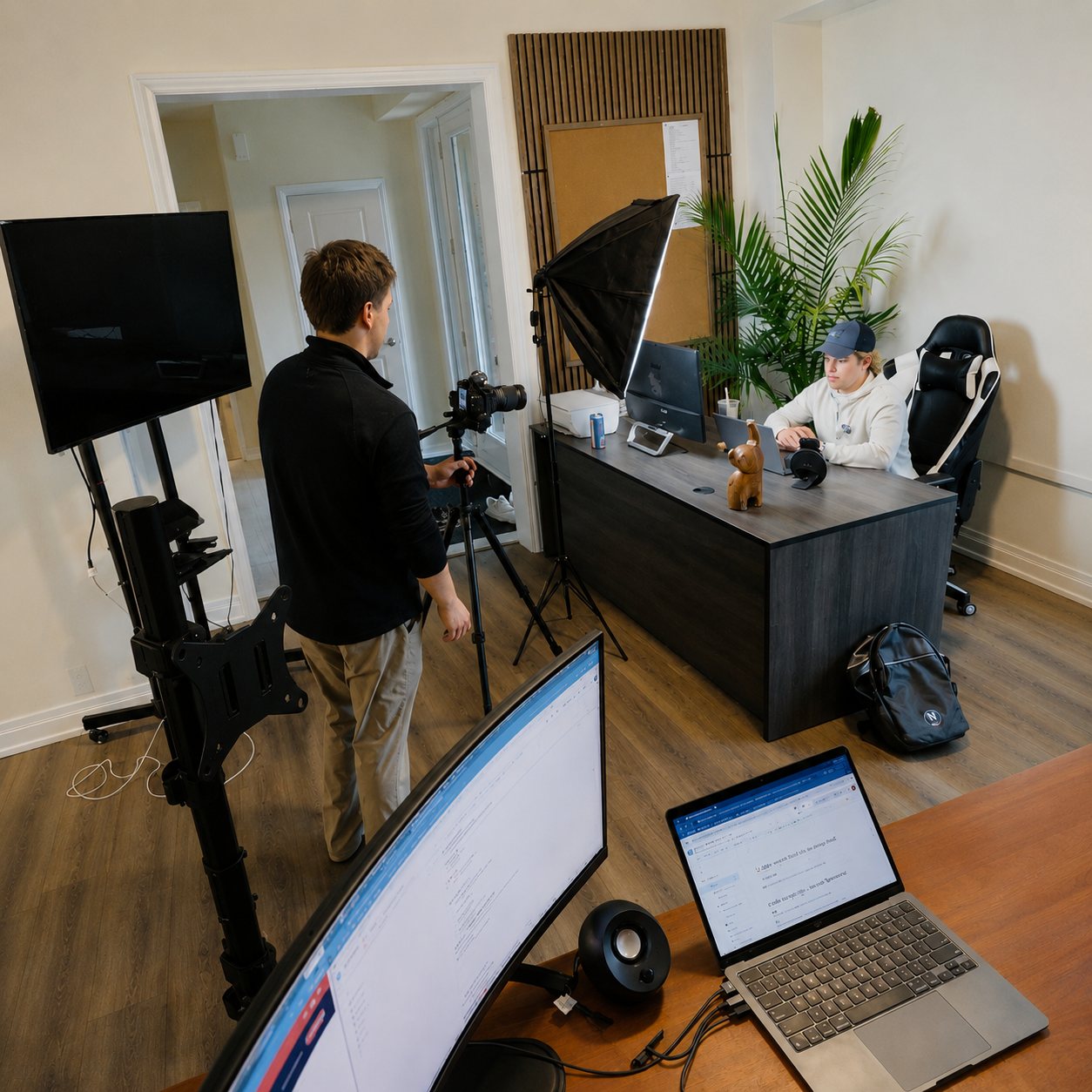 The office
5.0 ★ on Google
5.0Google rating“Working with NewLife Marketing has been a great experience. Their team has travelled to our locations to film professional content and turn it into Meta ad campaigns focused on generating real leads for our stores. The campaigns have been profitable, the communication has been consistent, and they’re always looking for ways to improve performance and bring us more opportunities. It’s been great having a marketing team that’s willing to show up, understand our business, and put in the work. We’d highly recommend NewLife Marketing to any business looking to grow through digital advertising.”
Last step
You will talk to Cruz or Keegan, not a sales rep. If the honest answer is that you do not need us yet, that is what you will hear, and you keep the plan either way.