
Step 1 of 5
Map it
Every way somebody currently reaches you, and what happens to each one. Drawn on paper before any software is chosen, because most of what gets bought is a solution to the wrong map.
 5.0 Google rating
CRM Systems In Toronto
CRM Consulting Firms Toronto get called twice: once to set it up, and again two years later when nobody uses it, and the second call is the one worth understanding.
Trusted by Ontario businesses












On this page
The whole scope, in the order it is explained below.
What the market asks for
The vocabulary is unusually consistent, and it says something about what buyers have learned.
Crm consultants toronto. Top crm consultant toronto. Crm consultant toronto. Crm firm toronto. Crm agency toronto. Nine of the eleven phrases ask for a person or a firm rather than for software, which is the opposite of how the category is usually sold.
That is a buyer who has already been through at least one implementation. People searching for a consultant rather than a platform have generally discovered that the platform was never the problem.
Where the projects fail
The commonest cause of a failed implementation is a vocabulary problem that looks like a software problem.
Ask four people in a sales team what "qualified" means and you will get four answers. Ask what separates a proposal sent from a proposal in negotiation and the answers diverge further. Build a system on top of that and you have four people recording four different realities in one database.
The symptom arrives months later as a forecast nobody trusts, and the usual response is to blame the tool and consider migrating. The migration carries the same ambiguity into a new product at considerable expense.
The fix is a workshop and a document: each stage named, each stage's entry condition written as something observable, and the list agreed by the people who will type into it. It takes days rather than weeks. It is the single highest-return part of the project and it is the part that gets cut when budgets tighten.
The stage definitions, in writing, agreed by the team, before any configuration. If a supplier wants to start in the software, they are starting at the end.
Before anything is bought
One page, agreed by the people who type into the system, and portable to whatever replaces it.
Each stage named. Against each one, an observable condition — something that either happened or did not, with no judgement required. A proposal has been sent or it has not. A site visit is booked or it is not.
Write it before any product is chosen, because this is the artefact a migration carries forward. Firms that have been through two implementations usually have one; firms on their first usually do not, and that is most of the difference in how the two projects go.
The test of it is boring and reliable: hand it to somebody who was not in the room and ask them to classify ten live deals. Where two readers disagree, the wording is wrong, and it will be wrong inside the software too.
Days of work rather than weeks. It is the first thing cut when a budget tightens and the only thing that would have saved the budget.
Marketing is half of this
The gap we meet most often sits exactly between advertising and the CRM, and both suppliers assume the other covered it.
An enquiry arrives. The CRM records a name, a date and sometimes a form. What it almost never records is which campaign, which page or which search produced it, because that information exists at the moment of capture and is discarded by the time the record is created.
The consequence is that every spending decision afterwards is argued from opinion. The advertising platform claims the result, the sales team remembers it differently, and nobody can settle it.
Fixing it is unglamorous: capture the source at the form, carry it into the record, and make it a required field on the report. It is a day of work and it changes the quality of every budget conversation for years.
This is why we do this work at all rather than leaving it to specialists. A marketing firm that cannot see what its spending produced is guessing, and the place that visibility is won or lost is inside the CRM.
Who it has to work for
The commonest reason a well-specified system is abandoned.
The configuration meeting contains an owner, a consultant and occasionally a manager. The people who will type into the thing forty times a day are usually not in the room, and the decisions that most affect them are made there.
What follows is predictable. A required field that is genuinely unanswerable at the moment of entry gets a junk value, because the alternative is being unable to save the record. Within a month that field is worse than empty, because it looks populated.
One person who does the work, in the room, with a veto over required fields, prevents nearly all of it. It is a cheap intervention and it is skipped almost every time.
Where a team is larger, pick the person most sceptical about the project rather than the most enthusiastic one. They will tell you what will actually happen.
Our scope
We are a small Ontario marketing company that builds sales systems and buys the advertising meant to fill them. We manage over $70,000 a month in advertising spend and the owner runs the paid media himself, which is why the reporting end of a build gets more attention from us than the feature list does.
We do not do enterprise integration, ERP replacement, regulated data environments or formal procurement, and we are not the right call for a sales team of forty. We are based in Minesing, north of the city, and work with Toronto businesses remotely.
Remote is worth a sentence rather than an apology. Almost all of this work happens in a shared document, a screen share and a weekly call, and the parts that genuinely benefit from being in a room — the session where stages get named and argued over — are a day or two at the start rather than a standing commitment. Where a project needs somebody present every week, a downtown firm is the better buy and we would say so on the first call rather than the fourth.
The build, which happens once, from the licence, which is monthly and goes to whoever makes the software, from support, which is somebody answering when it breaks. Then ask the two questions that decide whether you own this: whose name are the accounts in, and can the data be exported in full without asking anybody. A system you cannot leave with is one you are renting.
Next step
If two people would answer differently, that is the project. Tell us the answer you would each give and we can usually show you the gap in an hour.
NewLife Marketing · 70 Bearberry Rd, Minesing, ON L9X 2E1 · 705-302-1097 · Based in Minesing, building systems for businesses across Ontario.
How it works
Five steps, and the first one is a sheet of paper.
Step 1 of 5
Every way somebody currently reaches you, and what happens to each one. Drawn on paper before any software is chosen, because most of what gets bought is a solution to the wrong map.
Step 2 of 5
Stages that mean something you can act on: new, contacted, quoted, won, lost. A board with fourteen stages is a board nobody updates, which is the same as no board at all.
Step 3 of 5
The acknowledgement that names a time, the reminder nobody sends, the follow-up on a quote that has gone quiet. Not a conversation pretending to be a person.
Step 4 of 5
The website forms, the phone, the inbox, the calendar. A system that has to be typed into twice is a system that will be typed into once and then abandoned.
Step 5 of 5
Your accounts, your data, exportable. A system you cannot leave with is one you are renting, and you find that out at the worst possible moment.
Proof first
Every number published on this site came from paid media or production work, with the client named on it.
The build behind one of our longest-running partnerships.
See the partnership →A Portuguese grill that came to us with almost no online presence.
Read the case study →Named clients, real figures, and what each one was spending.
See all case studies →A system is harder to show than a campaign is, because the result is an enquiry that did not get lost rather than a number that went up. The honest measure is the share of enquiries that get a reply inside an hour. Ask anybody quoting for work in Toronto what that figure is for you now, and whether anything currently measures it.
The person on your account
Sales Director & Head of Client Communication — NewLife Marketing
Scopes your engagement before a dollar moves — what you actually need, what it should cost, and the goals the work will be judged against. Then he leads your day-to-day communication and checks those goals monthly.
Straight answers
Straight answers before you ever book a call.
Almost any of the major platforms will do what a mid-sized business needs, so the question is usually less important than it feels. What matters more is which one your team will actually type into and which one connects to the systems you already depend on. We would rather spend the first week on your stage definitions than on a product comparison, because the definitions survive a change of platform and the comparison does not.
The configuration is weeks. The adoption is months, and it is the part that decides whether the project worked. Budget for training, for a period where both the old way and the new way run, and for somebody internally whose job is to chase the records nobody updated. Projects that skip that third item quietly revert within a quarter.
Usually, and it is nearly always cheaper than migrating. Most systems we are asked to replace are not broken; they are configured for a process the business has outgrown, with fields nobody fills in and stages nobody agreed. Re-deciding the process and reconfiguring around it costs a fraction of a migration and carries the history with it.
Only if source capture is built in deliberately, which it rarely is by default. The work is to carry the campaign and page that produced an enquiry all the way into the record and onto the report. Once that exists, the monthly budget argument becomes a short conversation about numbers rather than a long one about impressions.
Why NewLife
Everything we do runs on one system we call The Film-to-Funnel System: in-house film → paid ads → landing page → CRM follow-up → optimize. Here is how that stacks up against doing it yourself or hiring a typical agency.
| In-house | Typical agency | NewLife | |
|---|---|---|---|
| Creative | You film it on a phone | Outsourced or stock footage | Our in-house cinema crew, filmed on-site |
| Who does the work | You, between running the business | A junior account manager | Cruz and the senior team, directly |
| The system | Disconnected tools that don't talk | Ads, then hands-off | Film → ads → landing page → CRM, one connected system |
| Your accounts & data | Yours, but no time to run them | Often held hostage | Always yours - you keep everything |
| Follow-up | Manual, when you remember | Rarely their problem | Automated speed-to-lead in the CRM |
| Local knowledge | You know your market | A national, generic playbook | Real local research for every market you target |
Where to go next
Come say hi
The office and the studio are in Minesing, just west of Barrie. Come and sit in it, see what is actually on the screens, and ask the person who would be on your account what they would do first.

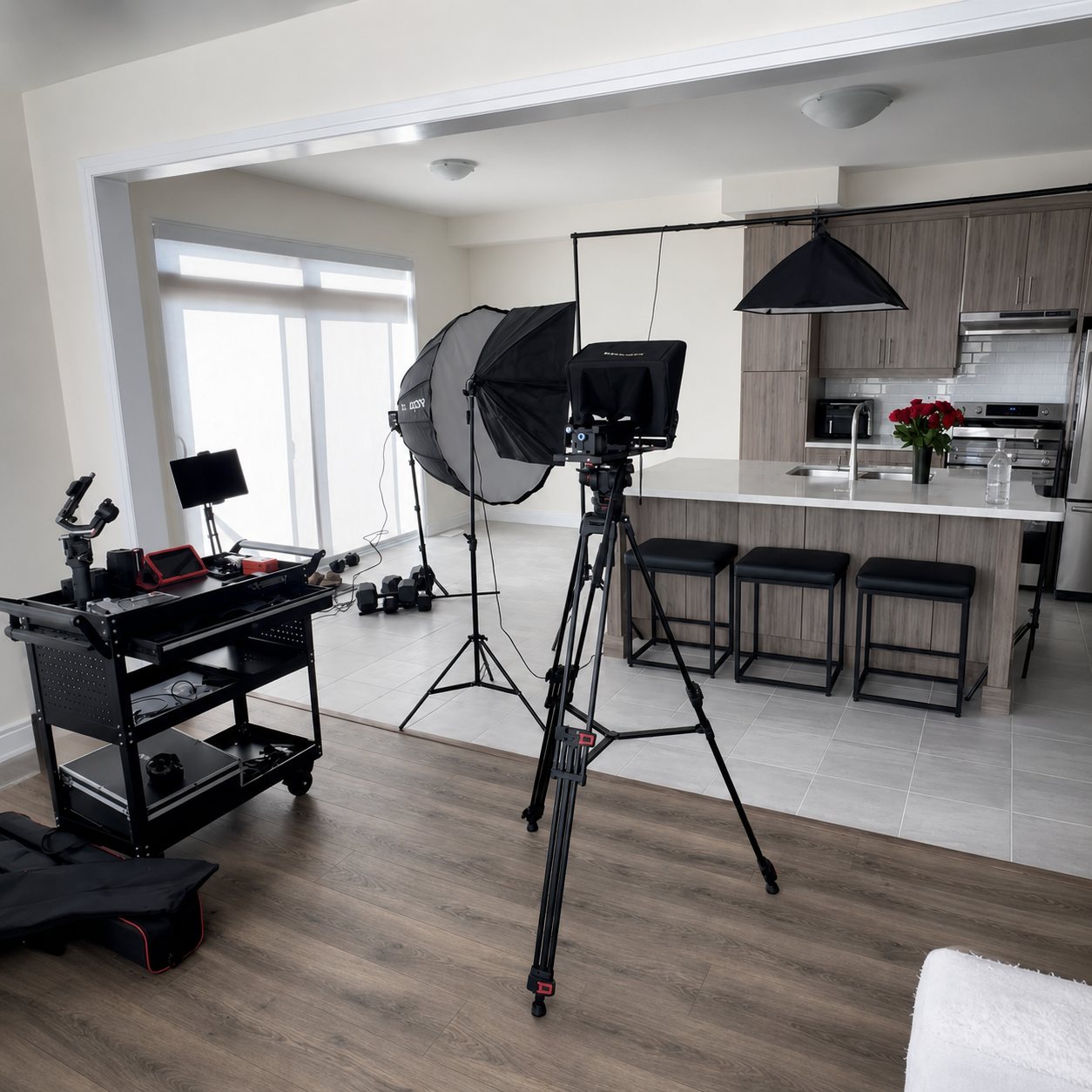
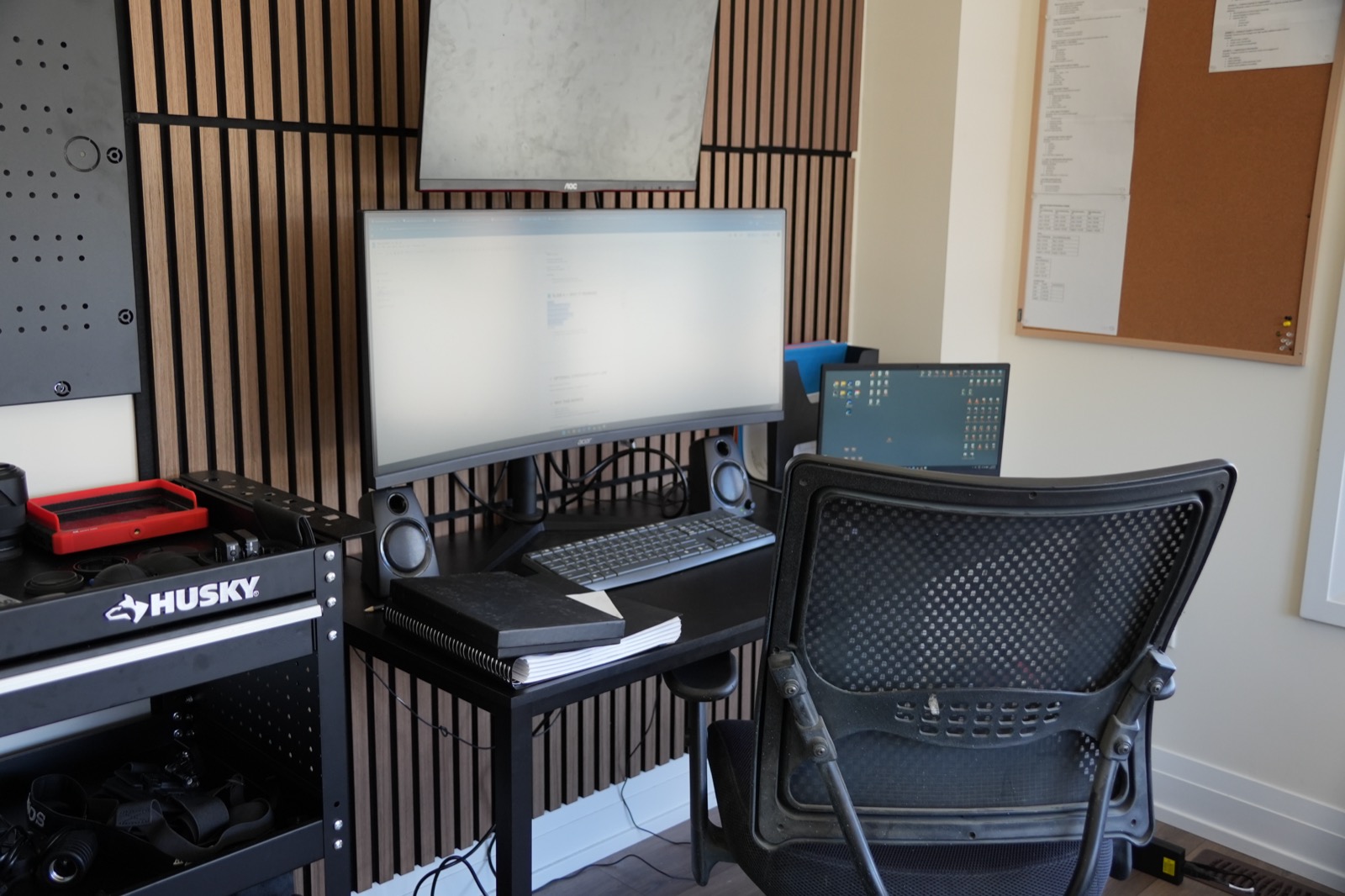
 The office
5.0 ★ on Google
5.0Google rating“Working with NewLife Marketing has been a great experience. Their team has travelled to our locations to film professional content and turn it into Meta ad campaigns focused on generating real leads for our stores. The campaigns have been profitable, the communication has been consistent, and they’re always looking for ways to improve performance and bring us more opportunities. It’s been great having a marketing team that’s willing to show up, understand our business, and put in the work. We’d highly recommend NewLife Marketing to any business looking to grow through digital advertising.”
Last step
You will talk to Cruz or Keegan, not a sales rep. If the honest answer is that you do not need us yet, that is what you will hear, and you keep the plan either way.