
Step 1 of 5
Map it
Every way somebody currently reaches you, and what happens to each one. Drawn on paper before any software is chosen, because most of what gets bought is a solution to the wrong map.
 5.0 Google rating
CRM Systems In Cambridge
CRM Cambridge usually gets bought by somebody who has worked out they spend an hour a week moving information between two places by hand.
Trusted by Ontario businesses












On this page
The whole scope, in the order it is explained below.
Where the time goes
The cost of not having a system is a wage, and almost nobody has worked out the figure.
Somebody retypes an address from an email into a quote, then from the quote into a job sheet, then from the job sheet into an invoice. Nothing is broken. It simply takes four times longer than it needs to and introduces an error every so often.
Hours a week multiplied by a wage is the budget for fixing it, and it is the number that decides whether there is a project at all. Without it, every quote for software is an opinion argued against another opinion.
Working it out takes an afternoon, and nobody outside the business can do it, because the hours are visible only to the people spending them.
It also frequently produces the honest answer that the manual version is cheaper than any system would be. That is a useful result rather than a disappointing one.
The manufacturing wrinkle
Toyota has manufactured here since 1988 and the supplier base around it sells in a shape most systems were not designed for.
A standard pipeline assumes a prospect appears, is qualified, receives a proposal and either buys or does not. A supplier relationship does not work like that. One customer places fifty orders a year against a framework agreed three years ago, and a new part number is a project rather than a deal.
Forced into a default template, that becomes either one enormous perpetual opportunity that never closes, or fifty tiny ones that make the forecast meaningless. Both happen, and both make the system something the sales team works around rather than in.
What usually works is separating the relationship from the enquiry: an account record carrying the agreement, the terms and the history, with individual opportunities created only for things that genuinely have a decision attached — a new part, a renewal, a tooling investment.
That is a configuration decision rather than a software one, and any crm cambridge build has to make it deliberately because no product defaults to it.
Before anything is bought
Answer them on paper first and the shortlist shortens itself.
None of these is a software question and all three are harder than choosing a product. That is the reliable signal: the parts a demo cannot help with are the parts that decide whether the project works.
What should happen unattended
The point is not fewer staff. It is that the things everybody intends to do actually happen.
An enquiry acknowledged within minutes rather than at the end of the day. A quote that follows itself up twice without anybody deciding to. A review request that goes out at the moment a job finishes, which is the only moment it works.
Each of those is a decision somebody means to make and forgets, and each is worth more than any report the system will ever produce.
They are also the parts that survive a busy season — precisely when they matter, and precisely when the manual version stops happening.
None of them requires a new platform. All three run on tools most businesses already pay for, which makes the work configuration rather than purchase.
That distinction decides the budget. A configuration project is measured in days and can be stopped at any point with something useful already in place; a platform migration is measured in months and has no halfway point worth stopping at.
So the order to attempt things in is the cheap, reversible one first. Put the three automations on what you already own, run them for a quarter, and see which of the remaining complaints survived. Most of the time one or two did, and the project that follows is far smaller than the one originally scoped.
Keeping it true
Every system drifts. The question is whether anybody is looking.
Once a month, open the list of open jobs and read it. Anything that has not moved in six weeks is either dead or forgotten, and both answers are useful; what is not useful is a pipeline that quietly inflates by a few stale records a month until nobody believes the total.
Check the same month’s source field for blanks. A rising blank rate is the earliest warning that entry has slipped, and it shows up months before a report looks wrong.
Half an hour, one person, booked in the calendar like anything else that only happens when it is scheduled.
Systems rarely fail loudly. They become slightly less true each month until somebody notices the forecast has been wrong for a year, and the half-hour is what catches that at week six instead. It is the least glamorous part of crm cambridge and the one that decides whether any of the rest was worth buying.
Our scope
Stated first, because it is the cheapest thing either of us can learn early.
We build the pipeline, the source capture and the automations that remove retyping, and we run the advertising those records are meant to explain. Over $70,000 a month of Ontario advertising spend passes through our hands and the owner runs it personally.
If the hour-a-week figure comes out small, crm cambridge is the wrong purchase and we will say so on the call rather than in month three. A business moving twenty jobs a quarter by hand is frequently better served by two automations on tools it already owns.
We are not an enterprise integrator. Shop-floor systems, ERP replacement and anything with a compliance regime attached belong with firms built for them. We are in Minesing rather than Cambridge, which matters for filming and for nothing else here.
The build, which happens once, from the licence, which is monthly and goes to whoever makes the software, from support, which is somebody answering when it breaks. Then ask the two questions that decide whether you own this: whose name are the accounts in, and can the data be exported in full without asking anybody. A system you cannot leave with is one you are renting.
Next step
If two people would answer differently, that is the project. Send us both answers and we can usually show you the gap in an hour.
NewLife Marketing · 70 Bearberry Rd, Minesing, ON L9X 2E1 · 705-302-1097 · Based in Minesing, building systems for businesses across Ontario.
How it works
Five steps, and the first one is a sheet of paper.
Step 1 of 5
Every way somebody currently reaches you, and what happens to each one. Drawn on paper before any software is chosen, because most of what gets bought is a solution to the wrong map.
Step 2 of 5
Stages that mean something you can act on: new, contacted, quoted, won, lost. A board with fourteen stages is a board nobody updates, which is the same as no board at all.
Step 3 of 5
The acknowledgement that names a time, the reminder nobody sends, the follow-up on a quote that has gone quiet. Not a conversation pretending to be a person.
Step 4 of 5
The website forms, the phone, the inbox, the calendar. A system that has to be typed into twice is a system that will be typed into once and then abandoned.
Step 5 of 5
Your accounts, your data, exportable. A system you cannot leave with is one you are renting, and you find that out at the worst possible moment.
Proof first
Every number published on this site came from paid media or production work, with the client named on it.
The build behind one of our longest-running partnerships.
See the partnership →A Portuguese grill that came to us with almost no online presence.
Read the case study →Named clients, real figures, and what each one was spending.
See all case studies →A system is harder to show than a campaign is, because the result is an enquiry that did not get lost rather than a number that went up. The honest measure is the share of enquiries that get a reply inside an hour. Ask anybody quoting for work in Cambridge what that figure is for you now, and whether anything currently measures it.
The person on your account
Sales Director & Head of Client Communication — NewLife Marketing
Scopes your engagement before a dollar moves — what you actually need, what it should cost, and the goals the work will be judged against. Then he leads your day-to-day communication and checks those goals monthly.
Straight answers
Straight answers before you ever book a call.
Almost any of the major platforms will do what a mid-sized supplier needs, so the question matters less than it feels. What matters more is which one your team will actually type into and what it connects to. We would rather spend the first week on stage definitions than on a product comparison, because the definitions survive a platform change.
Usually, and it is nearly always cheaper than migrating. Most systems we are asked to replace are not broken; they are configured for a process the business has outgrown, with fields nobody fills in and stages nobody agreed. Re-deciding the process and reconfiguring costs a fraction of a migration and keeps the history.
Separate the relationship from the enquiry. The account record carries the agreement, the terms and the history; opportunities are created only for things with a genuine decision attached, such as a new part, a renewal or a tooling investment. Forcing every repeat order through a sales pipeline produces a forecast nobody can use.
Only if source capture is built deliberately, which it rarely is by default. The work is carrying the campaign and the page that produced an enquiry into the record and onto the report. In a market where the valuable phrases are narrow, that is also how you learn which page to write next.
Why NewLife
Everything we do runs on one system we call The Film-to-Funnel System: in-house film → paid ads → landing page → CRM follow-up → optimize. Here is how that stacks up against doing it yourself or hiring a typical agency.
| In-house | Typical agency | NewLife | |
|---|---|---|---|
| Creative | You film it on a phone | Outsourced or stock footage | Our in-house cinema crew, filmed on-site |
| Who does the work | You, between running the business | A junior account manager | Cruz and the senior team, directly |
| The system | Disconnected tools that don't talk | Ads, then hands-off | Film → ads → landing page → CRM, one connected system |
| Your accounts & data | Yours, but no time to run them | Often held hostage | Always yours - you keep everything |
| Follow-up | Manual, when you remember | Rarely their problem | Automated speed-to-lead in the CRM |
| Local knowledge | You know your market | A national, generic playbook | Real local research for every market you target |
Where to go next
Come say hi
The office and the studio are in Minesing, just west of Barrie. Come and sit in it, see what is actually on the screens, and ask the person who would be on your account what they would do first.

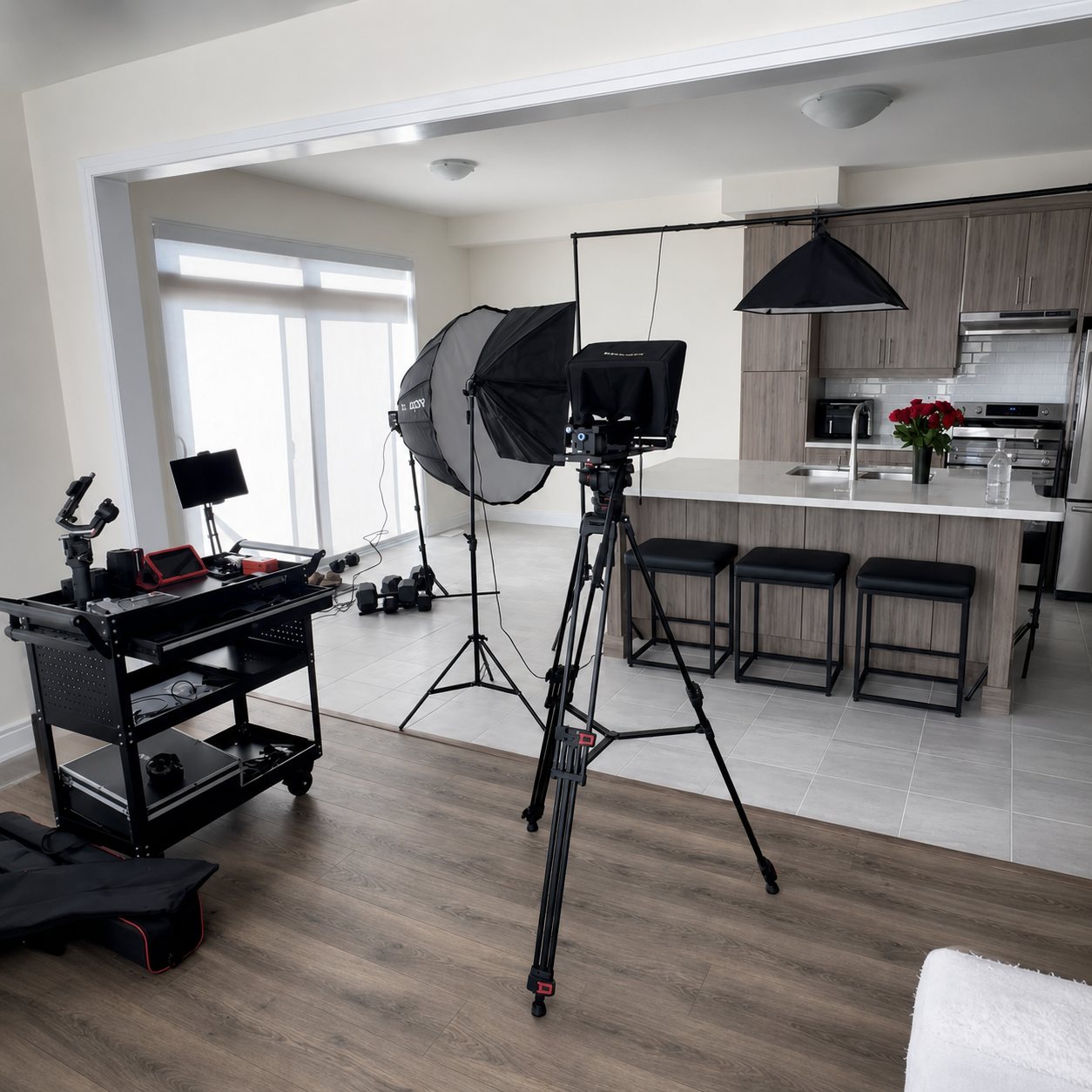
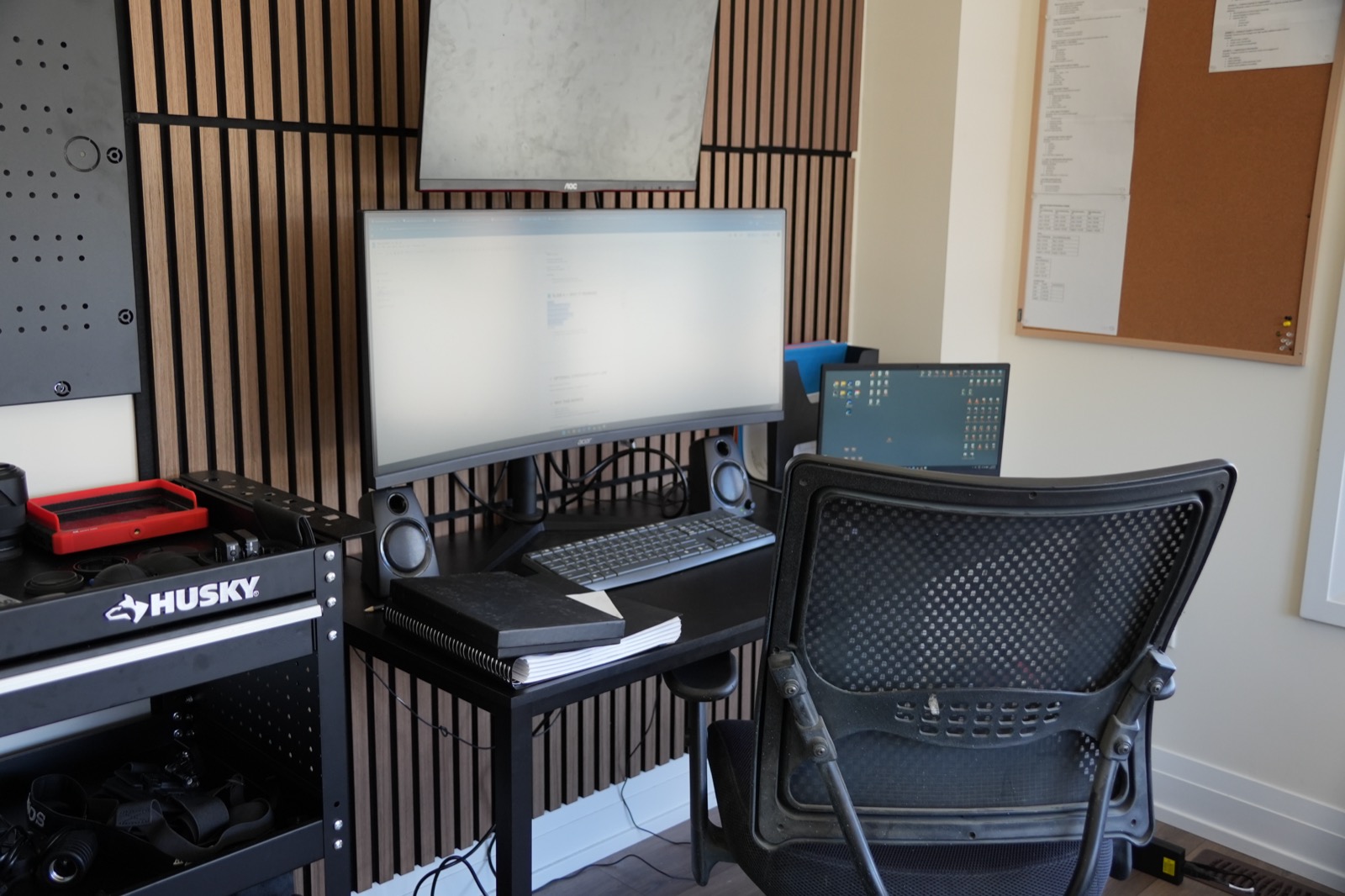
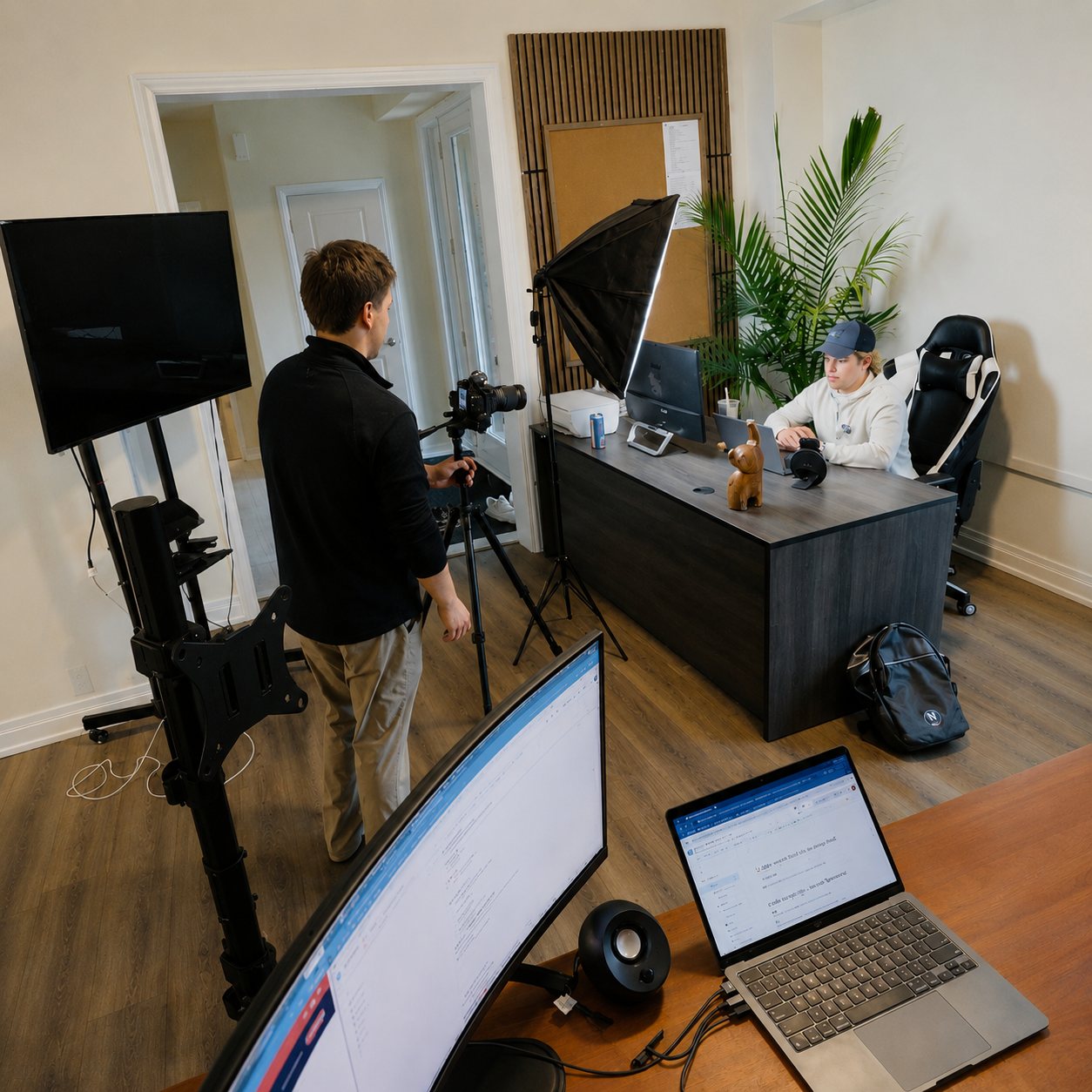 The office
5.0 ★ on Google
5.0Google rating“Working with NewLife Marketing has been a great experience. Their team has travelled to our locations to film professional content and turn it into Meta ad campaigns focused on generating real leads for our stores. The campaigns have been profitable, the communication has been consistent, and they’re always looking for ways to improve performance and bring us more opportunities. It’s been great having a marketing team that’s willing to show up, understand our business, and put in the work. We’d highly recommend NewLife Marketing to any business looking to grow through digital advertising.”
Last step
You will talk to Cruz or Keegan, not a sales rep. If the honest answer is that you do not need us yet, that is what you will hear, and you keep the plan either way.