
Step 1 of 5
Tracking
Browser-only tracking loses a large share of conversions to ad blockers and browser settings, which means the account optimises on a partial picture. Nothing else is worth doing until this is right.
 5.0 Google rating
Meta Ads In Alliston
Meta Ads Alliston reaches a small enough audience that the same people see the same advertisement repeatedly, which makes rotation the whole job.
Trusted by Ontario businesses












On this page
The whole scope, in the order it is explained below.
The market
Alliston's addressable audience on Facebook and Instagram is small. That keeps costs low and makes it realistic to reach essentially everybody in town who matches your customer profile, which is not something you can say about a city.
The flip side is frequency. A small audience sees the same advert repeatedly, and performance drops off far faster than in a large market. Accounts here that run one creative for months stop working and nobody can say exactly when.
The shift pattern shows up again too. Engagement in a town where thousands work rotating hours does not follow the usual daily curve, and scheduling built on assumptions gets it wrong.
The numbers
New Tecumseth grew faster than anywhere else in Simcoe County between the last two censuses. That headline hides the thing that actually matters for targeting, which is that the growth did not arrive evenly.
Statistics Canada, 2021 Census
Statistics Canada, 2021 Census, population centres
Statistics Canada, 2021 Census, population centres
Alliston itself went from 19,092 to 23,253 people, about 22%, and holds a little over half the town. Tottenham nearly doubled. Beeton barely moved. Those are three different markets inside one municipal boundary, and a campaign drawn as a radius around the Alliston water tower treats them as one.
It matters more here than the raw numbers suggest. A near-doubled population is a population with no incumbent supplier, which is the single most favourable condition paid social has. A flat one is a market where everybody already has a plumber. The same creative, the same offer and the same budget will produce very different results across fifteen kilometres of the same town, and a Meta Ads Alliston account that cannot tell the three apart will read that as random variance.
What we would target
The structure accepts a small audience and plans for it: frequent creative rotation, a tight geography covering New Tecumseth, and scheduling matched to when people are actually on their phones.
Because the audience is finite, the goal is familiarity across the whole of it rather than reach for its own sake.
The creative and audience process is set out on our Meta Ads page.
The work
Audience size is checked before anything is built, because it determines how fast creative will burn and therefore how often it needs replacing.
Creative is produced in batches rather than one at a time, and rotated on a schedule, which is the single most important discipline in a small market.
Targeting covers Alliston and the surrounding New Tecumseth communities, with your own customer and visitor lists used as the warm layer.
Delivery is scheduled against when engagement actually happens rather than office hours, frequency is monitored as a headline metric rather than an afterthought, and reporting is cost per lead.
That is the whole of it, and the emphasis is set by what Alliston businesses actually run into.
Where we would start
With frequency. If the number is climbing and results are falling, nothing else in the account matters until the creative is refreshed.
Then a batch of new creative, filmed in one session so there is a queue rather than a scramble.
Then scheduling, matched to the shift pattern rather than assumed.
Then the warm audiences, which in a small market are both cheap and chronically unused.
Why creative burns
In a city, a creative dies slowly and you have time to notice. In a town the size of this one the audience is finite, so everybody who matches your targeting sees the advert, then sees it again, and the decline looks like the platform changing rather than the audience getting bored.
Average times one person saw your advert over the reporting window. Meta reports it per ad set. Most owners we meet have never opened the column, which is why the diagnosis usually takes about a minute once we do.
Frequency climbing, reach flat, cost per result rising week over week. The instinct is to add budget. Adding budget to a saturated audience buys more impressions from the same people and makes the number worse.
New creative, not more money. Which is why we film in batches rather than one at a time: a queue of four or five variants shot in a single session is what lets a rotation actually happen instead of being scheduled and then skipped.
That discipline is most of what separates a Meta Ads Alliston account that keeps working from one that produced results for six weeks and then quietly stopped.
Why us
Meta Ads Alliston is not a thing you buy once. It is a monthly rotation of creative against a finite audience, and the month it stops being refreshed is the month it starts getting more expensive. Anyone selling you a campaign build with no plan for what runs in week nine is selling you the first six weeks.
What you are actually buying is the filming, the rotation schedule, the audience structure that keeps cold and warm apart, and somebody watching the frequency column. We produce the video in-house rather than asking you to supply it, which in a town where people recognise the buildings is the difference between an advert that looks local and one that looks bought.
It is judged on cost per customer, not on reach. For Alliston that is the number we would build the plan around, and the one we would report against whether it moved in your favour or ours.
The media budget, which goes to Meta, from the management fee, which goes to the agency, from the creative, which is somebody making the advertisements and is the part that decides the result. A single monthly number hides all three. Ask how many new advertisements a month, who makes them, whose account it is, and what happens to the audiences and the pixel history if you leave.
Next step
One number in the account answers it, and in a town this size it is the number that decides whether the budget is doing anything at all.
Find frequency: how many times, on average, each person has seen your advertisement over the period. Under two and the audience is still fresh. Over four or five in a small market and you are paying to show the same thing to the same people, who stopped registering it weeks ago.
The fix is not a bigger budget or a wider audience. It is more advertisements — genuinely different ones, not the same claim recoloured — rotated before the number climbs. In a small market that is the entire management job.
Send us the account and we will read the frequency with you, whether or not you ever want anybody to run it.
How it works
Five steps, and the first one is not about advertising at all.
Step 1 of 5
Browser-only tracking loses a large share of conversions to ad blockers and browser settings, which means the account optimises on a partial picture. Nothing else is worth doing until this is right.
Step 2 of 5
One advertisement is not a test. Several genuinely different ones - different opening, different claim, different footage - because the creative decides most of the result and the targeting decides far less than people expect.
Step 3 of 5
Ad sets begin in prospecting on a small budget. Most will not work, which is the point: the budget is buying an answer rather than reach.
Step 4 of 5
A set that proves out graduates to scaling or retargeting. One that does not is stopped. The verdict is reached at a threshold agreed in advance, not when somebody feels uneasy.
Step 5 of 5
Launch, gather to the threshold, decide, replace. Running that cycle properly is most of what separates an account that improves from one that drifts.
Proof first
Every number published on this site came from paid media or production work, with the client named on it.
A Portuguese grill that came to us with almost no online presence.
Read the case study →Named clients, real figures, and what each one was spending.
See all case studies →That account was not run in Alliston, and we are not going to imply otherwise. It is published, named and checkable, which is more than a screenshot of a dashboard offers. Ask any agency what a customer cost before and after, and ask who counted it.
The person on your account
Founder & CEO · Head of Operations & Paid Media — NewLife Marketing
Runs your strategy call, builds and manages your paid media accounts personally, and owns the monthly numbers you will be shown. On your calls you talk to Cruz or Keegan: never a rep.
Straight answers
Straight answers before you ever book a call.
No, but it changes the approach. Small audiences are cheap and easy to saturate, which means the creative has to change often to stay effective.
More often than in a city. In a town this size we would plan on a regular rotation rather than waiting for performance to drop.
Almost always frequency in a market this size. The audience has seen the advert enough times to stop noticing it. More budget makes that worse, not better; new creative fixes it.
It depends which part of the town your customers are in, and the census says that is a real question rather than a pedantic one. Tottenham grew 77.2% between 2016 and 2021 while Beeton grew 6.7%. If you serve the whole municipality we would normally build Alliston and Tottenham as separate ad sets so you can see which one is actually producing, instead of averaging them into a single number that describes neither.
We do not publish set rates. The right ad spend and the right fee genuinely differ per client and package, and in a small market the spend figure is often lower than people expect because the audience is cheap to saturate. You will get a real number for your goals on the call.
Why NewLife
Everything we do runs on one system we call The Film-to-Funnel System: in-house film → paid ads → landing page → CRM follow-up → optimize. Here is how that stacks up against doing it yourself or hiring a typical agency.
| In-house | Typical agency | NewLife | |
|---|---|---|---|
| Creative | You film it on a phone | Outsourced or stock footage | Our in-house cinema crew, filmed on-site |
| Who does the work | You, between running the business | A junior account manager | Cruz and the senior team, directly |
| The system | Disconnected tools that don't talk | Ads, then hands-off | Film → ads → landing page → CRM, one connected system |
| Your accounts & data | Yours, but no time to run them | Often held hostage | Always yours - you keep everything |
| Follow-up | Manual, when you remember | Rarely their problem | Automated speed-to-lead in the CRM |
| Local knowledge | You know your market | A national, generic playbook | Real local research for every market you target |
Where to go next
Come say hi
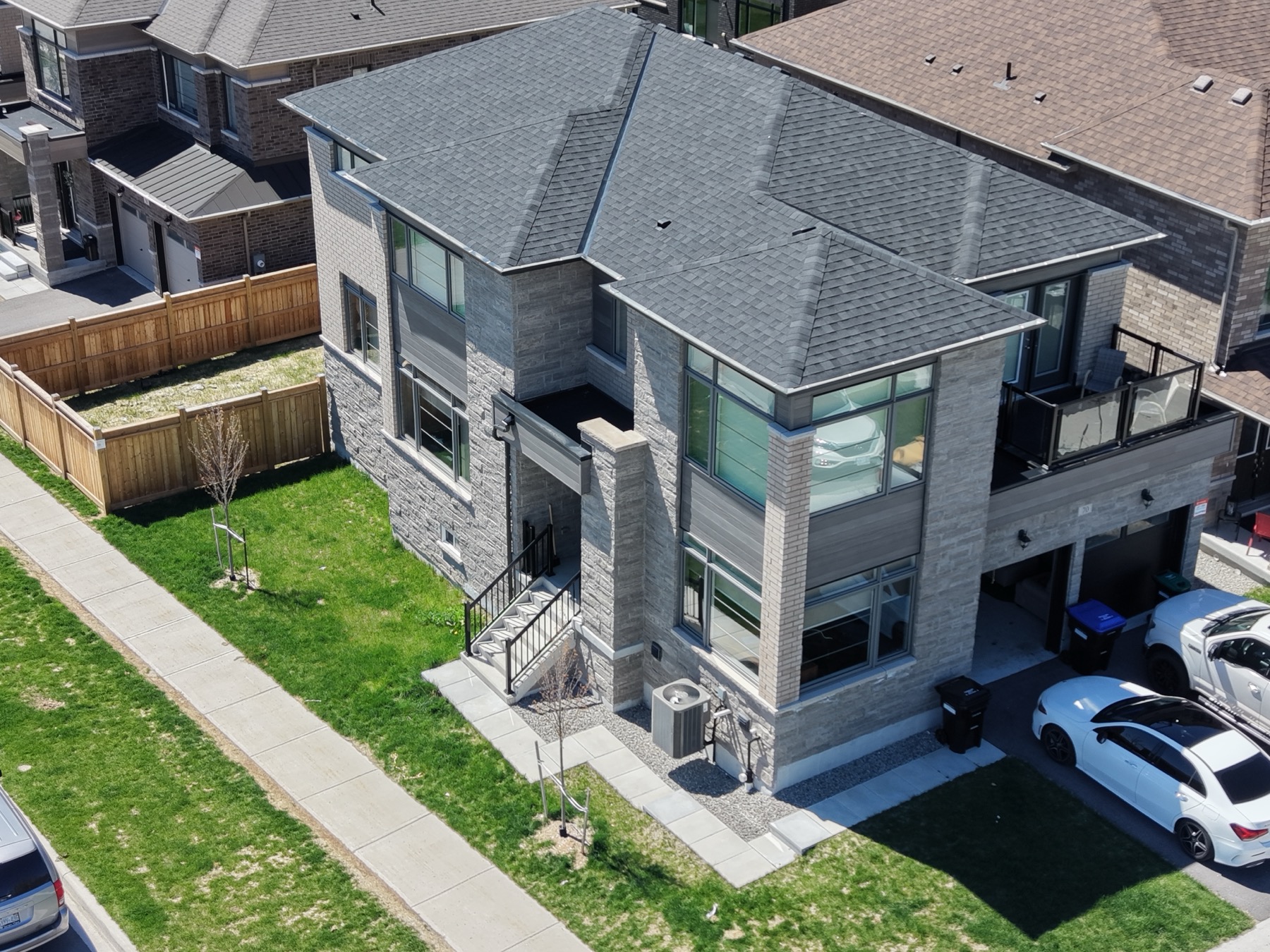
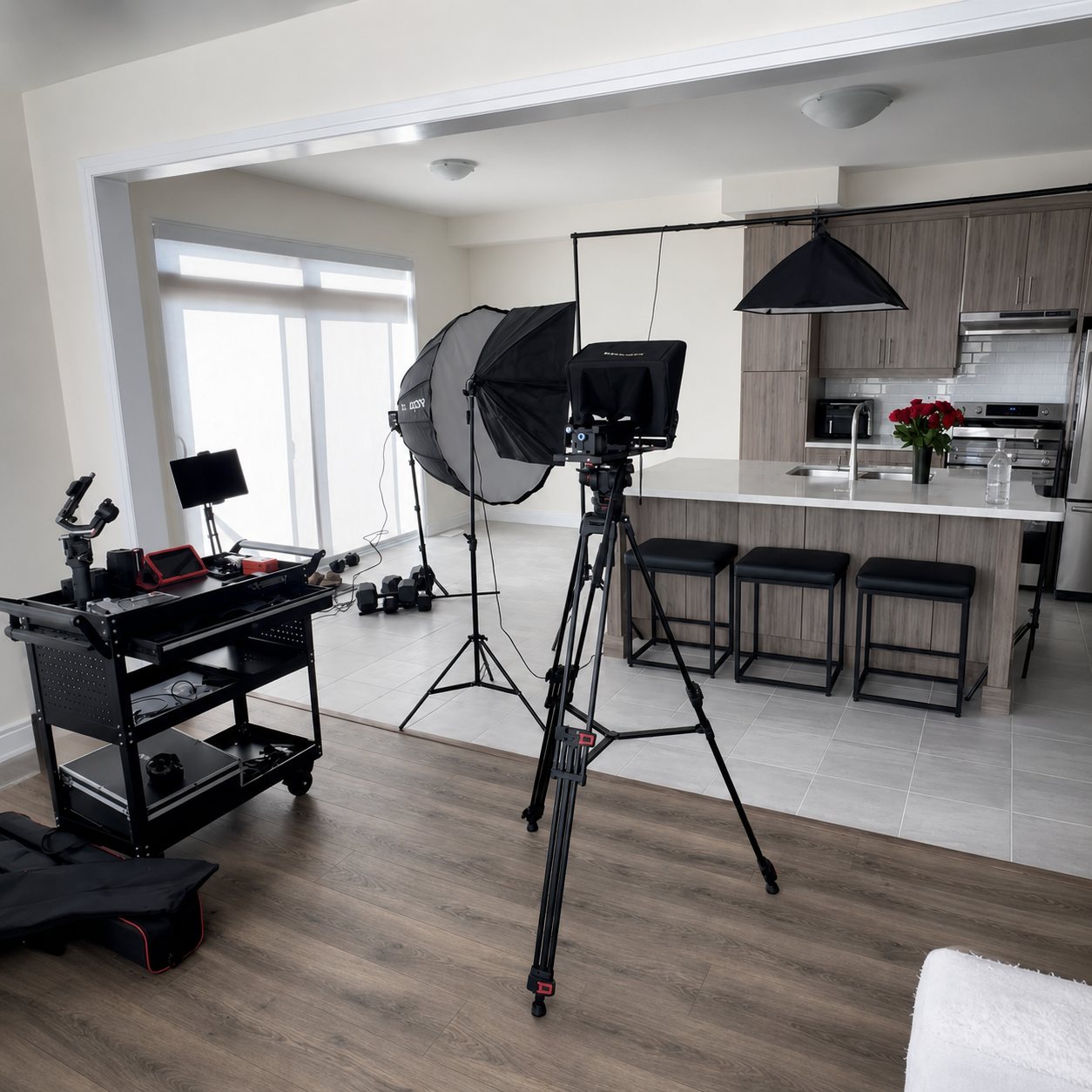
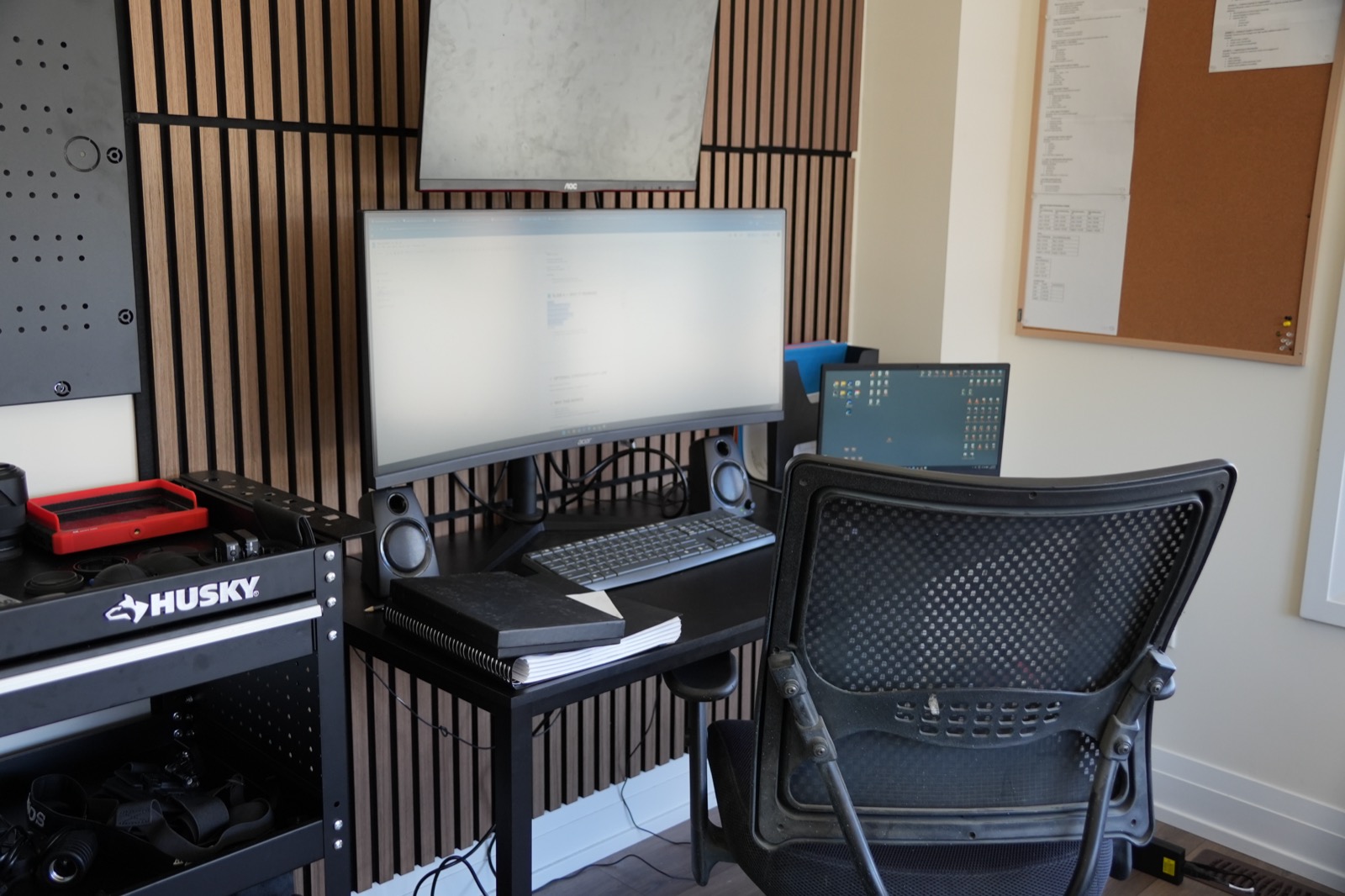
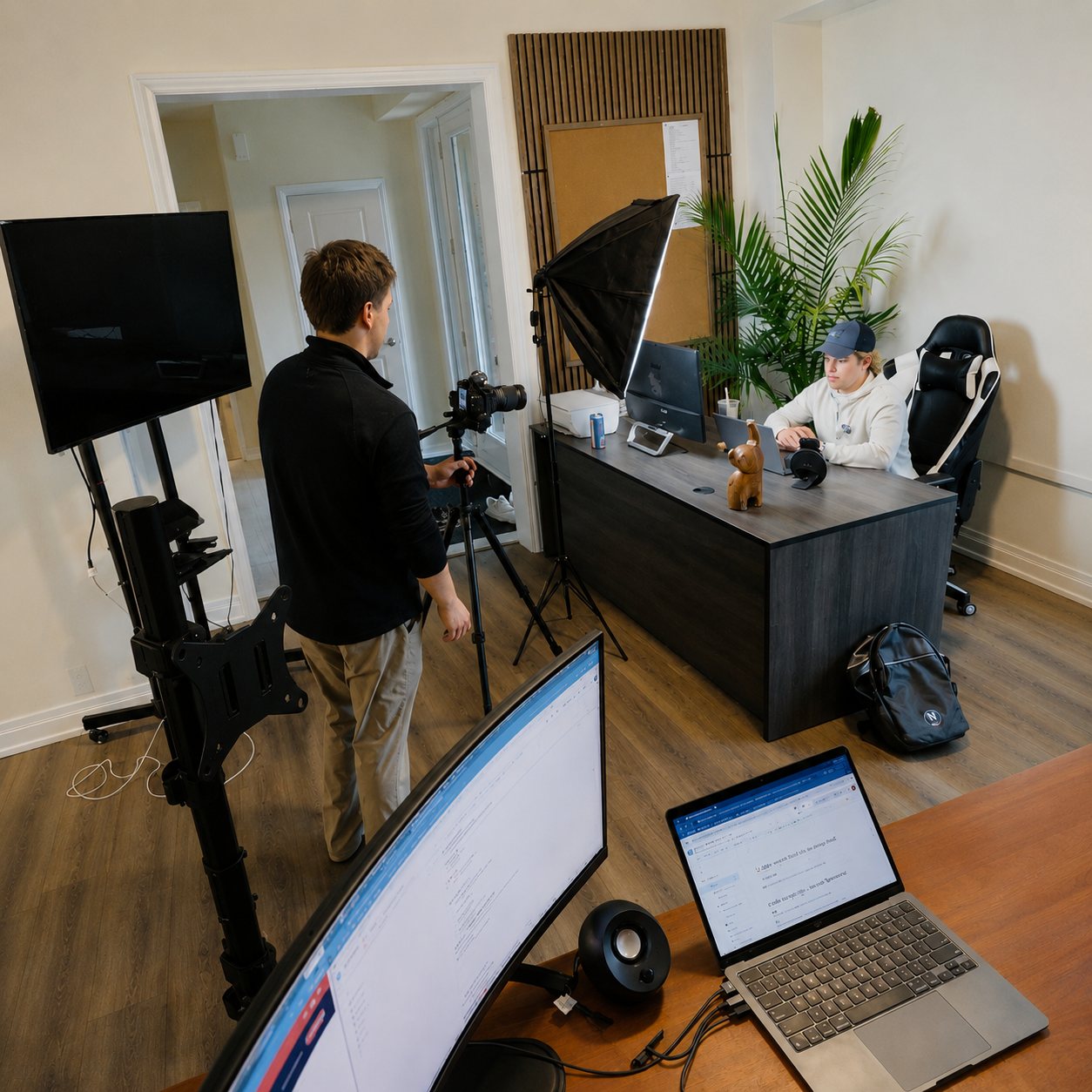
The office and the studio are in Minesing, just west of Barrie. Come and sit in it, see what is actually on the screens, and ask the person who would be on your account what they would do first.
 The office
5.0 ★ on Google
5.0Google rating“Working with NewLife Marketing has been a great experience. Their team has travelled to our locations to film professional content and turn it into Meta ad campaigns focused on generating real leads for our stores. The campaigns have been profitable, the communication has been consistent, and they’re always looking for ways to improve performance and bring us more opportunities. It’s been great having a marketing team that’s willing to show up, understand our business, and put in the work. We’d highly recommend NewLife Marketing to any business looking to grow through digital advertising.”
Last step
You will talk to Cruz or Keegan, not a sales rep. If the honest answer is that you do not need us yet, that is what you will hear, and you keep the plan either way.