
Step 1 of 5
Audit
Before anything is changed, we read what the account has actually been paying for. On a neglected account this one report explains most of the waste, and it is free to read.
 5.0 Google rating
Google Ads Management In Alliston
Google Ads Alliston is a small auction where the hours people search are set by shift patterns, and a flat budget across the week throws most of it away.
Trusted by Ontario businesses












On this page
The whole scope, in the order it is explained below.
The market
Alliston's paid search market is small and cheap, which means a modest budget can hold a strong position for the searches that matter. There is simply not much competition bidding here.
The complication is timing. A large part of the working population is on shifts, and they search outside ordinary business hours. Ads running nine to five in a town like this miss a meaningful share of the demand and compete hardest when the fewest people are looking.
The other recurring issue is the same one that shows up everywhere in small markets: ads generate the call and nobody answers it, so the spend converts at a fraction of what it should.
What we would target
The structure is simple because the market is. A tight keyword set per service, a geography covering New Tecumseth and the townships around it, and scheduling that matches when people actually search.
With low competition, the goal is coverage of the searches you want rather than a fight for share.
How the account gets built and managed is on our Google Ads Management page.
What it costs
A small auction is cheaper per click and harder to run, and the second half is the part nobody mentions.
Fewer advertisers means a lower price for the same position, which is the good news and it is real. A trade in a town this size can often sit at the top of the results it cares about for less a month than a Toronto competitor spends in a day.
The difficulty is volume. With a handful of relevant searches a day, it takes weeks rather than hours to learn anything, and every automatic setting in the platform is designed for accounts with far more data than yours will ever have. Automated bidding on a small account spends the first month guessing, and the guesses cost real money.So a small account is run differently. Manual control for longer. Exact match on the searches that matter. Judgement where a large account would use the machine. Changes measured over months, because a week is noise.And a floor underneath it. Below roughly the cost of a handful of clicks a day, an account cannot learn anything at all and the fee to manage it is more than the media. That is the point at which the honest answer is to spend the money on the listing and the site instead, and we would rather say so than take it.The work
Ad scheduling gets more attention here than in most markets. We look at when the clicks and the conversions actually happen rather than assuming office hours, and weight the budget to those windows.
Keyword research stays tight and intent-led. In a small market the list of searches worth buying is short, and covering it properly beats casting wide.
Negative keywords are built early and reviewed monthly off the search terms report, because even a small budget loses meaningful ground to irrelevant clicks when the total volume is low.
Landing pages match the campaign, call tracking matters as much as form tracking given how much of the demand arrives by phone, and reporting is cost per lead rather than impressions or clicks.
None of that is exotic. It is the Google Ads programme, pointed at a Alliston market.
Where we would start
Scheduling first, because in a shift town it is usually the single biggest lever and almost nobody has touched it.
Then call handling, which is not strictly account work but determines whether the account can pay for itself at all.
Then the keyword set, trimmed to the services you actually want and expanded to cover the surrounding townships.
Then landing pages, which in a small market are often the only thing separating two otherwise identical advertisers.
The media budget, which goes to Google, and the management fee, which goes to the agency. A single number a month tells you neither, and an agency taking a percentage of spend is paid more for spending more. Ask for both figures in writing, ask what happens to the account if you leave, and ask whose name it is in.
Why us
If you are shopping for Google Ads Alliston, the useful question is what is realistic here. A small auction, a shift-pattern town, and most of the budget decided by when your ads run.
Everything we do for a Alliston business is reported in one dashboard you can open whenever you like, rather than a monthly PDF.
Next step
Ten minutes in the account, and on a shift-pattern town it is usually the single most valuable thing in it.
Open the account and find the report that breaks results down by hour of day and day of week. Put spend beside conversions. On most small accounts there are two or three hours producing most of the work and a long flat stretch producing almost none, and the budget is spread evenly across all of it.
Then check the opposite: are the ads even running at the hours that convert? An account capped by a daily budget commonly runs out before the shift that matters, every single day, and nothing in the interface points that out.
Send us the account and we will look at both, whether or not you want anybody to manage it.
How it works
Five steps, and the first one costs nothing but reading.
Step 1 of 5
Before anything is changed, we read what the account has actually been paying for. On a neglected account this one report explains most of the waste, and it is free to read.
Step 2 of 5
Campaigns split so that a budget decision is possible: by what you sell, by what it is worth, and by where it is worth it. An account that cannot be turned down in one place cannot be managed.
Step 3 of 5
A conversion is a booked job or a sale, not a click on a phone number. Tracking is verified against what the business actually received before a single bid is changed.
Step 4 of 5
Starting on the searches with the clearest intent and the tightest match, then widening deliberately once there is evidence rather than hope.
Step 5 of 5
Every search term the account paid for, read weekly and sorted: promote it, block it, or leave it. This is most of what separates an account that improves from one that drifts.
Proof first
Every number on this site came from paid media or production work, with the client named. There is no traffic graph here and you should be wary of them elsewhere.
A Portuguese grill that came to us with almost no online presence.
Read the case study →Named clients, real figures, and what each one was spending.
See all case studies →That account was not run in Alliston, and we are not going to imply otherwise. It is published, named and checkable, which is more than a logo wall offers. Ask any agency you shortlist for the cost per booked job before and after, and ask who counted it.
The person on your account
Founder & CEO · Head of Operations & Paid Media — NewLife Marketing
Runs your strategy call, builds and manages your paid media accounts personally, and owns the monthly numbers you will be shown. On your calls you talk to Cruz or Keegan: never a rep.
Straight answers
Straight answers before you ever book a call.
Usually not, because the clicks are cheap. What a small market cannot support is a wide, loose account; the volume is not there to absorb waste.
Less than most people expect for this market, and we would rather start small and prove the cost per lead than take a budget we have not justified.
In a town working shifts, yes. Running ads only during office hours means bidding when the fewest potential customers are searching and going dark when the most are.
Why NewLife
Everything we do runs on one system we call The Film-to-Funnel System: in-house film → paid ads → landing page → CRM follow-up → optimize. Here is how that stacks up against doing it yourself or hiring a typical agency.
| In-house | Typical agency | NewLife | |
|---|---|---|---|
| Creative | You film it on a phone | Outsourced or stock footage | Our in-house cinema crew, filmed on-site |
| Who does the work | You, between running the business | A junior account manager | Cruz and the senior team, directly |
| The system | Disconnected tools that don't talk | Ads, then hands-off | Film → ads → landing page → CRM, one connected system |
| Your accounts & data | Yours, but no time to run them | Often held hostage | Always yours - you keep everything |
| Follow-up | Manual, when you remember | Rarely their problem | Automated speed-to-lead in the CRM |
| Local knowledge | You know your market | A national, generic playbook | Real local research for every market you target |
Where to go next
Come say hi
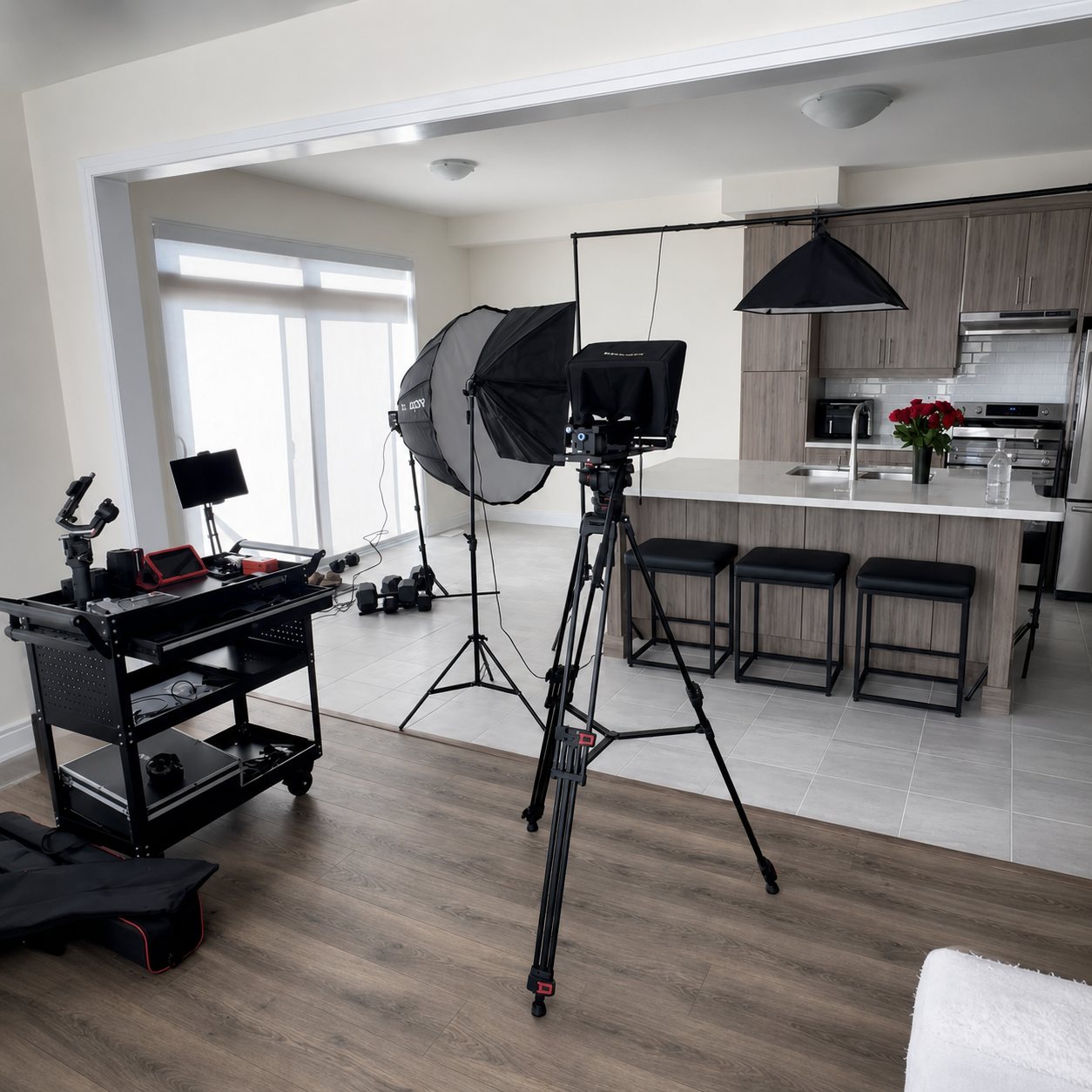
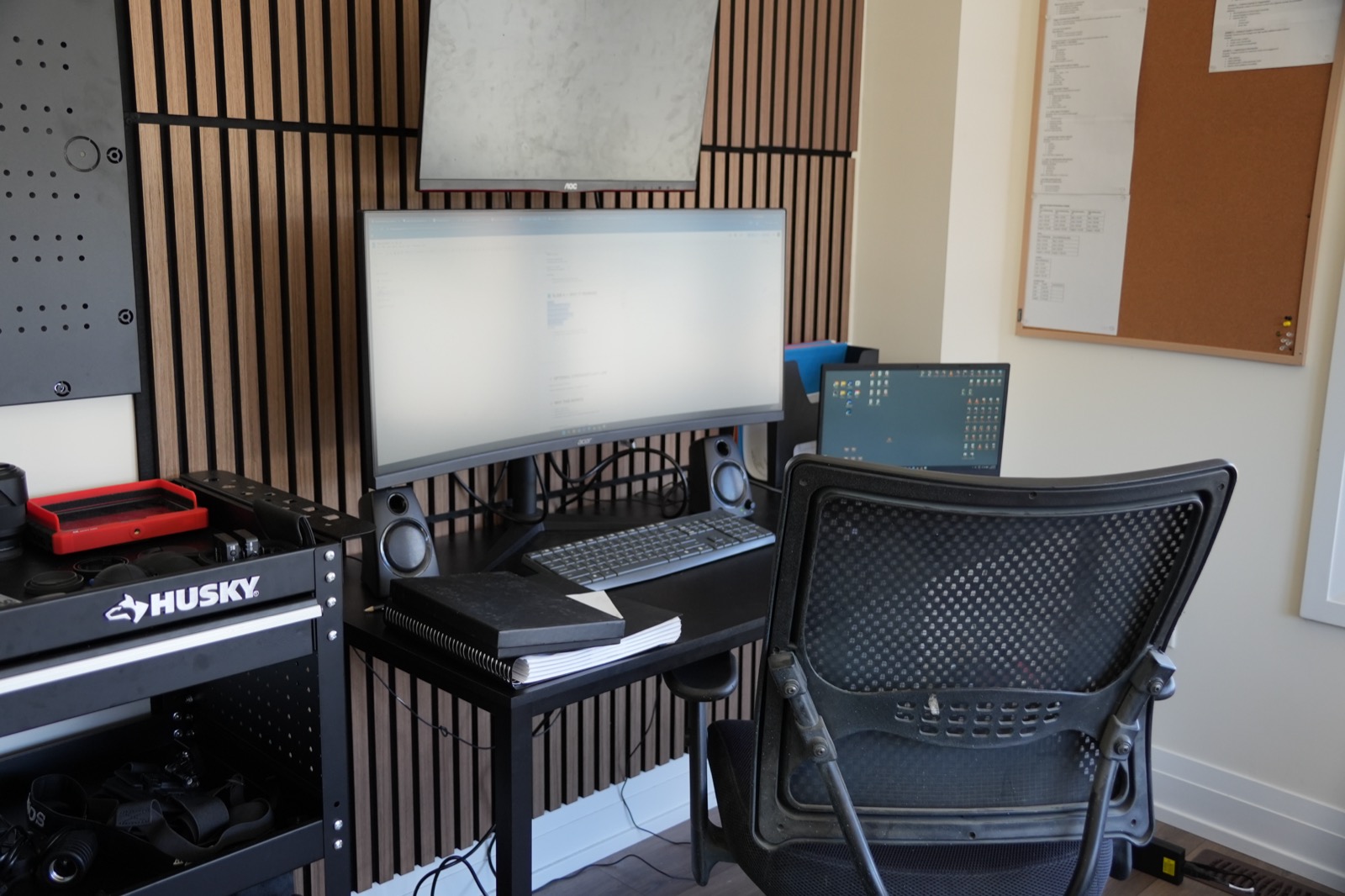
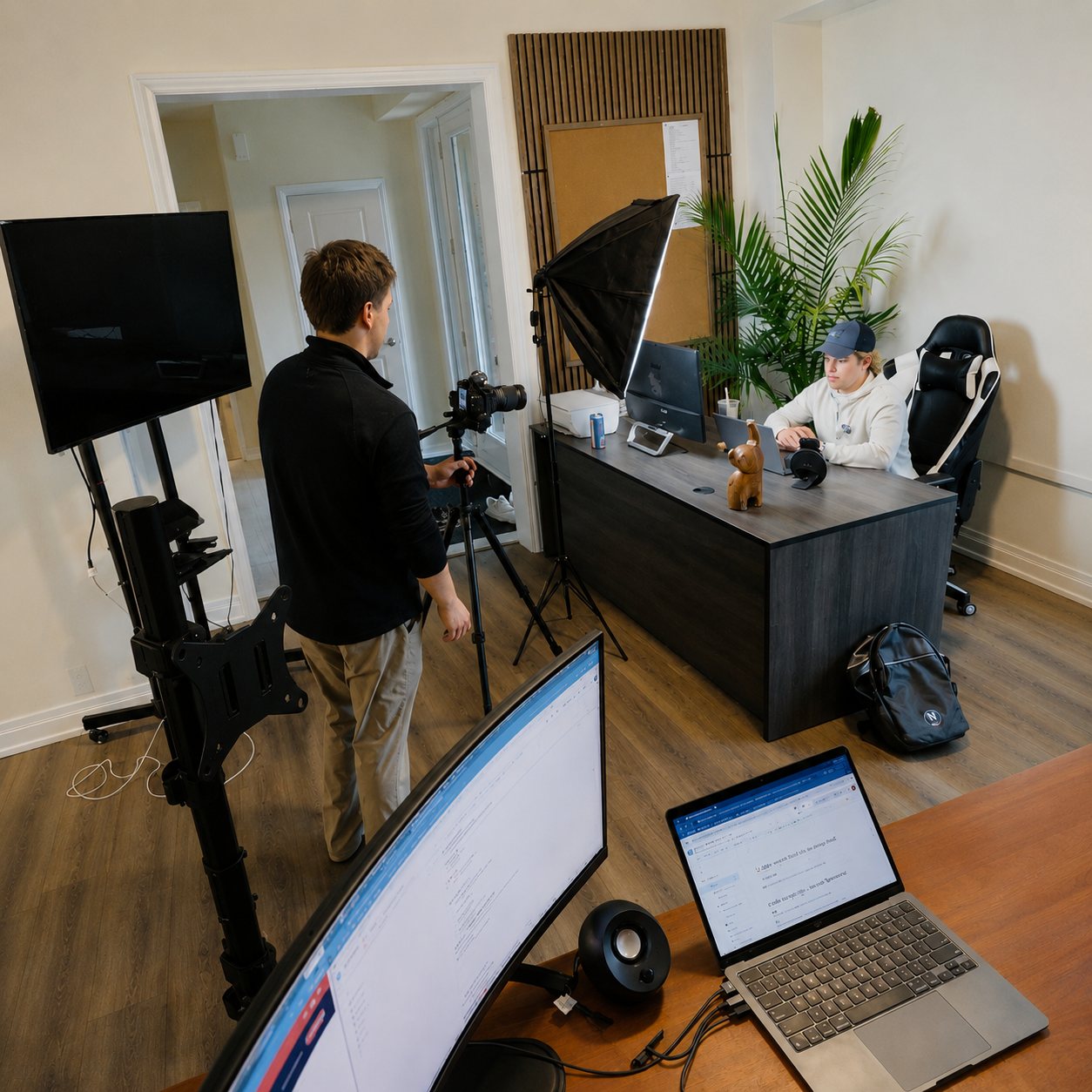
The office and the studio are in Minesing, just west of Barrie. Come and sit in it, see what is actually on the screens, and ask the person who would be on your account what they would do first.

 The office
5.0 ★ on Google
5.0Google rating“Working with NewLife Marketing has been a great experience. Their team has travelled to our locations to film professional content and turn it into Meta ad campaigns focused on generating real leads for our stores. The campaigns have been profitable, the communication has been consistent, and they’re always looking for ways to improve performance and bring us more opportunities. It’s been great having a marketing team that’s willing to show up, understand our business, and put in the work. We’d highly recommend NewLife Marketing to any business looking to grow through digital advertising.”
Last step
You will talk to Cruz or Keegan, not a sales rep. If the honest answer is that you do not need us yet, that is what you will hear, and you keep the plan either way.